A Beginner’s Guide to Lawn Care
By Sal Ram · · Updated · 7 min read

Key Takeaways
- Water your lawn about 1 to 1.5 inches a week, including rainfall.
- Never cut more than one-third of the grass blade in one mow.
- Water before 10 a.m. to reduce evaporation and fungal disease risk.
- Cool-season grasses need more fertilizer in spring and fall.
- Test soil first: it determines pH, fertility, and watering needs.
A healthy lawn comes down to three habits done consistently: water about 1 to 1.5 inches a week, never cut more than a third of the grass blade at once, and match your fertilizing schedule to whether you have cool-season or warm-season grass. Get those three right and most other lawn problems solve themselves.
Lawn care can feel like it requires a lot of specialized knowledge, but the fundamentals are simple once you know your soil and grass type. Here's a beginner's guide covering soil, grass, watering, mowing, fertilizing, and weeds.
Why does your soil matter before anything else?
Soil supplies the nutrients, water, and air that grass roots need, so knowing what you're working with shapes every decision after this. A soil test (from a garden center kit or a lab sample) reveals pH, fertility, organic matter, and texture.
If your soil is too acidic, adding lime raises the pH. If it's too sandy, compost or organic matter improves water retention and nutrient availability. Skip this step and you're guessing at fertilizer and watering needs instead of actually addressing the cause.
What type of grass do you have?
Grasses split into cool-season and warm-season types, and which one you have determines your entire maintenance calendar. Cool-season grasses (Kentucky bluegrass, perennial ryegrass, fine and tall fescue) grow best where winters are cold and summers mild, which describes most of southeastern Canada, including Ottawa. Warm-season grasses (Bermuda, zoysia, St. Augustine, centipede) suit hot-summer, mild-winter climates.
Cool-season lawns need more water and fertilizer in spring and fall and should be mowed taller to protect against heat stress. Warm-season lawns need that extra attention in summer instead. If you're not sure which you have, a local garden center or extension office can identify it from a sample.
How much and how often should you water?
Most lawns need about 1 to 1.5 inches of water a week, including rainfall, per EPA WaterSense guidance. Water deeply and infrequently, once or twice a week rather than daily, so roots grow down toward moisture instead of staying shallow.
Place a rain gauge or an empty tuna can on the lawn and time how long it takes your sprinkler to fill it with an inch of water; that's your watering duration per session. Water in the early morning, before 10 a.m., when it's cooler and calmer, so less water is lost to evaporation and grass blades dry before nightfall, which helps prevent fungal disease.
What's the right mowing height?
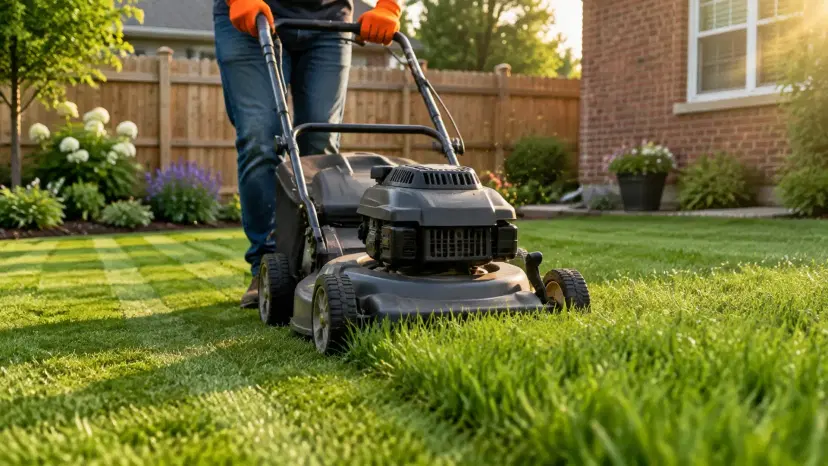
Never remove more than one-third of the grass blade's height in a single mow, a standard rule in turf management. Cutting more than that shocks the plant and forces it to spend energy on recovery instead of building deeper roots. Taller grass also shades the soil, reducing evaporation and keeping roots cooler.
Adjust your mowing frequency to how fast your grass grows rather than a fixed weekly habit. Kentucky bluegrass, for example, is typically mowed between 2.5 and 3.5 inches, while Bermuda grass sits between 0.5 and 1.5 inches, so check the recommended height for your specific grass type. For a season-long schedule and more on clippings, see our lawn mowing guide.
When should you fertilize and manage weeds?
Fertilizer supplies nitrogen, phosphorus, and potassium that soil may lack, improving color, disease resistance, and stress tolerance. Follow the product label for timing and rate, apply with a spreader for even coverage, and water afterward to help it reach the soil. Cool-season grasses need most of their fertilizer in spring and fall; warm-season grasses need theirs in summer.
For weeds, hand-pulling or a hoe is more eco-friendly and safer around pets and kids but takes more time; herbicides are faster and more thorough but cost more and carry more environmental impact. Whichever method you choose, treat weeds like dandelions, crabgrass, and clover while they're young and actively growing, since mature weeds are harder to remove and often have already seeded.
Methodology
Watering guidance references EPA WaterSense turfgrass and water efficiency recommendations. Mowing height and the one-third rule reflect standard turfgrass management principles used across extension and turf-care programs.
When it's worth hiring a lawn care service
None of this is complicated, but it does take a recurring time commitment through the growing season. If your schedule doesn't allow for weekly mowing and seasonal fertilizing, Ezi's lawn maintenance service and weed removal service cover it. For more on seasonal timing in the Ottawa climate, see our Ottawa lawn care guide. For dandelions and crabgrass, Ezi also offers weed removal.
See why regular lawn maintenance pays off even if you enjoy doing the work yourself.
Conclusion
Consistent watering, careful mowing, and fertilizing on the right schedule for your grass type will get a brown, patchy lawn back to green faster than any single product or trick. If you'd rather hand off the recurring work, book Ezi's lawncare services in Ottawa.
Frequently Asked Questions
How much water does a lawn need per week?
Most lawns need about 1 to 1.5 inches of water per week, including rainfall, according to EPA WaterSense guidance. Water deeply but infrequently, once or twice a week rather than daily, so roots grow deeper and the lawn holds up better in dry stretches.
How short can you cut your grass?
Take off no more than a third of the blade height per mow. Cutting shorter stresses the plant and slows root growth.
When is the best time to water a lawn?
Water in the early morning, before 10 a.m., when temperatures are cooler and wind is calmer, which reduces evaporation loss and lets grass blades dry before nightfall. Watering at night leaves grass damp for hours, which raises the risk of fungal disease.
What's the difference between cool-season and warm-season grass care?
Cool-season grasses (common in Ottawa and southeastern Canada), like Kentucky bluegrass and fescue, need more water and fertilizer in spring and fall and should be mowed taller. Warm-season grasses need their extra care in summer instead, so matching your maintenance calendar to your grass type matters more than following a generic schedule.
Should I pull weeds by hand or use an herbicide?
Hand-pulling is more eco-friendly and safer around pets and kids but takes more time; herbicides work faster but cost more and carry more environmental impact. Either way, treat weeds when they're young and actively growing, since mature weeds are harder to remove and more likely to have already seeded.
ottawa
yard maintenance
Written by
Lawncare · Car Detailing
Sal Ram brings an engineer's problem-solving mindset to lawn care and car detailing — the same diagnostic instincts from his engineering background now go into reading turf problems and chasing paint-perfect finishes. Hands-on, technical, and big on getting the details right.