How to clean a hazy mirror: 5 methods for a clear reflection
By Samer Alsayegh · · Updated · 7 min read
Key Takeaways
- Mix equal parts white vinegar and water to clear mirror haze
- Hazy mirrors are commonly caused by residue buildup or hard water stains
- Desilvering causes permanent dark spots that cleaning cannot fix
- Use a lint-free cloth and wipe top to bottom, side to side
- Squeegee mirrors after hot showers to prevent condensation film
A hazy mirror that still looks foggy after you've wiped it down usually isn't a cleaning problem. It's a residue, mineral, or moisture problem, and each one needs a different fix. Here's how to tell which one you're dealing with and clear it for good.
What causes a mirror to get hazy?
Most haze comes down to one of two things: buildup on the surface, or damage behind the glass.
Surface haze (dust, hairspray drift, toothpaste splatter, hard water minerals) sits on top of the glass and responds to the right cleaner and technique. It's the version you can fix.
Desilvering doesn't. Mirrors have a thin silver backing behind the glass, and moisture that seeps in through the edges or a scratch causes that backing to oxidize, leaving dark spots or a cloudy patch that no amount of cleaning removes. If wiping the surface does nothing and the haze looks like it's behind the glass rather than on it, that's desilvering, so skip to the last section.
5 ways to clear a hazy mirror
1. Residue buildup
The most common cause. Cleaning product residue, dust, and airborne particles layer on the glass over weeks, leaving a dull grey film that regular wiping just smears around.
- Dust first. Wipe loose particles off with a microfibre cloth or feather duster before applying any liquid, because wet-wiping over dust just creates paste.
- Use a gentle cleaner. A glass cleaner or a 1:1 mix of water and white vinegar cuts through residue without leaving its own film behind.
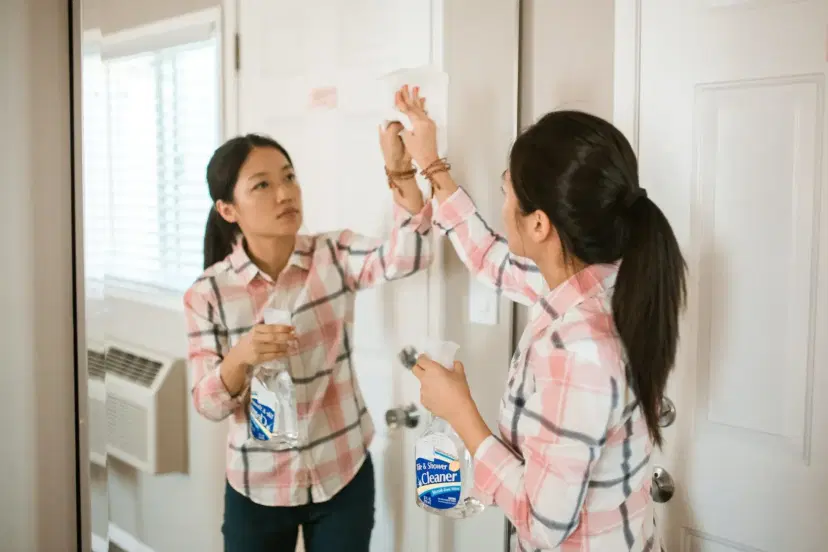
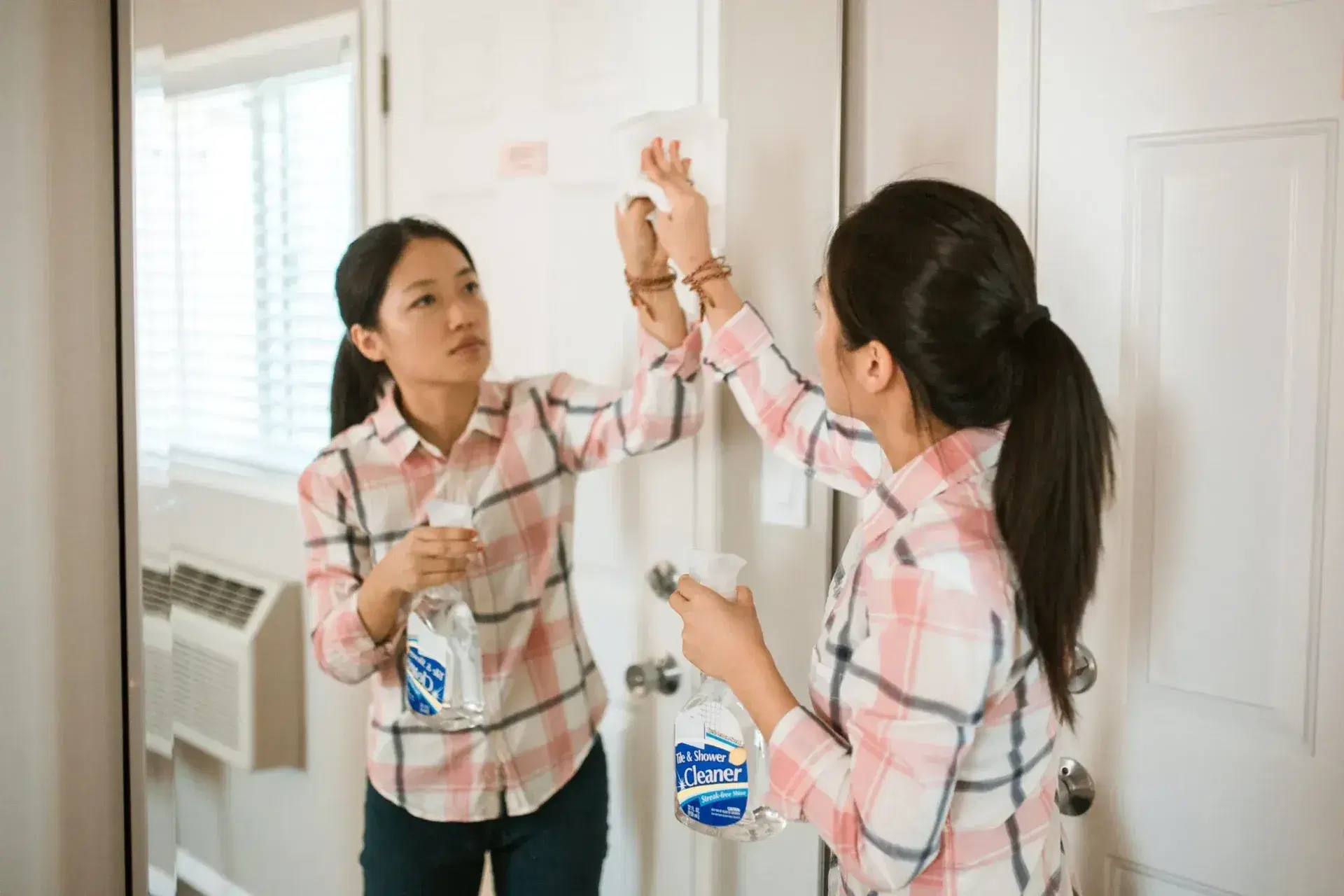
- Wipe with a lint-free cloth, not paper towel. Paper towel fibres are exactly what causes the streaks you're trying to avoid.
- Buff dry in small circles with a dry microfibre cloth to lift the last of the residue and bring back the shine.
2. The wrong cleaning product
Ammonia, bleach, and abrasive cleaners can etch glass or leave a film that reads as haze. Read the label, stick to a dedicated glass or mirror cleaner (or the vinegar-water mix above), and test anything new on a small corner first.
3. Poor cleaning technique
Wiping in random circles redistributes dirt instead of lifting it. Pick one direction (top to bottom or side to side) and stay consistent. Swap the cloth the moment it feels damp or gritty; a dirty cloth just reapplies the mess you're trying to remove.
4. Hard water stains
Hard water leaves mineral deposits (calcium and magnesium) that dry into a spotty film regular glass cleaner won't touch.
- Vinegar solution: equal parts water and white vinegar, applied with a damp cloth, dissolves most mineral buildup.
- Commercial limescale remover handles heavier deposits glass cleaner can't.
- Prevention: wipe mirrors dry after showers, and a water softener solves it at the source if hard water is a house-wide problem.
5. Humidity and moisture
Bathroom humidity condenses on the glass, and that moisture mixing with dust is what creates a hazy film over time. It's the same moisture that can warp nearby wooden window frames, so persistent bathroom humidity is worth addressing beyond just the mirror.
- Ventilate: run the fan or crack a window during and after showers.
- Squeegee the mirror right after a hot shower, before condensation dries into a film.
- Clean on a regular schedule: a weekly wipe-down prevents the buildup that eventually turns into haze.
The best way to wipe a mirror
Work top to bottom, side to side, not in circles. Circular wiping is the single most common cause of streaks, because it redistributes cleaner unevenly instead of pulling it off in one direction. Check the mirror from an angle in good light after wiping. Streaks are often invisible head-on but obvious at an angle.
Keeping it clear
- Build mirrors into your regular cleaning routine instead of treating them as a one-off job, since buildup is much easier to prevent than to remove.
- Keep a couple of microfibre cloths just for glass. Using the same cloth on counters and mirrors reintroduces the residue you just cleaned off.
- Clean on a cloudy day or out of direct sun, since sunlight dries cleaner before you can buff it out, which causes its own streaking.
- An anti-fog spray on bathroom mirrors cuts down on the condensation that causes both fogging and haze.
When a mirror can't be cleaned
If the haze sits behind the glass rather than on it (dark spots or a cloudy patch that doesn't respond to wiping), that's desilvering, and no cleaning method fixes it. Re-silvering is available at specialty glass shops, but for most residential mirrors, replacement is the more practical option. Drying mirrors after showers is the best prevention, since moisture at the edges is what starts the process.
Short on time? Book online and let a pro handle the glass.
How To
Frequently Asked Questions
Why does my mirror look hazy even after cleaning?
Post-clean haze is usually caused by one of three things: hard water mineral deposits (calcium and magnesium) that don't dissolve with regular glass cleaner, cleaning product residue left behind by sprays that weren't fully buffed off, or oxidation/silver degradation on older mirrors behind the glass coating.
What is the best cleaner for a hazy mirror?
For hard water haze, white vinegar diluted 1:1 with water is highly effective: the acidity dissolves mineral deposits. For product residue, rubbing alcohol (70% isopropyl) cuts through buildup without streaking. For everyday maintenance, a microfibre cloth with a small amount of glass cleaner works well.
How do you clean a mirror without leaving streaks?
Use a lint-free microfibre cloth or a clean squeegee. Spray cleaner onto the cloth, not directly onto the mirror. Work in a Z or S-pattern from top to bottom. Clean on a cloudy day or away from direct sunlight, because heat causes the solution to dry before you can buff it out.
Can a hazy mirror be repaired if the silver is deteriorating?
If the haze is behind the glass (silvering deterioration, often appearing as dark spots or a cloudy film that can't be cleaned from the surface), the mirror cannot be cleaned. It needs to be resilvered or replaced. Re-silvering is available at specialty glass shops but is often more costly than a new mirror.
How do I prevent my mirrors from getting hazy?
Wipe mirrors dry after showers to prevent hard water buildup. Apply a thin coat of Rain-X or a DIY vinegar rinse monthly to repel mineral deposits. Avoid spraying products directly on the mirror; spray onto a cloth first. Store cleaning products away from mirrors to prevent chemical vapour residue.
How do you clean mirrors in general, not just hazy ones?
For everyday mirror cleaning, spray a 1:1 water and white vinegar solution (or a standard glass cleaner) onto a lint-free microfibre cloth, not the mirror itself, then wipe top to bottom in a Z-pattern and buff dry. Weekly wipe-downs prevent the residue buildup that turns into haze over time.
mirrors
Written by
Home Cleaning · Maintenance
Co-founder of Ezi Services and Draftbase, entrepreneur and builder focused on SaaS, AI, and growth — I turn ideas into scalable businesses using technology, automation, and relentless execution.