How to Clean Hardwood & Timber Floors Like a Pro

by Samer A.
On December 5, 2025
Hardwood and timber floors add elegance and warmth to any home, but maintaining their beauty requires proper cleaning techniques and the right approach. Whether you're dealing with oak, maple, or other timber varieties, understanding how to clean hardwood floors correctly will help preserve their finish and extend their lifespan. This comprehensive guide covers everything you need to know about professional-level hardwood floor cleaning.
Understanding Your Hardwood Floor Cleaning Schedule
The frequency of cleaning your hardwood floors depends on several factors, including foot traffic, household size, and lifestyle. According to Good Housekeeping, you should sweep or dust hardwood floors every few days, vacuum weekly, and perform a deep clean every one to two months or as needed based on traffic patterns.
Martha Stewart's cleaning experts recommend that hardwood floors typically require once-a-week cleaning, with higher foot traffic areas needing more frequent attention due to faster buildup of dirt, grime, and pet hair. The key is to treat dirt, stains, and spills immediately as they arise to prevent permanent damage.
Essential Tools for Professional Hardwood Floor Cleaning
Before you begin cleaning, gather the right equipment. According to Good Housekeeping, essential cleaning tools include:
Vacuum cleaner (canister type preferred for hardwood)
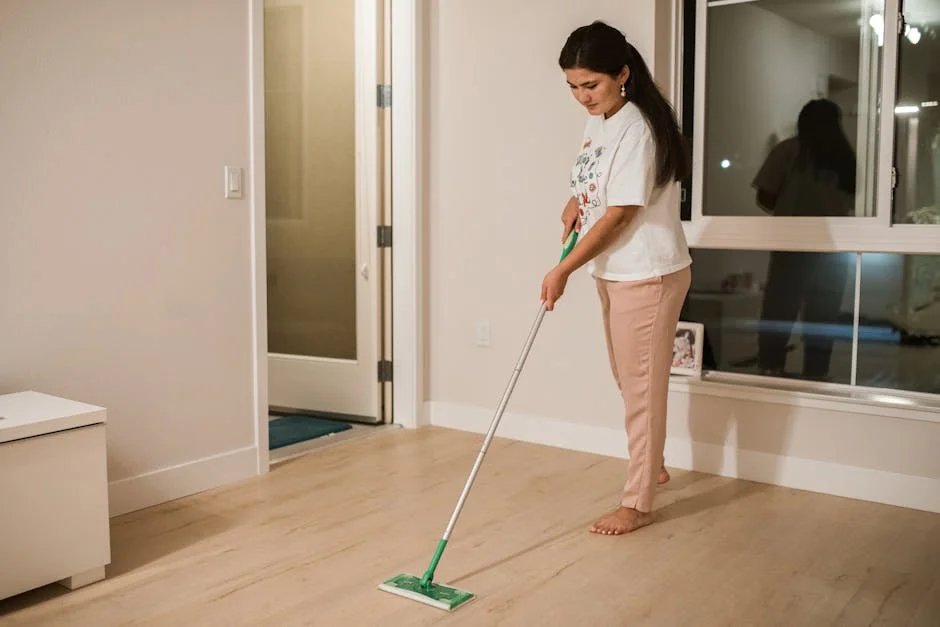
Wet mop designed for hardwood floors (such as Swiffer WetJet)
Microfiber dust mop for daily maintenance
Hardwood floor cleaner (such as Bona cleaner spray)
Baking soda and sponge for scuff mark removal
Microfiber mop heads that trap dust and grime effectively
According to Better Homes & Gardens, microfiber mop heads are recommended as they trap dust and grime effectively, and some mops may not require additional cleaning agents.
Step-by-Step Guide: How to Clean Hardwood Floors
Step 1: Daily Maintenance and Dust Removal
Daily maintenance is crucial for preventing scratches and maintaining your floor's appearance. According to Good Housekeeping, use a broom or microfiber dust mop to pick up dust, dirt, and crumbs to prevent scratching. This simple step prevents abrasive particles from being ground into the wood during mopping.
Better Homes & Gardens suggests using a mop treated with a dusting agent to pick up dust, dirt, and pet hair. Disposable electrostatic cloths can also be used for quick dusting between deeper cleaning sessions.
Step 2: Spot Cleaning Spills Immediately
One of the most important aspects of hardwood floor care is addressing spills quickly. According to Good Housekeeping, clean spills immediately—wet spills left to dry will dull the finish and attract additional dirt. Floorworld recommends addressing spills immediately to prevent absorption and staining, and to blot affected areas with a clean, absorbent cloth without spreading liquid.
Step 3: Vacuuming Before Wet Cleaning
Vacuuming is essential before any wet mopping. According to Martha Stewart, always vacuum hardwood floors before mopping because dirt and debris act as abrasives and can cause scratches if not removed before mopping. Vacuuming first ensures your cleaning solution works more effectively.
Good Housekeeping recommends using a canister vacuum with a long oval floor brush. If using an upright vacuum, turn off the rotating brush to prevent scratching the floor surface.
Step 4: Wet Mopping with Proper Technique
Wet mopping is where many people make mistakes. According to Good Housekeeping, spray small 3x3 foot areas with hardwood cleaner and pick up dissolved dirt with a microfiber mop.
Martha Stewart's experts provide detailed instructions: Mix warm water with a few drops of natural dish soap, ensure your mop is damp but not overly wet—wring out excess liquid thoroughly—and mop in small sections at a time. Finish with a dry mop to prevent water damage and ensure a streak-free finish.
Better Homes & Gardens emphasizes that you should saturate your sponge or rag mop, then wring it almost dry (it should feel only slightly damp). Damp-mop the floor while preventing standing water, and wipe up excess liquid immediately since standing water can damage wood surfaces.
Step 5: Drying Your Floors
Proper drying is critical to prevent water damage. Martha Stewart recommends finishing with a dry mop to prevent water damage and ensure a streak-free finish. In humid weather, use a ceiling fan or air-conditioner to speed drying.
Floorworld suggests allowing floors to air dry completely before foot traffic or replacing furniture, and keeping pets away from freshly cleaned floors until fully dry.
Best Cleaning Products for Hardwood Floors
Professional Product Testing Results
The Kitchn conducted comprehensive testing of five different hardwood floor cleaning methods on oak kitchen floors, rating each on ease of use, performance, and overall effectiveness.
Winner: Swiffer WetJet Hardwood Floor Cleaner
Overall rating: 4.5/5
Estimated cleaning time: 5 minutes (fastest of all methods)
Ease of use: 4/5
Performance: 5/5
Price: $32 for starter kit
Pros: No additional products needed, button-press operation releases optimal amount of solution, leaves floors clean and polished
Cons: Requires hard scrubbing for sticky residue, uses disposable plastic containers for solution refills
Runner-Up: Method Squirt + Mop Wood Floor Cleaner
Overall rating: 4/5
Estimated cleaning time: 6 minutes
Ease of use: 4.5/5
Performance: 3/5
Price: $6
Pros: Easy squirt application, pleasant spearmint scent, good texture for cleaning
Cons: Not powerful enough for stuck-on gunk
Third Place: Murphy Wood Cleaner
Overall rating: 3/5
Estimated cleaning time: 10 minutes (longest)
Ease of use: 4.5/5
Performance: 4/5
Price: $12
Pros: Best at deep-cleaning, restores shine, removes sticky residue easily
Cons: Requires bucket preparation, harder to control liquid amount
DIY Cleaning Solutions
If you prefer natural cleaning solutions, Martha Stewart recommends mixing warm water with a few drops of natural dish soap. Optional additions include olive oil for a natural shine.
The Kitchn's testing also evaluated DIY solutions:
Castile Soap & Essential Oil
Overall rating: 2.5/5
Recipe: 1/4 cup castile soap + few drops essential oil + 1 gallon warm water
Pros: Effectively cleans and lifts sticky residue
Cons: Requires more elbow grease, need to re-moisten mop multiple times
White Vinegar Solution
Overall rating: 2/5
Recipe: 1/2 cup distilled white vinegar + 1 gallon lukewarm water (or 1:16 ratio in spray bottle)
Pros: Easy to make, decent cleaning ability
Cons: Required multiple re-sprays, floors not shiny after cleaning, unpleasant smell
Critical Warnings: What NOT to Use on Hardwood Floors
Understanding what to avoid is just as important as knowing what to use. According to Good Housekeeping, do not use vinegar on hardwood floors—the acidic solution can damage or dull certain finishes.
Martha Stewart's experts warn against several products:
Standing water (can damage wood)
Overly wet mops
White vinegar (too acidic for hardwood)
Lemon juice (too acidic for hardwood)
Baking soda
Harsh or abrasive cleaners (leave residues and marks)
Better Homes & Gardens provides additional warnings:
Do not use ammonia
Do not use vinyl or tile floor cleaners
Do not use glass cleaner
Do not use steam cleaners (can cause cupping from residual water and excessive heat)
Avoid baking soda and lemon (can damage hardwood flooring)
Avoid vinegar on waxed or unfinished wood (causes discoloration)
How to Remove Scuff Marks and Stains
Light Scuffs
According to Good Housekeeping, light scuffs can be buffed out with a sock or clean tennis ball.
Heavy Scuffs
For more stubborn marks, Good Housekeeping recommends applying baking soda to a damp sponge, gently rubbing until the mark disappears, rinsing with a damp paper towel, and buffing dry.
Specific Stain Types
Better Homes & Gardens provides detailed guidance for different stain types:
Dark Spots and Pet Stains (soft-oiled finishes):
Rub with No. 000 steel wool and floor wax
If still dark: apply bleach or vinegar, let soak for 1 hour, rinse with damp cloth
Heel Marks:
Use fine steel wool to rub in floor wax
Oil-Based Stains:
Rub area with soft cloth and dish detergent to break down grease
Rinse with clear water; repeat if necessary
Let dry, then smooth raised grain with fine sandpaper
Water Marks or White Stains:
Rub with No. 000 steel wool and floor wax
For deeper stains: lightly sand floor, clean with fine steel wool and odorless mineral spirits
Maintaining Humidity Levels for Timber Floors
Proper humidity control is essential for timber floor longevity. According to Floorworld, maintain indoor humidity levels between 40-60% to prevent warping or cracking. Humidity fluctuations cause wood planks to expand or contract, potentially damaging your floors.
Floorworld recommends considering investing in a humidifier or dehumidifier for areas with extreme weather conditions.
Prevention: The Best Protection for Your Hardwood Floors
Establish a No-Shoes Policy
According to Good Housekeeping, adopt a no-shoes policy indoors—dirt and grit are abrasive and scratch floors over time.
Use Floor Mats and Rugs
Better Homes & Gardens recommends:
Place floor mats both outside and inside exterior doors
Set up boot removal areas in snowy/rainy weather to avoid water and de-icing agent damage
Create mudroom spaces with seating and shoe storage
Keep cleaning cloths near doors for quick puddle cleanup
Use area rugs in play areas to protect from toy scratches
Use pet-friendly rugs or mats in high-traffic areas to minimize wear
Furniture Protection
Better Homes & Gardens advises using floor protectors under furniture to prevent scratches and scuffs. Martha Stewart recommends attaching rubber pads to furniture legs.
Immediate Spill Response
Martha Stewart emphasizes wiping up spills immediately and keeping floors as dry as possible.
Professional-Grade Mopping Systems
Spin Mop Technology
The O-Cedar RinseClean™ Spin Mop & Two Bucket System represents modern mopping innovation. Key features include:
Dual-tank bucket system that separates clean and dirty water, ensuring you always mop with fresh water
Foot-activated pedal for hands-free wringing and controlled water release
Microfiber mop head that removes over 99% of bacteria with just water (tested against E. coli and Staph. aureus on pre-finished hardwood flooring)
Triangle-shaped mop head for easy maneuverability and corner cleaning
Telescopic handle adjusting up to 51 inches
Machine washable mop head refill
Safe for all hard floor surfaces, including hardwood
The O-Cedar RinseClean™ won the 2025 Real Simple "Smart Cleaning Award" and the 2025 Apartment Therapy "Cleaning Award."
Advanced Mopping Solutions
The Swiffer® PowerMop Multi-Surface Kit offers an all-in-one mopping system with impressive performance claims:
Delivers mop and bucket clean in half the time (compared to traditional mop and bucket, including cleaning and drying time)
Features 5X cleaning power compared to Swiffer WetJet pad layers
Mopping pads contain 300+ scrubbing strips that reach into grooves
Saves up to 70 gallons of water compared to traditional mopping methods
Fresh scent cleaning solution leaves freshness for up to 2 hours after initial use
Preparing for Deep Cleaning Sessions
Before beginning a deep clean, Floorworld recommends:
Remove all furniture and obstacles before cleaning for thorough access
Roll up and remove area rugs during cleaning
Keep rugs away from freshly cleaned floors until completely dry to prevent moisture retention and discoloration
Choosing the Right Cleaning Products
Manufacturer-Recommended Products
Floorworld recommends consulting specific cleaning instructions from suppliers like Quick-Step, Godfrey Hirst, and Australian Select Timber for product-specific recommendations. Recommended professional-grade products include:
Bona Australia - Professional-grade cleaners and accessories specifically formulated for timber floors
Enzyme Wizard - Uses natural enzymatic action to break down organic stains and odours
Safe Cleaner Certifications
Better Homes & Gardens recommends using Greenguard Gold Certified cleaners, which are safe for homes with kids and pets.
Common Questions About Hardwood Floor Cleaning
How Often Should I Mop My Hardwood Floors?
According to Martha Stewart, hardwood floors typically require once-a-week cleaning, with higher foot traffic areas needing more frequent attention. Good Housekeeping recommends deep cleaning every one to two months or as needed based on traffic patterns.
Can I Use Vinegar on Hardwood Floors?
No. According to Good Housekeeping, do not use vinegar on hardwood floors—the acidic solution can damage or dull certain finishes. Better Homes & Gardens warns that vinegar can dull certain hardwood flooring finishes and should always be tested in an inconspicuous spot before full application.
What's the Best Way to Prevent Streaks?
Martha Stewart recommends mopping with the grain of the wood for even distribution of cleaning solution, avoiding letting floors get too wet, and avoiding harsh or abrasive cleaners. Better Homes & Gardens suggests vacuuming or sweeping before mopping to prevent dust spreading, and using a soft cloth or towel to buff floors dry rather than air drying.
Should I Use a Steam Mop on Hardwood Floors?
No. Better Homes & Gardens explicitly warns against using steam cleaners, as they can cause cupping from residual water and excessive heat.
Professional Tips for Streak-Free Results
To achieve professional-looking results:
Vacuum thoroughly before mopping to remove all dust and debris
Wring out your mop until it's barely damp—excess water is the primary cause of streaks
Mop with the grain of the wood for even solution distribution
Work in small sections (3x3 feet) to maintain control
Buff dry immediately with a clean, dry cloth or mop
Use ceiling fans to speed drying in humid conditions
Conclusion: Mastering Hardwood Floor Cleaning
Cleaning hardwood and timber floors like a professional doesn't require expensive equipment or complicated techniques—it requires knowledge, the right tools, and consistent maintenance. By following these expert-approved methods, using appropriate cleaning products, and implementing preventive measures, you can keep your hardwood floors looking beautiful for years to come.
Remember the key principles: sweep and dust regularly, vacuum before mopping, use minimal moisture, and address spills immediately. Avoid harsh chemicals and excessive water, and always test new cleaning methods in inconspicuous areas first. With proper care and attention, your hardwood floors will maintain their natural beauty and provide lasting elegance to your home.
For professional-level results, invest in quality microfiber mops, use manufacturer-recommended cleaning products, and maintain consistent cleaning schedules based on your household's traffic patterns. Your hardwood floors are an investment in your home's beauty and value—treat them with the care they deserve.
You might also like...
Best 6 All-Surface Cleaners to Clean Your Home in 2026
Mar 8, 2026
Home Cleaning
Best 6 All-Surface Cleaners to Clean Your Home in 2026Top 5 Things You Need to Know When Moving Out in 2026 in Ontario
Mar 2, 2026
Home Cleaning
Top 5 Things You Need to Know When Moving Out in 2026 in OntarioMove Out Cleaning Costs in Ontario 2026: Complete Pricing Guide
Feb 27, 2026
Home Cleaning
Move Out Cleaning Costs in Ontario 2026: Complete Pricing GuideGreen Eco-Friendly Cleaning Guide
May 4, 2023
Home Cleaning
Green Eco-Friendly Cleaning GuideClean Your Car and Home: A Time-Saving Guide
Jul 10, 2024
Home Cleaning
Clean Your Car and Home: A Time-Saving GuideWhat Is a Home Deep-Cleaning Service?
Apr 19, 2023
Home Cleaning
What Is a Home Deep-Cleaning Service?