How to Take Care of Your Lawn in Ottawa: Full Guide
By Sal Ram · · Updated · 14 min read

Key Takeaways
- OMAFRA recommends soil pH between 6.0 and 7.0 for turf grass.
- Ottawa lawns need about 2.5 cm of water per week, applied deeply.
- Never cut more than one-third of the grass blade per mowing.
- Apply nematode grub treatment in mid-to-late July for best results.
- Mulching mowers can cut fertilizer needs by up to 25%.
Most Ottawa homeowners water their lawns wrong, mow too short, and fertilize at the wrong time, then wonder why their grass looks burnt by August.
Knowing lawn care in Ottawa is not the same as generic lawn advice you find on Canadian gardening sites. Ottawa's climate, soil composition, and seasonal patterns are distinct. A hard freeze in April and clay-heavy soil in Nepean and Kanata in July both demand a specific approach.
The problem runs deeper than aesthetics. A weak lawn costs you money. Weed control bills add up. Bare patches invite crabgrass and clover. And by the time you notice the damage, recovery takes an entire season.
The good news? A structured, season-by-season lawn care plan fixes almost every common issue and keeps your lawn thick, green, and resilient from the moment the snow melts until the ground freezes again.
This guide walks you through exactly that plan.
Why Ottawa lawns are different from the rest of Canada
Ottawa homeowners are working with a unique set of conditions that most generic lawn care guides completely ignore.
Cool-season grasses dominate Ottawa lawns. Kentucky bluegrass, tall fescue, and perennial ryegrass are the most common varieties because they thrive in temperatures between 15°C and 24°C. When summer pushes past 30°C, these grasses go into natural dormancy, and mismanaged watering during that window causes lasting damage.
Ottawa also sits on a mix of clay-heavy soils, especially in Nepean and Barrhaven, and sandy loam in eastern areas like Orleans. Clay soil compacts easily, reduces drainage, and suffocates grass roots without annual core aeration. Sandy soils drain too fast and require more frequent, lighter watering.
The role of Ottawa's climate zones
Ottawa spans Hardiness Zones 5b through 7a. Southern parts of Ottawa, including Nepean, Barrhaven, and Kanata, see milder winters and longer growing seasons. Northern regions face harder freezes and shorter windows for fertilization and overseeding.
Understanding your zone directly affects:
- When you apply your first spring fertilizer
- How late in the fall you can overseed
- Whether your grass needs winter dormancy prep or can sustain late-fall growth
Soil pH: The hidden factor
The Ontario Ministry of Agriculture, Food and Rural Affairs (OMAFRA) recommends a soil pH of 6.0 to 7.0 for most cool-season turf grasses. Acidic soils below 5.5 prevent grass from absorbing nutrients even when you fertilize correctly.
A simple soil test kit (available at most Canadian Tire or Home Hardware locations) costs under $20 and can save you hundreds in misapplied fertilizer.
How to take care of your lawn in Ottawa: A season-by-season plan
A year-round approach is the foundation of a healthy Ottawa lawn. Each season builds on the last. If you're just getting started, check out our beginner's guide to lawn care.
Skip the DIY and let a professional handle your lawn care. Call us today.
Season 1: Spring lawn care (April to May)
Spring is about recovery and preparation, not aggressive treatment. It's also a natural time to pair yard work with an indoor reset; our spring cleaning checklist covers the windows, baseboards, and appliances while you're focused on the lawn outside.
1. Wait for the right temperature. Don't rush onto your lawn the moment snow melts. Wait until daytime temperatures consistently reach 10°C and the soil is no longer saturated. Walking on wet, soft soil compacts grass roots.
2. Rake and dethatch. Remove dead grass, leaves, and debris that accumulated over winter. A dethatching rake or power dethatcher removes the layer of dead organic material blocking sunlight and water penetration. Thatch over 1.5 cm thick is a problem.
3. Apply spring fertilizer. Use a slow-release nitrogen fertilizer with an NPK ratio around 20-5-10 or 30-0-4. Apply once soil temperatures reach 10°C, typically late April to mid-May in southern Ottawa.
4. Overseed bare patches. Thin or bare areas from winter damage should be overseeded before weeds claim that space. Use a grass seed blend matched to your existing lawn type.
5. First mow of the season. Set your mower blade no lower than 7.5 cm (3 inches). Cutting shorter stresses new growth and exposes soil to weed seeds.
Season 2: Summer lawn care (June to August)
Summer in Ottawa is when most lawns fail because homeowners fight against the grass's natural biology.
1. Water deeply and infrequently. Ottawa lawns need about 2.5 cm (1 inch) of water per week. One or two deep watering sessions are far more effective than daily shallow sprinkles. Deep watering encourages roots to grow downward, building drought resistance.
2. Raise your mowing height. In summer heat, raise the mower deck to 8 to 10 cm. Taller grass shades the soil, reduces moisture loss, and naturally suppresses weeds.
3. Let dormant grass rest. If your lawn goes dormant (turns straw-brown in July heat), stop fertilizing and reduce foot traffic. Dormancy is a survival mechanism, not death. Resume watering at 2.5 cm per week to maintain dormancy without stressing roots further.
4. Watch for grubs. European chafer grubs and Japanese beetle larvae are a significant problem across southern Ottawa. Mid-to-late July is the optimal window for applying nematode treatments, Ottawa's preferred organic grub control solution. Watch for chinch bugs too, another common Ottawa summer lawn pest that causes straw-brown patches easily mistaken for drought stress.
Season 3: Fall lawn care (September to October)
Fall is the most critical season for Ottawa lawn care. The cooler temperatures and regular rainfall create ideal conditions for deep root development.
1. Aerate the lawn. Core aeration pulls plugs of soil from the ground, reducing compaction and allowing water, air, and nutrients to reach the root zone. This is especially important for clay-heavy Ottawa soils. Rent a core aerator or hire a professional for the best results.
2. Overseed aggressively. Fall overseeding is more effective than spring because weed competition is lower and soil temperatures remain warm while the air cools down. Spread seed at the recommended rate for your grass type and keep it moist for 2 to 3 weeks.
3. Apply fall fertilizer. A winterizing fertilizer with a higher potassium content (look for ratios like 12-0-18 or 0-0-50) strengthens cell walls and improves freeze tolerance. Apply in late September to mid-October.
4. Continue mowing until growth stops. Don't let the grass go into winter overgrown. A final mow to about 6 cm helps prevent snow mould, a fungal disease common in Ottawa winters.
Season 4: Winter preparation (November)
1. Clear the lawn. Remove toys, furniture, and debris before freezing. Objects left on the grass create dead patches by spring.
2. Avoid excessive foot traffic. Frozen grass blades are brittle. Walking repeatedly on frost-covered turf causes cellular damage and brown streaking by spring.
3. Store equipment properly. Drain fuel from mowers, clean blades, and store them in a dry location to ensure they're ready for spring.
Common lawn care mistakes Ottawa homeowners make
Even well-intentioned homeowners sabotage their lawns with these recurring errors.
Mistake 1: Mowing too short (scalping)
Scalping is the most damaging mistake on this list. Cutting below 6 cm removes too much leaf blade at once, weakens the root system, and exposes bare soil. That exposed soil is exactly where crabgrass and dandelions germinate.
The fix: never cut more than one-third of the blade length at any single mowing session. For the full technique, read our lawn mowing guide.
Mistake 2: Watering at the wrong time
Evening watering leaves the grass wet overnight, creating the perfect environment for fungal diseases like dollar spot and brown patch. Morning watering (between 6 and 10 AM) allows foliage to dry during the day and puts water in the soil before afternoon heat increases evaporation.
Mistake 3: Over-fertilizing in summer
Applying nitrogen fertilizer during summer heat spells encourages rapid, weak top growth while the grass is already stressed. This growth burns quickly in heat and leaves the lawn vulnerable. Save high-nitrogen products for spring and early fall.
Mistake 4: Skipping aeration on clay soil
Ottawa's clay-heavy soils compact significantly after just one season of foot traffic and rainfall. Without annual core aeration, water pools on the surface, roots suffocate, and even the best fertilizer program delivers poor results.
Mistake 5: Ignoring weed ID before treatment
Not all weeds respond to the same herbicide. Applying a broadleaf herbicide to creeping bentgrass or annual bluegrass does nothing. Identify the weed first, then choose a targeted control method. Many Ottawa homeowners benefit from a professional assessment here.
Hire professionals and avoid costly mistakes
Best practices and pro tips for a thick, green Ottawa lawn
Pro tip 1: Match your seed to your conditions
For shaded Ottawa yards, use a fine fescue blend. For high-traffic areas, choose turf-type tall fescue or Kentucky bluegrass mixed with perennial ryegrass for faster germination and recovery.
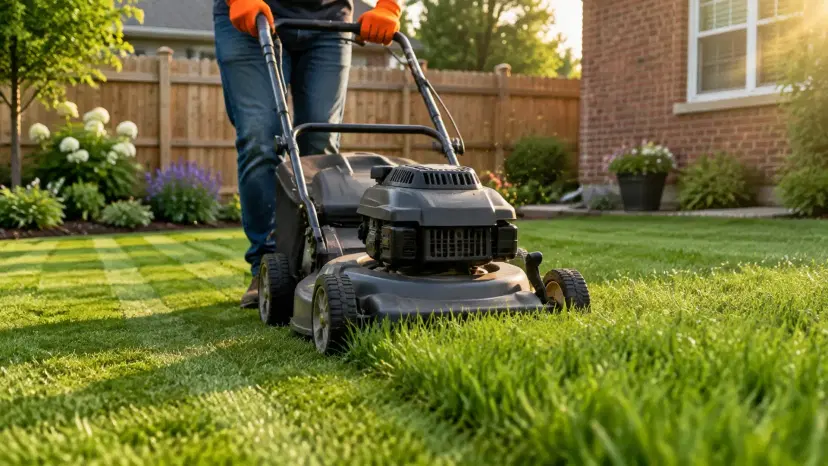
Pro tip 2: Use a mulching mower
A mulching mower returns finely chopped grass clippings to the lawn as a natural nitrogen source. This practice, called grasscycling, can reduce your fertilizer needs by up to 25%, according to the University of Guelph's Turfgrass Institute.
Pro tip 3: Test soil every two to three years
Soil chemistry shifts over time. A soil test through OMAFRA or a private lab tells you exactly what nutrients your lawn is lacking, so you stop guessing with fertilizer blends.
Pro tip 4: Calibrate your spreader
An uncalibrated fertilizer spreader is one of the fastest ways to burn stripes into your lawn. Walk the spreader at a steady pace and check coverage with water-sensitive test paper or a simple catch container to verify output.
Pro tip 5: Treat grubs before you see damage
By the time grass peels back like a carpet (the classic grub damage sign), the infestation is weeks old. Apply beneficial nematodes in late July as a preventive measure in areas with known grub pressure.
Our experience
After working with hundreds of homeowners across Ottawa, including Kanata, Nepean, and Orleans, one pattern stands out clearly: the lawns that struggle most are not the ones that received too little attention, but the ones that received the wrong attention at the wrong time. A homeowner who aerates in spring on sandy soil and fertilizes in August with a high-nitrogen product has done more harm than good despite significant effort. Ottawa's lawn care window is precise. The grass biology is predictable. When you align your schedule with what the grass actually needs at each stage of the season, results come faster and with far less frustration. That alignment is what separates a lawn that survives from one that thrives. We also provide regional lawn maintenance in Gatineau for homeowners just across the river.
DIY vs. professional lawn care in Ottawa: Which is right for you?
Many homeowners start with DIY and eventually realize that time, equipment costs, and learning curve make professional care a better long-term investment.

The honest answer is that a combination approach works best for most Ottawa homeowners: DIY weekly mowing and watering paired with professional fertilization, aeration, and overseeding programs.
Real results: What a proper lawn care schedule looks like
A homeowner in Barrhaven, Ottawa, had a lawn with roughly 40% bare patches, persistent dandelion growth, and compacted soil after three years of irregular care. Here's what a structured program achieved:
- Year 1, spring: Core aeration, overseeding with a Kentucky bluegrass and perennial ryegrass blend, slow-release fertilizer application
- Year 1, summer: Nematode treatment for grubs, consistent deep watering program
- Year 1, fall: Second aeration, aggressive overseeding, winterizer fertilizer
- Year 2, spring: 70% bare patch coverage recovered, dandelion population reduced by an estimated 60%
- Year 2, fall: Lawn at full density across entire property
The total investment was a structured two-year program. No miracle products. No expensive treatments. Just the right things done at the right time.
Get a lush, green Ottawa lawn without the guesswork
You now have the knowledge. But knowledge only gets results when it's applied consistently, at the right time, with the right products.
Ezi Home Services has been caring for Ottawa lawns for over 10 years. With a 4.7-star rating across 250+ verified reviews, we bring professional-grade results to homeowners across the region.
What our lawn care service includes
- Seasonal fertilization programs calibrated to your specific soil and grass type
- Core aeration and overseeding for thick, healthy turf
- Grub control, weed management, and winterization
Trusted by 250+ Ottawa homeowners. Rated 4.7 stars for a reason.
Conclusion
Knowing how to take care of your lawn in Ottawa comes down to three non-negotiable principles: work with the season, not against it; understand your soil before you treat it; and never skip fall preparation.
Spring recovery, summer discipline, and fall investment are what separate the lawns people compliment from the ones that blend into the neighbourhood. The science isn't complicated, but the timing is critical, and the mistakes are easy to make without a clear plan.
If you've been frustrated by patchy grass, persistent weeds, or lawns that look great in May but struggle by August, you now have a roadmap to fix that permanently.
Ready to stop guessing and start growing? Book a free lawn assessment with Ezi Home Services today and see what 10+ years of Ottawa lawn expertise looks like on your property.
How To
Frequently Asked Questions
When should I start lawn care in Ottawa?
Begin spring lawn care when daytime temperatures consistently reach 10 degrees C and the soil is no longer saturated, typically mid-to-late April in southern Ottawa. Avoid rushing onto the lawn too early as wet soil compacts under foot traffic, causing root damage that affects the entire growing season.
How often should I water my lawn in Ottawa?
Most Ottawa lawns need about 2.5 cm (1 inch) of water per week, applied in one or two deep sessions rather than daily light watering. Deep watering encourages roots to grow downward, which builds drought resistance and reduces the frequency of watering needed through summer.
What type of grass grows best in Ottawa?
Cool-season grasses perform best in Ottawa's climate. The most common and successful varieties are Kentucky bluegrass, perennial ryegrass, and tall fescue. For shaded areas, a fine fescue blend is the most reliable option. Avoid warm-season grasses like Bermuda or zoysia, which don't survive Ottawa winters.
When is the best time to fertilize a lawn in Ottawa?
Fertilize three to four times per year: once in early spring (late April), once in early summer (June), once in early fall (September), and once with a winterizer in late October. Avoid high-nitrogen fertilizers in peak summer heat, as they push weak growth during the grass's stress period.
How do I get rid of grubs in my Ottawa lawn?
Apply beneficial nematodes (specifically Heterorhabditis bacteriophora species) in late July to early August when soil temperatures are above 15 degrees C and grub larvae are in early stages. Water the lawn thoroughly before and after application. Nematodes are Ottawa's most effective and environmentally responsible grub control method.
How do I fix a dead or patchy lawn in Ottawa?
Dead patches usually come from compacted soil, grubs, or winter salt damage. Aerate first, then overseed with a cold-tolerant grass blend and top-dress with compost. Water deeply for 2-3 weeks while the new seed establishes - our lawn care team can diagnose the specific cause and build a recovery plan for your yard.
What are the best lawn care services available for hire in Canada?
The best lawn care services offer more than mowing: edging, trimming, fertilizing, aeration, and spring and fall cleanups. Look for insured crews, a set schedule, and recent local reviews. Ezi Home Services offers lawn care in Ottawa, Toronto, Gatineau, Montreal, and Surrey, from one-time cuts to weekly service.
Where can I find affordable weekly lawn mowing services near me in Canada?
Book a recurring weekly plan instead of one-off cuts, since most providers charge less per visit for a set schedule. Online platforms like Ezi Home Services show the price upfront and let you book weekly mowing in minutes. Ask whether trimming and clipping cleanup are included so the low price is not padded later.
ottawa
lawn maintenance
yard maintenance
Written by
Lawncare · Car Detailing
Sal Ram brings an engineer's problem-solving mindset to lawn care and car detailing — the same diagnostic instincts from his engineering background now go into reading turf problems and chasing paint-perfect finishes. Hands-on, technical, and big on getting the details right.