How to Clean a Fabric Couch at Home: Step by Step
By Samer Alsayegh · · Updated · 13 min read
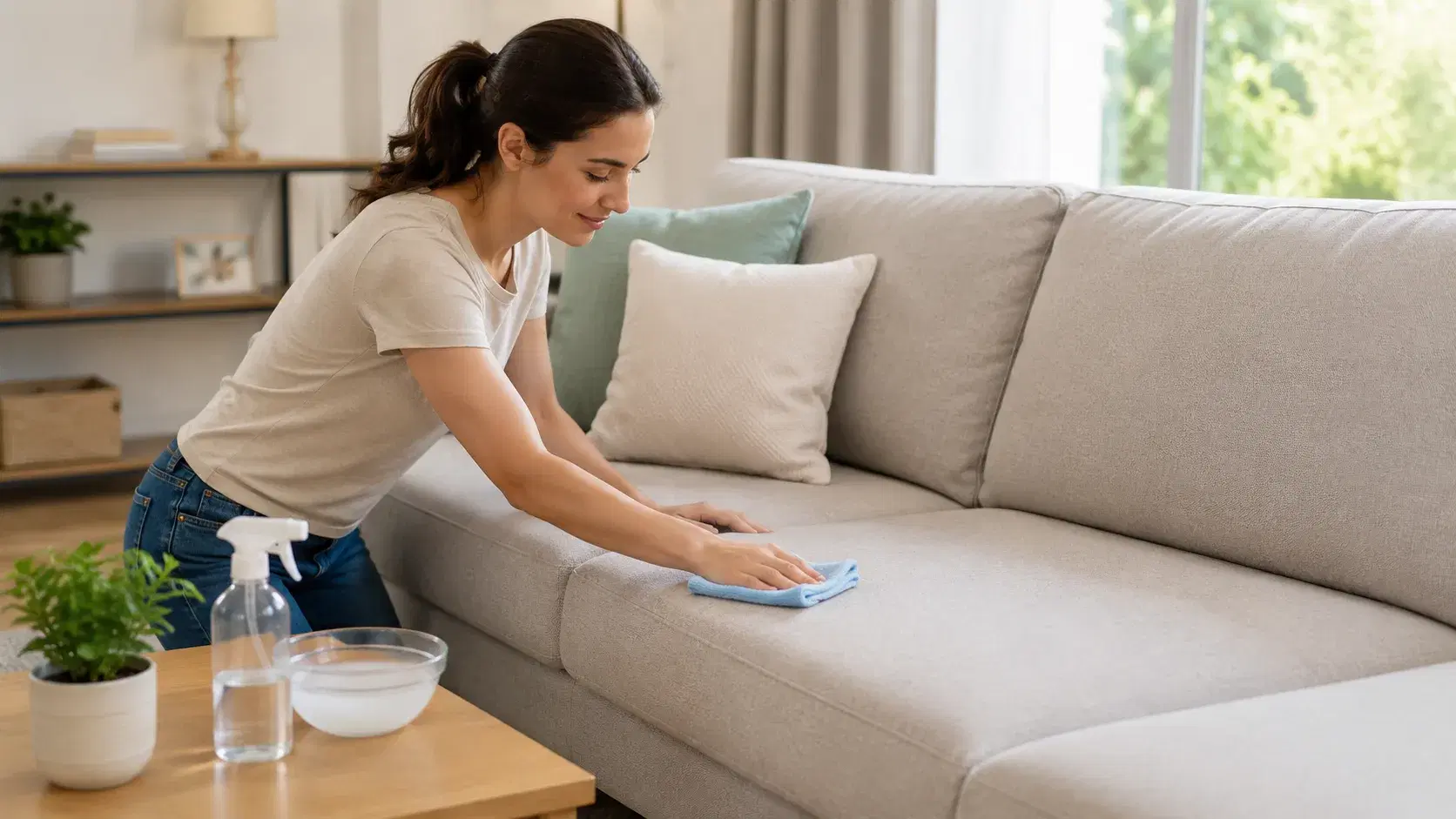
Key Takeaways
- Vacuum sofas weekly to cut down dust mites and allergens
- Deep clean fabric sofas every 3 to 6 months
- Check the tag code first: W means water-safe, S means solvent-only
- Baking soda deodorizes fabric after sitting 20 minutes to an hour
- Enzyme cleaners break down pet urine proteins better than masking sprays
To clean a material couch, check the tag code first (W, S, WS, or X). Vacuum every surface, sprinkle baking soda for 20 minutes, and vacuum again. For W or WS fabric, mist with 1 tsp dish soap, 1 tbsp white vinegar, and 1 cup warm water, blot with a white cloth, rinse, and air dry.
Check the cleaning label first
Before you use any cleaner on your sofa, check the tag. It will have a letter that tells you how to clean it safely.
- W: You can use water or a water-based cleaner. This is the easiest fabric to clean.
- S: Use only solvent-based (dry) cleaners. Do not use water. Water can cause shrinking, staining, or color damage.
- WS: You can use either a water-based cleaner or a solvent. Test a small hidden area first.
- X: Vacuum only. No liquid cleaners of any kind.
If you cannot find the tag or are unsure, test your cleaner on a small hidden spot first. Wait 10 minutes and check for any color change or damage before proceeding.
What you need to clean a fabric sofa
Gather these supplies before you start:
- Vacuum cleaner with upholstery and crevice attachments
- Soft-bristle brush
- Microfiber cloths (white, to avoid color transfer)
- Mild dish soap
- Warm water
- Baking soda
- Spray bottle
- White vinegar (optional, for odors)
- Rubbing alcohol (for microfiber sofas)
See our guide to the best cleaning cloths and sponges for what to blot with. Store-bought upholstery cleaners work too. Pick a water-based formula for W-coded fabric and a solvent formula for S-coded fabric, and always spot test first.
How to clean couch fabric: step by step
Step 1: Remove cushions and brush off debris
Take off all removable cushions. Use a soft brush to loosen any dust, crumbs, or pet hair sitting on the surface. This makes vacuuming much more effective.
Step 2: Vacuum the entire sofa
Use your vacuum's upholstery attachment to go over the entire sofa, the back, arms, sides, and base. Swap to the crevice tool to get into the seams, around buttons, and along the trim. Vacuum both sides of each cushion, too.
Do not skip this step. Vacuuming first removes the loose debris so your cleaning solution goes to work on the deeper dirt.
Step 3: Deodorize with baking soda
Sprinkle a generous amount of baking soda all over the sofa fabric. Let it sit for at least 20 minutes. For strong odors, leave it for up to an hour.
Baking soda pulls out moisture and neutralizes smells. After the wait time, vacuum it all up thoroughly.
Important note: Some natural fabrics like cotton or linen can react to baking soda's alkalinity. Always do a spot test on a hidden area first, especially on older or delicate fabric.
Step 4: Make a natural DIY couch cleaner
For sofas with a W or WS code, mix this simple water-based cleaner by hand:
- 1 teaspoon of mild dish soap
- 1 cup of warm water
- 1 tablespoon of white vinegar
Put it in a spray bottle and shake gently. This solution works well on most common stains and general fabric cleaning, no machine needed.
Step 5: Spray and blot the fabric
Lightly mist one section of the sofa at a time. Do not soak the fabric. Using a clean white microfiber cloth, blot the area in gentle circular motions instead of rubbing. Move to a clean part of the cloth as you go.
Work from the outside of any stain inward. Rubbing a stain spreads it and pushes it deeper into the fabric.
Step 6: Rinse the fabric
Dampen a clean cloth with plain water and lightly blot the cleaned area to remove any soap residue. Soap left in fabric can attract more dirt over time.
Step 7: Dry the sofa properly
Open windows or use a fan to speed up drying. Do not put cushions back or use the sofa until it is fully dry. Damp fabric can grow mold inside, which is hard to remove later.
Avoid placing the sofa in direct sunlight to dry, as this can fade the fabric color.
Rather hand it off? Get a house cleaning quoteHow to deep clean a fabric couch with an upholstery cleaner
For a deeper clean on W or WS fabric, a portable upholstery spot cleaner or a wet vac with an upholstery tool pulls out dirt that blotting leaves behind.
- Vacuum and pre-treat any stains first.
- Fill the machine with warm water and a small amount of upholstery shampoo made for it. Too much soap leaves a sticky residue.
- Spray and extract in slow, overlapping passes, one section at a time.
- Finish with a few dry passes (suction only) to pull out as much water as possible.
- Run a fan and let the sofa dry fully, usually 4 to 8 hours.
A handheld steam cleaner also works on W and WS fabric. Keep it moving so the fabric doesn't get soaked. Never use a machine or steam on S or X coded sofas.
How to dry clean a sofa at home
S coded fabric can't take water, so clean it with a solvent instead. Fill a spray bottle with rubbing alcohol or a solvent upholstery cleaner, mist lightly, and blot with a white cloth. Alcohol evaporates fast, so the fabric dries without water rings. Once dry, brush the fibres with a soft brush to restore the texture. Dry foam upholstery shampoo is another option, since it cleans with very little moisture. The same no-water approach applies when you're dry cleaning clothes at home.
How to clean sofa cushions
Sofa cushions take the most wear, so they need a little extra attention. Polyester? See how to clean a polyester couch.
- Removable covers: Check the care label. If the cover is machine washable, zip it off, wash on a cold, gentle cycle, and air dry. Put the cover back on while it is still slightly damp so it stretches back into shape.
- Non-removable covers: Clean them in place using the same spray-and-blot method above. Work on one sofa cushion at a time and stand it on its edge to dry so air reaches both sides.
- Foam inserts: Never soak the foam. If an insert smells, sprinkle it with baking soda, leave it for an hour, and vacuum it off.
- Flat or lumpy cushions: Fluff and rotate them every week so they wear evenly.
How to clean a microfiber sofa
Microfiber is a popular choice for families because it is soft and affordable. But it needs a slightly different approach.
- Check the tag. Most microfiber sofas are S coded, meaning no water.
- For S coded microfiber: Fill a spray bottle with rubbing alcohol. Lightly mist the fabric and blot with a white cloth.
- For W coded microfiber: Use a small amount of dish soap mixed with warm water, applied with a spray bottle.
- Once the fabric dries, use a soft-bristle brush to fluff the fibers back up. This prevents that stiff, flat look after cleaning.
How to remove pet stains and odors
Pet accidents on a sofa need fast action. The longer you wait, the harder the stain is to remove.
- Blot up as much of the liquid as you can right away. Use paper towels and press firmly.
- Mix equal parts water and white vinegar and spray it on the stain.
- Let it sit for 5 minutes, then blot again with a clean cloth.
- Sprinkle baking soda on the damp area and let it dry completely before vacuuming.
For set-in pet odors, an enzyme-based cleaner works best. Enzyme cleaners break down the proteins in urine, eliminating the smell at the source rather than just masking it. For more on stubborn pet odors, see our guide on removing pet odor and stains from a fabric couch.
How to remove common stains from a fabric couch
Many of these same techniques work on carpet too. See our full carpet stain removal guide for stain-specific tips beyond upholstery.
| Stain | Cleaner | Method |
|---|---|---|
| Coffee or tea | Dish soap and cold water | Blot, apply, blot, rinse. Never use hot water, it sets the stain. |
| Grease or oil | Baking soda, then dish soap | Let baking soda absorb for 15 minutes, vacuum, then spot clean. |
| Ink | Rubbing alcohol | Dab on a white cloth and blot from the outside in. Don't rub. |
| Red wine | Cold water and dish soap | Blot fast, apply, blot. Baking soda absorbs what's left. |
| Water rings | Distilled water | Dampen the whole panel evenly, seam to seam, then dry with a fan. |
| Old, set-in stains | Enzyme or oxygen cleaner | Apply, wait 10 to 15 minutes, blot, and repeat. |
Water stains: Rings form when one spot dries faster than the fabric around it, leaving a tide line of minerals and dirt. Spot-cleaning the ring alone usually makes a new one, so dampen the whole cushion or panel lightly and evenly with distilled water and dry it quickly with a fan. W or WS fabric only.
Old stains: Set-in stains need longer contact time. On W coded fabric, apply an enzyme cleaner (for food, sweat, or pet stains) or an oxygen-based upholstery cleaner, let it sit 10 to 15 minutes, then blot and rinse. It may take two or three rounds. If it hasn't moved after that, a professional extraction is the next step.
How often should you clean your sofa?
Your sofa traps dust mites, pet dander, pollen, crumbs, and body oils. According to the American Lung Association, dust mites and allergens cling to upholstered furniture and can trigger allergies and asthma attacks, and the U.S. Environmental Protection Agency recommends vacuuming upholstered furniture regularly to reduce them. Here is a simple schedule to follow:
- Weekly: Vacuum cushions and surfaces to remove loose dust and debris
- Monthly: Spot clean any visible stains or marks
- Every 3 to 6 months: Do a full deep clean of the entire sofa
- Once or twice a year: Consider a professional sofa cleaning, especially in homes with pets or children
If you have pets that sit on the couch or you eat on the sofa often, clean it more frequently.
Tips to keep your sofa clean longer
These habits help your sofa stay fresh between deep cleans:
- Vacuum weekly, even if it looks clean
- Rotate and flip cushions every few weeks for even wear
- Use a throw blanket or slipcover in high-traffic sitting areas
- Clean spills immediately; the faster you act, the less chance of a stain
- Keep pets to one designated spot on the sofa, or use a washable pet cover
- Avoid eating on the sofa when possible
What do professional cleaners use to clean couches?
Most professional upholstery cleaners use hot water extraction for W coded fabric. They pre-treat stains, apply a pH-balanced upholstery shampoo, then rinse and extract with a commercial machine that pulls out far more water than home units, so the sofa dries faster. For S coded fabric, they switch to solvent-based dry cleaning.
Call a professional for:
- Deep-set stains that will not come out with home methods
- Strong, persistent odors from pets, smoke, or mold
- Delicate or expensive fabric that you do not want to risk damaging
- A sofa with an X or S code that needs solvent treatment
Ezi's carpet cleaning includes upholstery steam cleaning, and you can add it to a deep cleaning when the whole room needs attention.
Rather hand it off? Get a house cleaning quoteConclusion
Cleaning your fabric sofa at home is not complicated, but it does take the right steps and a little patience. Start by checking the care code, then vacuum, deodorize, and spot clean using the right solution for your fabric type. Stay on top of it with a simple weekly routine and your sofa will look and smell better for much longer. When DIY is not enough, a professional clean is always worth it, especially for stubborn stains, allergens, or delicate upholstery.
How To
Frequently Asked Questions
Can I use Dawn dish soap to clean my couch?
Yes, on W or WS coded fabric. Mix 1 teaspoon of Dawn or another mild dish soap into 1 cup of warm water, mist lightly, and blot without soaking the fabric. Rinse with a damp cloth so no soap residue is left behind. Don't use it on S or X coded couches.
How to clean a fabric sofa with baking soda?
Vacuum the sofa first, then sprinkle baking soda over all fabric surfaces and leave it for 20 to 60 minutes. It absorbs odors and moisture. Vacuum it up thoroughly with the upholstery attachment. Spot test first on cotton, linen, or older fabric.
What do professional cleaners use to clean couches?
Most professionals use hot water extraction with a pH-balanced upholstery shampoo for W coded fabric, and solvent-based dry cleaning for S coded fabric. They pre-treat stains first, then extract dirt and moisture with a commercial machine so the sofa dries faster.
How to dry clean a sofa at home?
For S coded fabric, use a solvent cleaner or rubbing alcohol instead of water. Mist lightly, blot with a white cloth, and brush the fibres once dry. Dry foam upholstery shampoo also works because it uses very little moisture.
How do I get rid of the smell from a sofa without washing it?
To remove sofa odors, sprinkle baking soda on the fabric, leave it for 30–60 minutes, then vacuum. For pet odors, use an enzyme cleaner.
Can I steam clean a fabric couch at home?
Yes. Steam cleaning is safe for W and WS coded sofas, but avoid using it on S or X coded fabrics.
How long does a fabric sofa take to dry after cleaning?
A fabric sofa usually dries within 2–6 hours. Good airflow or a fan can help speed up drying.
How often should I deep clean my sofa?
Deep clean your sofa every 3–6 months, or every 2–3 months if you have pets, children, or allergies.
What's the best way to clean a fabric couch?
Check the tag code, vacuum every surface, then sprinkle baking soda, wait 20 minutes, and vacuum again. On W or WS fabric, mist lightly with a mix of dish soap, white vinegar, and warm water, blot with a white cloth, rinse with a damp cloth, and let the couch air dry fully before anyone sits on it.
What is the best sofa cleaner for fabric couches?
It depends on the tag code. For W or WS fabric, a homemade mix of 1 teaspoon dish soap, 1 tablespoon white vinegar, and 1 cup warm water lifts most stains. For S fabric, use rubbing alcohol or a solvent upholstery cleaner. X fabric gets vacuuming only. Spot test any sofa cleaner on a hidden area first.
sofa cleaning
fabric sofa
upholstery cleaning
home cleaning tips
stain removal
Explore more
Written by
Home Cleaning · Maintenance
Co-founder of Ezi Services and Draftbase, entrepreneur and builder focused on SaaS, AI, and growth — I turn ideas into scalable businesses using technology, automation, and relentless execution.