Pressure Washing Guide: Safe PSI for Driveways, Siding, and Decks
By Samer Alsayegh · · 12 min read
Key Takeaways
- Wash siding once a year, driveways every 6 to 12 months.
- Use 2,000 to 2,700 PSI on concrete, but not on new pours.
- Soft washing suits wood, stucco, and shingles, not high pressure.
- 97% of US Realtors say curb appeal matters in attracting a buyer.
- Spring and fall, above 4°C, are the best times to wash.
Pressure washing removes years of dirt, algae, and grime in a single afternoon. A machine blasts water at 1,500 to 4,000 PSI to strip away what a garden hose can't touch. Most homes need their siding washed once a year and their driveway washed every 6 to 12 months. Damp, shaded yards need it more often. Done right, it's one of the cheapest ways to make a tired house look new again.
A dirty driveway is easy to ignore. You stop noticing it until you park a clean car next to it. Algae streaks show up on the siding. Moss fills the cracks in the patio stones. None of it happens overnight. But it adds up fast. Ezi Home Services sees this every spring. Homeowners think it just looks old. Really, it just needs a wash.
What pressure washing actually does
A pressure washer pushes water through a narrow nozzle. The water comes out fast. A garden hose gives a gentle trickle. This turns that trickle into a tool that strips off dirt, mildew, and old paint. Home units start around 1,500 PSI. Bigger gas-powered rigs can hit 4,000 PSI, per Consumer Reports. A garden hose runs at about 50 PSI.
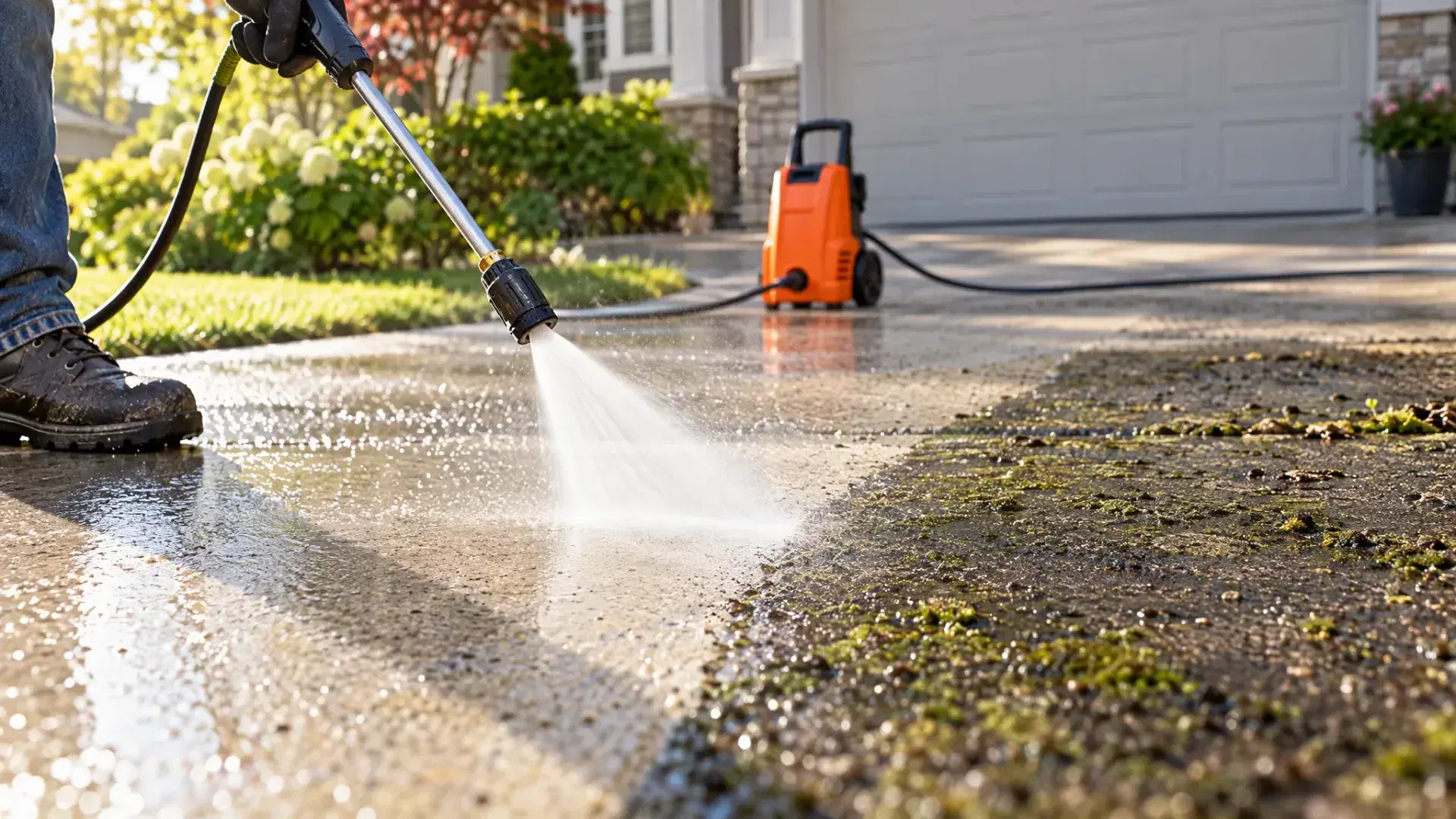
The common DIY mistake is assuming more pressure is always better. It isn't. For a concrete driveway, aim for 2,000 to 2,700 PSI with a wide 25 to 40 degree fan tip. Hold the wand 20 to 30 cm (8 to 12 in.) from the surface. Go much higher and you risk etching the concrete or carving grooves into it.
Vinyl siding and asphalt shingles are even more sensitive. The Asphalt Roofing Manufacturers Association says never to use a power washer on a shingle roof. Too much force loosens the shingle's protective granules and shortens roof life. That's why service providers often reach for two different techniques, not one.
Pressure washing vs. soft washing: know the difference
Pressure washing and soft washing solve the same problem. They use opposite tools. Pressure washing relies on brute force. Water at up to 4,000 PSI does the scrubbing. Soft washing drops the pressure to 100 to 500 PSI. It leans on a cleaning solution instead. That solution breaks down mould, algae, and moss at the root.
The surface decides which method you need. Hard, solid materials like concrete, stone, brick, and sealed pavers can handle full pressure. Porous or delicate surfaces do better with the gentler chemical-first approach. That includes wood siding, stucco, painted trim, and asphalt shingles.
Use the wrong method on the wrong surface and you'll pay for it. Stripped paint. Splintered wood. A driveway with an obvious clean patch in the middle of an otherwise faded slab. A full exterior job often blends both techniques. Hard pressure hits the concrete. Soft washing handles the siding. That combo restores a full exterior without damaging any of it. This is where a professional's judgment earns its keep. They match the technique to the surface before the first drop of water hits it.
What washing pressure does each surface need?
The right washing pressure depends on the surface. Hard stone and concrete can take 2,000 PSI or more. Siding and wood need far less. Here's a quick guide:
| Surface | Safe pressure (PSI) | Nozzle tip | Notes |
|---|---|---|---|
| Concrete driveway or walkway | 2,000 to 2,700 | 25° to 40° | Skip pours under 12 to 24 months old |
| Brick, stone, or masonry | 2,000 to 3,000 | 25° to 40° | Go easy on old or crumbling mortar |
| Interlocking pavers | 1,500 to 2,500 | 25° to 40° | Re-sand joints after washing |
| Vinyl, metal, or fibre-cement siding | 1,300 to 2,000 | 40° | Spray down, never up under the laps |
| Wood deck or fence | 500 to 1,200 | 40° | Spray with the grain |
| Car or truck | 1,200 to 1,900 | 40° | Keep the wand at least 30 cm (12 in.) back |
| Asphalt shingles, stucco, painted wood | Soft wash only (100 to 500) | Wide fan | Let a cleaning solution do the work |
Two rules cover most of it. Start at the low end and step up only if the dirt won't move. And keep the wand moving. Holding it in one spot is how most etching and wand marks happen.
The tip matters as much as the PSI. A 0° tip shoots a pencil-thin jet. It can cut wood and even skin. Most home jobs never need anything narrower than 25°.
Is pressure washing the same as power washing?
Not quite, though most people use the terms the same way. Pressure washing uses cold water at high pressure. Power washing uses the same high pressure with heated water. The heat breaks down grease, oil, and salt faster, the same way hot water helps with dishes.
So power washing shines on oily garage floors and greasy driveway stains. But that heat can harm some surfaces, like composite decking or painted trim. For most homes, a cold-water pressure wash plus the right cleaner is all you need.
Driveways, decks, and patios: what each surface needs
Concrete driveways take the most abuse. They also take the most pressure. Oil stains, tire marks, and years of dirt respond well to a 2,000 to 2,700 PSI wash. A degreaser pre-treatment helps on stubborn spots. Skip pressure entirely on driveways poured in the last 12 to 24 months. New concrete hasn't fully cured. High-pressure water can pit it or change its colour before it's ready.
Wood decks need a lighter touch. Start low, around 500 to 1,200 PSI. Always spray with the wood grain, never across it. Spraying across it can cut into the wood. A deck in heavy shade grows mildew faster. So does one that sits close to trees. It may need a rinse every year instead of every two.
Patios made of natural stone or pavers sit in between. Moderate pressure lifts moss from the joints. It won't blast out the sand that holds pavers in place. Re-sand the joints after washing if any washes out. Skip that step and you'll be fighting weeds in the cracks by midsummer.
Ezi's exterior cleaning service matches the technique to each surface. A driveway gets the pressure it can handle. Siding gets a gentler pass.
Why this matters: mould and moisture
Most people see pressure washing as a look-good job. It's more than that. It's also a moisture-control job. The Government of Quebec notes that mould needs water to grow. Standing water, leaks, and wet materials all help it spread. Algae and mould both love surfaces that stay damp too long. Think shaded siding, clogged gutters, or a patio with poor runoff.
Washing away that buildup once a year does more than improve curb appeal. It clears away the grime that traps moisture against your siding and foundation. The same Quebec guide advises checking your roof, siding, gutters, and drains once a year. Keep gutters clear. Trim back shrubs near the house. Wash once a year. You're addressing the cause, not just the symptom.
How much does pressure washing add to curb appeal?
Curb appeal isn't just a feeling. It shows up in how buyers actually behave. In the National Association of Realtors' 2023 Remodeling Impact Report, 97% of US Realtors said curb appeal matters in attracting a buyer. And 92% have told sellers to improve their curb appeal before listing. A clean driveway and siding are the cheapest place to start.
Those figures come from the US market. But the same snap judgment happens at the curb here too. It doesn't matter if it's an Ottawa bungalow or a Toronto semi. Maybe you're listing your home. Maybe you're just tired of the algae streaks. Either way, this is one of the lowest-cost projects on the list.
How water use compares to a hose
A garden hose alone can't shift dirt once it's baked in. It doesn't matter how long you spray. Home pressure washers typically use about 6 to 9 litres (1.5 to 2.5 US gallons) of water per minute at full pressure. A standard garden hose can run 30 litres a minute or more, with no added force behind it. You use less water. The pressure does work a hose just can't. That's part of why 30 minutes with a pressure washer beats an hour of hosing and scrubbing.
Why most homeowners hire this out instead of DIY
Renting a pressure washer looks simple. Then you're on a ladder, aiming a 3,000 PSI wand at your own siding. Consumer Reports, citing US Consumer Product Safety Commission data, reports that about 6,000 people went to the emergency room with pressure washer injuries in 2014. Cuts were the most common injury, followed by bruises, punctures, and eye injuries. Add electrical risk near outdoor outlets. Add the real chance of damaging your siding, shingles, or deck boards with the wrong nozzle. The appeal of a $150 rental starts to shrink fast.
A trained provider already knows the right PSI and tip for each surface. They carry insurance to cover it if something goes wrong. For most homeowners, that judgment call is worth more than the rental fee saved.
Methodology
PSI ranges and injury figures come from Consumer Reports, which cites US Consumer Product Safety Commission data. Surface and nozzle tips reflect common manufacturer guidance. Roof guidance comes from the Asphalt Roofing Manufacturers Association. Moisture and mould guidance comes from the Government of Quebec. Curb appeal figures come from the National Association of Realtors. Canadian climate notes reflect typical conditions across Ezi's Ontario and Quebec service areas.
Best time of year for pressure washing in Canada
Spring and fall are the best windows for exterior cleaning in most of Canada. Spring washing clears away winter salt, sand, and grime before it stains driveways and siding for good. Fall washing clears leaves and organic buildup before snow and ice lock it in place. A clean driveway also makes winter easier. See our tips on stopping icy, slippery driveways and walkways.
Temperature matters more than the calendar. Most service providers avoid washing below about 4°C. Water that seeps into small cracks in concrete or siding can freeze and expand, which turns a hairline crack into a real one. If you're booking a wash in Ottawa or Gatineau, aim for a stretch of mild days, not a cold snap right after a thaw.
When to call a professional
Some jobs are past the point where a garden hose helps. Deep oil stains on the driveway. Algae climbing past the second storey of your siding. A deck that hasn't been touched in two years. Ezi's exterior cleaning service matches the right pressure to each surface. Concrete, siding, decks, and patios each get the right touch. You get the full result, with no etched concrete or stripped paint.
Homeowners book pressure washing in Ottawa, Toronto, Montreal, and Gatineau the same way they book a deep clean. Pick a time. Get an upfront price. Let a vetted provider handle the equipment. You can book in a few taps.
Match the pressure to the surface every time
A clean exterior is a fast, cheap way to make a home look good. It's a small job with a big payoff. That's true if you're selling soon. It's also true if you're just tired of the algae on your siding. Match the pressure washing PSI to the surface. Treat mould and moisture as the real problem hiding under the dirt. Wash driveways and siding on a yearly schedule. Does the job involve a ladder, a shingle roof, or a big yard? Booking a provider is usually faster and safer than renting gear for a one-time job.
Frequently Asked Questions
How often should you pressure wash your house?
Wash vinyl or metal siding once a year to stop algae and mildew from building up. Wood siding only needs a wash when you see dirt or mould. Homes in damp, shaded yards may need a wash every 6 to 8 months, not once a year.
What PSI is safe for a concrete driveway?
Use 2,000 to 2,700 PSI for most concrete driveways, with a wide 25 to 40 degree fan tip. Hold the wand 20 to 30 cm (8 to 12 in.) away. Going much higher risks etching the surface or leaving visible wand marks. Skip pressure washing on driveways poured in the last 12 to 24 months, since new concrete hasn't fully cured.
What's the difference between pressure washing and soft washing?
Pressure washing uses high force, up to 4,000 PSI. It blasts dirt off hard surfaces like concrete and brick. Soft washing uses 100 to 500 PSI plus a cleaning solution. It lifts mould and algae from softer surfaces like wood siding, stucco, and shingles, with no damage.
Can pressure washing damage your house?
Yes. Too much pressure or the wrong nozzle can etch concrete, strip paint, or gouge wood siding. Asphalt shingles are most at risk. The Asphalt Roofing Manufacturers Association says never to power wash a shingle roof, since it loosens the protective granules. Matching the pressure and technique to the surface avoids this.
Is pressure washing worth it before selling a house?
Yes. In a 2023 National Association of Realtors report, 97% of US Realtors said curb appeal matters in attracting a buyer. And 92% have told sellers to improve curb appeal before listing. A clean driveway and siding are a low-cost place to start.
When is the best time of year to pressure wash in Canada?
Spring and fall are the best windows, once temperatures stay reliably above about 4°C. Spring washing clears winter salt and grime. Fall washing removes leaves and buildup before snow and ice lock it in.
pressure washing
exterior cleaning
driveway cleaning
soft washing
curb appeal
home maintenance
Explore more
Written by
Home Cleaning · Maintenance
Co-founder of Ezi Services and Draftbase, entrepreneur and builder focused on SaaS, AI, and growth — I turn ideas into scalable businesses using technology, automation, and relentless execution.