How to Clean Walls and Ceilings Without Damaging Paint
By Samer Alsayegh · · Updated · 8 min read
Key Takeaways
- Only dust flat paint. Do not wash it wet.
- Satin, eggshell, and gloss paint can be washed with soap.
- HEPA filters trap 99.97% of tiny dust bits.
- Dust walls and ceilings each month. Wash them twice a year.
- Work top to bottom. Runoff then lands on spots not yet clean.
Whether you can wash a wall or ceiling comes down to one thing: the paint finish. Flat paint should only be dusted or spot-cleaned dry, while satin, eggshell, semi-gloss, and gloss finishes can handle a full wash with mild soap and water, according to paint manufacturer guidance from Sherwin-Williams and Behr. Get that one distinction wrong and you can strip color right off the wall.
It's easy to dust every wall and ceiling in your home; it's much harder to wash them without leaving streaks, damaging the finish, or missing the corners where grime actually builds up. People search this job as washing walls, wall cleaning, or how to clean walls at home. It's all the same task, and the finish test below decides how far you can safely take it. This guide walks through how to tell your paint types apart, gather the right tools, and wash a room from ceiling to baseboard without redoing your paint job by accident.
Why does paint finish matter before you wash?
Flat and matte paints have a porous, non-reflective surface that absorbs water along with whatever soap you're using, which lifts pigment and leaves dull patches. If your ceilings or walls are flat-painted, stick to a dry microfiber duster or a barely damp cloth for spot cleaning, and plan to repaint scuffed areas rather than scrub them.
Satin, eggshell, semi-gloss, and gloss finishes cure harder and seal the surface, so they tolerate regular washing. Most kitchens, bathrooms, and trim use one of these finishes precisely because they hold up to moisture and grease. If you're not sure what's on your walls, wipe a hidden spot (behind a door or inside a closet) with a damp cloth first and check for color transfer.
Wallpaper is its own category. Most modern wallpaper is vinyl-coated and can be lightly wiped, but water can loosen seams and adhesive on paper-backed or fabric styles, so dust instead of wash unless the manufacturer says otherwise.
What tools do you need to clean walls and ceilings?
Gather everything before you start so you're not dripping down a ladder mid-job looking for a rag. You'll want:
- **Two buckets: **one for soapy wash water, one for clean rinse water.
- **A soft sea sponge: **gentler on painted surfaces than a synthetic scrub sponge.
- **A soft-bristle duster or HEPA vacuum brush attachment: **a HEPA filter captures 99.97% of particles down to 0.3 microns instead of blowing dust back into the air, which matters if anyone in the house has allergies.
- **Mild dish soap or a no-rinse wall cleaner, **rubber gloves, safety goggles for ceiling work, and a step stool or ladder.
How do you wash your ceiling and walls step by step?
Clear the room first: take down picture frames and mirrors, cut power to ceiling fans or light fixtures, and pull furniture away from the walls. Then work from the top down.
- Dust the ceiling and walls fully before introducing any water, so you're not turning dry dust into mud.
- Mix warm water with a small amount of dish soap in one bucket; fill the second bucket with clean rinse water.
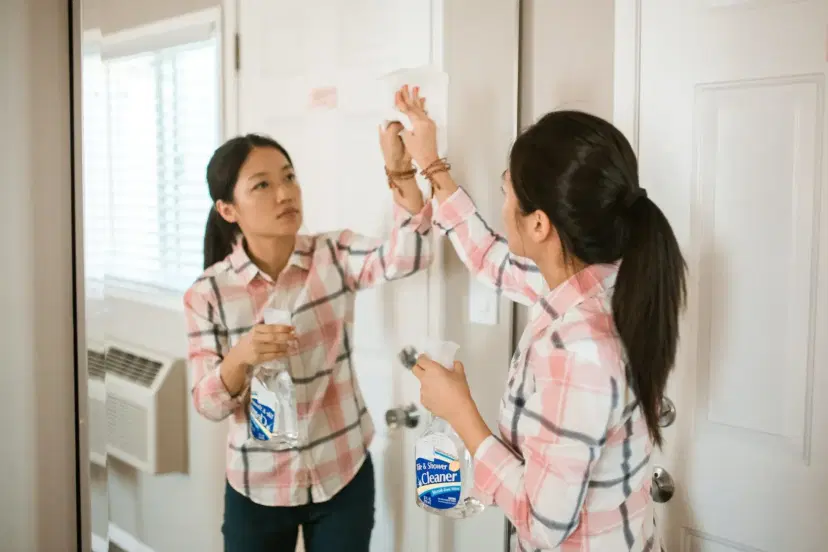
- Working in three- to four-foot sections, dip the sponge in soapy water, wring it out well, and wash in a circular motion, rinsing the sponge between sections.
- Move to the walls next, working top to bottom so dirty runoff lands on sections you haven't cleaned yet. Use a toothbrush or grout brush for corners, switch plates, and where the wall meets the baseboard.
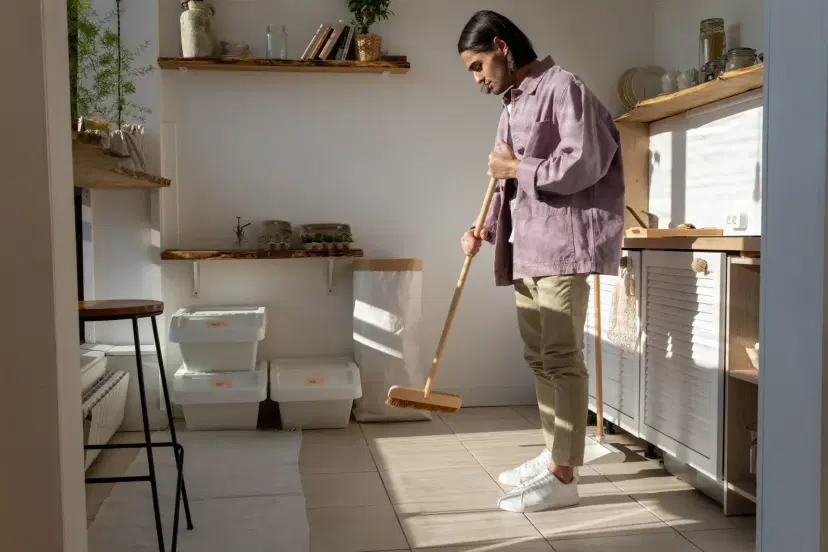
- Finish by wiping baseboards and mopping the floor, since a deep cleaning service covers exactly this kind of top-to-bottom detail if you'd rather hand it off.
What's the best thing to use to clean walls?
For washable finishes, warm water with a small squirt of mild dish soap beats every specialty wall cleaner on the shelf. It cuts grease without leaving the streaky film that all-purpose sprays sometimes do. Skip anything with bleach or ammonia on colored paint, since both can lighten or discolor the finish. If you're washing walls in a kitchen with heavy grease buildup, add a spoonful of baking soda to the soapy water for extra cutting power before you reach for a stronger degreaser.
How do you clean a ceiling without making a mess?
Set up a sturdy step ladder instead of stretching from the floor. Cover furniture and floors with a drop cloth, since drips come straight down. Start with a dry pass using a microfiber mop or duster to pull off cobwebs and loose dust.
Then fill a spray bottle with warm water and a few drops of dish soap. Lightly mist a small section, wipe with a damp microfiber mop, and move on before it drips. For smoke or kitchen grease on a ceiling, add a little white vinegar to the spray bottle. Popcorn or textured ceilings are the exception: skip wet cleaning methods and stick to a dry brush attachment on the vacuum, since water can loosen the texture.
Methodology
Paint-finish handling in this guide follows manufacturer care guidance from Sherwin-Williams and Behr on washable versus flat finishes. Dust and allergen recommendations reference EPA indoor air quality guidance on damp-dusting and HEPA filtration, and vacuum filtration figures come from certified HEPA filter specifications (99.97% capture at 0.3 microns).
When it's worth calling a professional
High ceilings, textured surfaces like popcorn ceilings, or walls with years of built-up grease in the kitchen are where DIY washing gets risky, both for your paint and for you on a ladder. Ezi's general cleaning service covers routine wall and surface dusting, while a deep clean tackles the grease, grime, and hard-to-reach corners a monthly dusting doesn't.
Conclusion
Clean walls and ceilings come down to knowing your paint finish, working top to bottom, and rinsing often. Get those three right and you'll avoid the two most common mistakes: streaked flat paint and grease that just gets pushed around instead of removed. Dusty walls usually mean dusty window coverings too, so see how to clean blinds by blind type next. If the job's bigger than a weekend, book a cleaning with Ezi and let a vetted service provider handle it.
Frequently Asked Questions
Can you wash flat-painted walls?
Flat paint should be spot-cleaned with a dry or barely damp cloth, not scrubbed, because the porous, matte finish lifts pigment with it when wet. Paint manufacturers including Sherwin-Williams and Behr recommend washing only satin, eggshell, semi-gloss, or gloss finishes, which cure to a wipeable surface.
How often should you clean your walls and ceilings?
Dust walls and ceilings monthly and do a full wash twice a year, since the EPA notes that regular damp-dusting keeps settled dust and allergens from recirculating into the air. Kitchens and bathrooms, which collect grease and moisture, often need spot-washing more often.
What's the safest way to clean wallpaper?
Most wallpaper, especially vinyl-coated styles, should only be dusted or lightly wiped with a barely damp cloth, never scrubbed or soaked. Water can loosen the adhesive or seams, so test any cleaner on a hidden strip first.
Do I need a HEPA vacuum for wall and ceiling dusting?
A vacuum with a HEPA filter is not required but helps, since HEPA filters capture 99.97% of particles down to 0.3 microns instead of recirculating them into the room. Use the soft-brush attachment on ceilings, corners, and baseboards before you ever introduce water.
What household items do I need to clean walls safely?
You need two buckets (one for wash water, one for rinse), a soft sea sponge, a soft-bristle duster, mild dish soap, rubber gloves, and a step stool for ceiling work. Working top to bottom in small three- to four-foot sections keeps dirty runoff off freshly cleaned areas.
Should I clean the ceiling or the walls first?
Clean the ceiling first, then move to the walls, so any dust or drips fall onto surfaces you haven't cleaned yet. Finish by wiping down baseboards and mopping the floor to catch anything that settled during the process.
Do you need to clean walls before painting?
Yes. Wash walls with mild dish soap and water before painting, since dust, grease, and cooking residue keep primer and paint from bonding evenly and can cause peeling later. Rinse with clean water, let the wall dry fully, and spot-treat any greasy or nicotine-stained areas with a degreaser or TSP substitute, since paint won't adhere over oily film even after it looks clean.
What cleaner is safe for painted walls?
Warm water with a small amount of mild dish soap is the safest all-purpose wall cleaner for washable finishes. Skip anything abrasive or bleach-based on coloured paint, since it can dull or strip the sheen.
How do you wash walls in a house without damaging the paint?
Test the finish first, work top to bottom in small sections, wring your sponge well, and rinse with a separate bucket of clean water. Never scrub flat paint wet; dust it instead.
What's the best way to wash a ceiling?
Check the paint finish first: flat ceiling paint should only be dusted, while satin or eggshell ceiling paint can be washed. Use a sponge mop with mild dish soap and warm water, wring it out well so it's damp rather than wet, and work in small sections to avoid drips running down onto walls you haven't cleaned yet.
walls and ceilings
house cleaning tips
wash walls
wall cleaning
Written by
Home Cleaning · Maintenance
Co-founder of Ezi Services and Draftbase, entrepreneur and builder focused on SaaS, AI, and growth — I turn ideas into scalable businesses using technology, automation, and relentless execution.