What Cleaning Chemicals Not to Mix (Bleach, Ammonia, Vinegar & More)
By Lorna Beaulieu · · Updated · 14 min read
Instant Quote
What's your postal or ZIP code?Same-day availability in most areas
Key Takeaways
Never mix bleach with ammonia, vinegar, rubbing alcohol, or a second drain cleaner. Each combination produces a toxic gas within seconds. If you're unsure what's in a cleaner, treat it as unsafe to combine with bleach, and call 1-844-POISON-X if you're exposed.
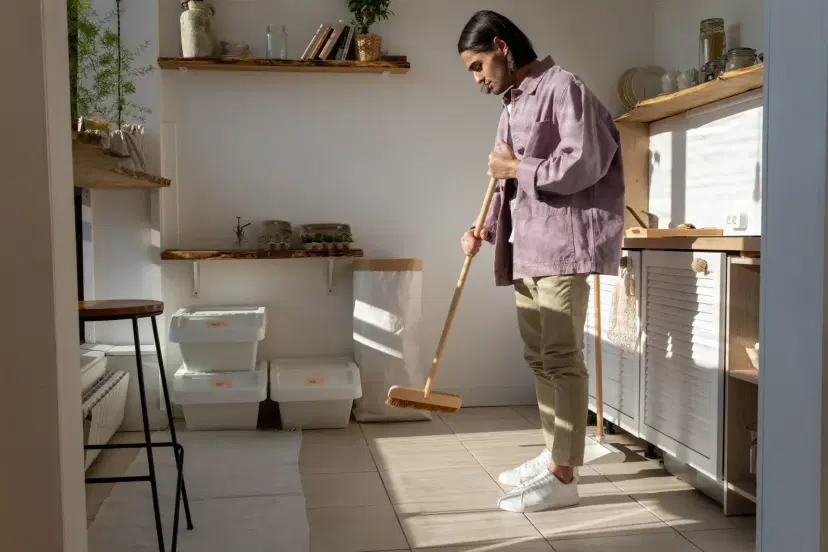
Never mix bleach with ammonia, vinegar, rubbing alcohol, or a second drain cleaner. Each pair makes a toxic gas in seconds. The risk is real in Canadian homes. In the first half of 2020, poison centres here took 3,408 calls about bleach. They took 949 more about chlorine gas. Most of those mixes were accidents. Someone sprayed one cleaner. Then they reached for a second bottle. This guide names the popular products behind those slips, so you can spot them on your own shelf. Ezi Home Services cleaners work by one rule: one product, one surface, rinse in between.
Why does mixing cleaning products make toxic gas?
Cleaners are simple chemicals. Put two of them together and you can get a third one that was in neither bottle. Bleach plus an acid makes chlorine gas. Bleach plus ammonia makes chloramine gas. Transport Canada's CANUTEC lists both of these in its guide to bad mixes at home.
These reactions need no heat and no spark. They start the moment the liquids touch. Health Canada says the effects run from burning eyes and light heads all the way to death. Small rooms make it worse. A closed bathroom traps the gas right at face level while you scrub.
The safe habit is short. Use one product. Rinse the surface with plain water. Then use the next one. This holds for “green” cleaners too. Vinegar is an acid. Hydrogen peroxide is an oxidizer. Neither one is safe next to bleach.
Which popular cleaners hold bleach, ammonia, or acid?
Front labels sell scent and surface. They rarely shout the chemistry. Turn the bottle over and read the active ingredient line. Here is what sits in most Canadian cupboards.
Bleach in a bottle. Clorox and Javex bleach are both sodium hypochlorite. So is Lysol Toilet Bowl Cleaner with Bleach, at 2%. Many mould sprays, scouring powders, and “with bleach” sprays use the same thing.
Ammonia in a bottle. Windex Original lists ammonium hydroxide. That is ammonia in water, per SC Johnson's own ingredient site. Some all-purpose sprays and floor cleaners use it too. Ammonia cuts grease and dries streak-free. That is why glass cleaners love it.
Acid in a bottle. CLR is 12–18% lactic acid plus 2.5–3.75% gluconic acid. Bar Keepers Friend runs on oxalic acid. Pine-Sol Original lists 1.75% glycolic acid. Some toilet cleaners use hydrochloric acid. White vinegar is about 5% acetic acid. Rust removers, kettle descalers, and lime scale sprays are nearly all acids.
Alcohol and peroxide. Rubbing alcohol is isopropanol. Lots of glass and screen wipes hold alcohol too. Drugstore hydrogen peroxide is a 3% mix.
Quats. Lysol Disinfecting Wipes use a “quat,” short for quaternary ammonium. It is not the ammonia in Windex. It still must not meet bleach.
| Popular product | Active ingredient | Never pair it with |
|---|---|---|
| Clorox or Javex bleach | Sodium hypochlorite | Ammonia, any acid, alcohol, quat wipes |
| Lysol Toilet Bowl Cleaner with Bleach | Sodium hypochlorite 2% | Vinegar, CLR, acid toilet cleaners |
| Windex Original | Ammonium hydroxide (ammonia) | Any bleach product |
| CLR | Lactic acid 12–18%, gluconic acid | Bleach, per its own label |
| Bar Keepers Friend | Oxalic acid | Bleach and ammonia |
| Pine-Sol Original | Glycolic acid 1.75% | Bleach |
| White vinegar | Acetic acid, about 5% | Bleach, hydrogen peroxide in one bottle |
| Lysol Disinfecting Wipes | Quaternary ammonium (quat) | Bleach sprays |
| Drano Liquid | Sodium hypochlorite and lye | Any other drain cleaner |
| Rubbing alcohol | Isopropanol | Bleach |
| Fabuloso Multi-Purpose | Surfactants and fragrance (no ammonia listed) | Bleach |
Does Fabuloso have ammonia?
No. The ingredient list Colgate-Palmolive publishes for Fabuloso Multi-Purpose Cleaner does not include ammonia or bleach. It is mostly water, surfactants, and fragrance. That does not make it safe to combine with other products. Use it on its own, rinse the surface, and never pour it into a bucket that already has household bleach in it.
Bleach and ammonia: chloramine gas
This pair makes chloramine gas. It hurts fast. The CDC lists short breath, watery eyes, chest pain, and a raw nose and throat. Bad doses can bring pneumonia or fluid in the lungs.
Here is the everyday version. You spray a bleach cleaner in the tub. Then you spray Windex on the mirror two feet away. Or you wipe both with one cloth. Ammonia hides in glass sprays, some all-purpose sprays, and a few toilet cleaners. Pet urine holds ammonia as well. So bleach on a soiled floor is a real risk.
Bleach and vinegar or any acid: chlorine gas
This pair makes chlorine gas. The CDC calls it a lung-damaging agent. One whiff stings the eyes, nose, and throat and starts a cough. More of it brings chest pain, vomiting, and fluid in the lungs.
The classic slip is a swap to natural cleaning. You wipe the counter with bleach spray. Ten minutes later you grab vinegar for hard water spots. No rinse in between. The same trap catches CLR, Bar Keepers Friend, and acid toilet cleaners. CLR's own label says do not mix it with bleach or other home chemicals. Bar Keepers Friend gives the same warning.
Bleach and rubbing alcohol
This mix makes chloroform plus other chlorine compounds. Chloroform slows the nervous system. It brings dizziness and heavy drowsiness. At high levels it can knock a person out. NIOSH also ties it to liver and kidney harm.
Cold and flu season is when this one shows up. People wipe a door handle with bleach spray. Then they hit it with an alcohol wipe to dry it fast. Treat it like bleach and ammonia. Never in one bucket. Never on one surface without a rinse.
Hydrogen peroxide and vinegar
Kept in one bottle, these two form peracetic acid. The EPA calls it a strong oxidizer that is corrosive on contact. It burns skin, eyes, and airways. NIOSH work has logged eye and breathing trouble on the job.
Plenty of DIY cleaning recipes tell you to blend them for a stronger spray. Skip that. Use one, wipe, then use the other. Two bottles, two steps, no blending. Our guide to eco-friendly cleaning products covers safer swaps that work on their own.
Bleach and quat wipes: the mix most lists miss
You will rarely see this pair on a warning list. Bleach and quat wipes should not meet either. The mix can give off gas that stings, and it can wipe out the germ-killing power you paid for.
Think about how a kitchen really gets cleaned. You spray a bleach cleaner on the counter. Then you grab a Lysol wipe for the edges. That is two disinfectants on one wet surface. Pick one and let it sit for the full time on the label. That time is often 10 minutes.
Bleach and dish soap or laundry detergent
Some dish soaps and laundry products hold ammonia compounds. Washington State's health department flags this pair for that reason. The label may say “antibacterial” and nothing else. So the risk is invisible.
The sink is where it happens. You bleach the basin, then run a sink of soapy water on top of the leftover bleach. Or you soak a load in bleach, then add detergent to the same water. Rinse the basin clean first. Wash the dishes second.
Bleach also breaks down in the wash if you add it at the wrong time. Add it with the detergent and the two cancel each other out. Use the bleach cup on the machine so it goes in later.
Vinegar and baking soda: safe, but mostly useless
This pair will not hurt you. It just will not clean much either. The fizz you see is carbon dioxide gas. What is left in the bowl is sodium acetate and water. That is a weak salt solution.
Chemists writing in The Conversation put it plainly. Baking soda is a base. Vinegar is an acid. Mix them and each one cancels the other. The paste you just made is weaker than either bottle on its own.
The fizz still has one use. In a slow drain, the bubbling shifts loose gunk by force. That is a physical effect, not a chemical one. For a counter or a tub, use one, rinse, then use the other. Baking soda works as a mild scrub. Vinegar works on hard water scale.
Never mix two drain cleaners
Drain products are not all the same. Drano Liquid holds sodium hypochlorite and sodium hydroxide, which is lye. Liquid-Plumr runs about 5–10% sodium hypochlorite with 0.5–2% lye. Other brands are acid-based, built on sulfuric or hydrochloric acid.
Pour an acid one on top of a failed lye one and you get heat, splatter, and fumes. Acid and base react hard. They give off energy. A drain is a narrow, closed space, so the splash gets worse. Poison Control and the CPSC both warn against it. Some of these reactions can crack a pipe.
If the first product fails, do not chase it. Flush with lots of water and wait. Then call a plumber. A trap full of two mixed chemicals is a hazard for the next person who opens it.
What Canadian poison data shows
Most posts on this topic quote American numbers. Canada has its own. Health Canada research covered calls to the five poison centres here. From January to June 2020, bleaches drove 3,408 calls. Disinfectants drove 1,667. Chlorine gas drove 949. Chloramine gas drove 148. Some groups rose by as much as 400% over the year before.
The longer view is calmer. From March 2019 to March 2022, Canadian centres logged 396,041 exposures in total. Bleaches made up 7,022 of them. Chlorine gas made up 2,205 and chloramine gas 369. So gas cases are a small slice of all calls. Still, about 2,500 of them in three years came from a gas that only exists because two bottles met.
Canada's centres handled 215,589 cases in 2020. Cleaning products ranked near the top of the list. That is the real lesson here. The danger is not rare or exotic. It comes from plain bottles used back to back.
How to use cleaning products safely
Read the back label before you open a new bottle. Look for the active ingredient. Look for any “do not mix” line. Sort your cupboard into three groups: bleach, ammonia, and acid. Know which shelf each bottle belongs to.
Air the room out. Health Canada says to open windows or doors and run fans during and after the job. Wear rubber gloves and eye cover with bleach. Never clean a small bathroom with the door shut.
Rinse your tools, not just the surface. A sponge that holds bleach will react with the next cleaner you use. Rinse buckets, cloths, and brushes with plain water when you switch.
Keep each product in its first bottle so the label stays readable. Never pour bleach into a drink bottle. Store the lot up high, away from kids and pets. If you have animals at home, see our list of pet-safe cleaning products.
What to do if you breathe in fumes
Leave the room right away. Get fresh air. Do not stop to mop the spill. Open windows and doors on the way out if that is safe.
In Canada, call 1-844-POISON-X (1-844-764-7669). It sends you to your own provincial centre. It is free and open 24 hours. In Quebec, call the Centre antipoison du Québec at 1-800-463-5060. In the United States, call 1-800-222-1222. Call 911 for trouble breathing, chest pain, or a blackout.
Bring the bottles with you if you can grab them safely. Brand names and active ingredients help staff help you faster.
Methodology
The reactions and safety steps here come from Health Canada, Transport Canada's CANUTEC, the CDC, NIOSH, the EPA, and the National Capital Poison Center. The call numbers come from Health Canada research on Canada's five poison centres. Product details come from maker ingredient lists and safety data sheets for each named brand. Every figure was read from the source document, not a summary of it.
When to call in a pro
Some jobs push people into risky mixing. Heavy soap scum, mould on grout, hard water scale, and post-build dust all tempt the “use everything” approach. A trained cleaner works in a set order instead. Right product, right surface, rinse between steps.
That is how Ezi providers work. They are trained on commercial-grade products and use one at a time. Book a general house clean or a deep clean and the crew brings its own supplies and its own order of work. If you would rather not mix anything yourself, hand the job over. Our FAQ covers how a booking works.
Cleaning products you should never mix, in short
- Bleach and ammonia: makes chloramine gas
- Bleach and any acid, like vinegar or CLR: makes chlorine gas
- Bleach and rubbing alcohol: makes chloroform
- Hydrogen peroxide and vinegar in one bottle: makes peracetic acid
- Two drain cleaners: heat, splatter, and fumes
- Bleach and quat wipes: they cancel out and sting your lungs
The habit that covers all of it is short. One product at a time. Rinse in between. Read the back of the bottle. If you are not sure what is in a cleaner, treat it as the wrong partner for bleach. Save 1-844-POISON-X in your phone today, then work through our room-by-room cleaning routine with one bottle at a time.
Frequently Asked Questions
What happens if you mix bleach and ammonia?
You get chloramine gas, which can burn the eyes, nose, throat, and lungs. The CDC lists short breath, chest pain, and watery eyes. Bad doses can cause pneumonia or fluid in the lungs. Ammonia hides in glass sprays like Windex Original, so a bleached tub and a wiped mirror can react.
Can you mix bleach and vinegar?
No. The pair makes chlorine gas, which the CDC calls a lung-damaging agent. One whiff stings the eyes and throat and starts a cough. The same risk applies to CLR, Bar Keepers Friend, and acid toilet cleaners. CLR's own label says not to mix it with bleach.
Which popular cleaners contain ammonia or acid?
Windex Original lists ammonium hydroxide, which is ammonia in water. CLR is 12 to 18% lactic acid. Bar Keepers Friend runs on oxalic acid. Pine-Sol Original lists 1.75% glycolic acid. White vinegar is about 5% acetic acid. Always read the active ingredient line on the back.
Is it safe to mix bleach and rubbing alcohol?
No. The mix makes chloroform plus other chlorine compounds. Chloroform brings dizziness and heavy drowsiness, and it can knock a person out at high levels. NIOSH also ties it to liver and kidney harm. Never use the two on one surface without a rinse.
Can you use a bleach spray and a Lysol wipe together?
No. Bleach and quat wipes should not meet. The mix can give off gas that stings, and it can wipe out the germ-killing power of both. Pick one product and let it sit for the full time on the label, often 10 minutes.
Do vinegar and baking soda make a toxic gas?
No. That fizz is just carbon dioxide, and what is left is salt water. It is safe but weak. Each one cancels the other out, so use them one at a time instead. Baking soda works as a mild scrub, and vinegar cuts hard water scale.
What number do I call in Canada for poison help?
Call 1-844-POISON-X, or 1-844-764-7669. It routes you to your provincial poison centre, free, 24 hours a day. In Quebec, call the Centre antipoison du Quebec at 1-800-463-5060. Call 911 for trouble breathing, chest pain, or a blackout.
Can you mix bleach and hydrogen peroxide?
No, avoid combining them - together they can release oxygen gas rapidly and the mix loses the disinfecting strength of both. Use one, rinse the surface with plain water, then use the other if you need a second pass.
Can you mix CLR and bleach?
No. CLR is an acid-based cleaner, and mixing it with bleach produces chlorine gas, the same reaction as bleach and vinegar. CLR's own product label warns against combining it with bleach or any other household chemical.
house cleaning
cleaning safety
chemical safety
bleach
poison control
cleaning products
Explore more
Written by
Home Cleaning · Maintenance
Lorna has spent years in residential cleaning and home maintenance, from move-in/move-out deep cleans to seasonal upkeep routines that actually hold up. She writes about the small, practical habits that keep a home running smoothly between professional visits.