How to Clean Carpet at Home: Step-by-Step Guide
By Samer Alsayegh · · Updated · 15 min read
Key Takeaways
- Always blot stains, never rub, working from outside edge inward.
- Machine-cleaned carpet dries in 4 to 6 hours, thick pile up to 24.
- Deep clean carpet every 6 to 12 months, professionally once a year.
- Never use hot water on protein-based stains like blood or pet accidents.
- Keep indoor humidity between 30 and 50 percent to prevent mould.
To clean carpet at home, vacuum slowly first, treat stains by blotting, then deep clean with a machine, a brush, or a dry powder. Rinse out the soap, dry it within 24 hours, and vacuum once more to lift the pile. A full deep clean every 6 to 12 months keeps carpets clean and fresh between professional visits.
Your carpet works hard every day. It catches dirt from shoes, pet hair, spills, and all the mess that comes with daily life. Over time, that build-up affects how your home looks, smells, and even how healthy the air inside is.
The good news? You can clean your carpet at home and do it well with the right steps and a little patience. You might live in an Ottawa townhouse, a Montreal condo, or a Surrey family home. Either way, this guide walks you from prep to the final fluff. It also covers what each method costs, so you can decide when DIY makes sense.
What you need before you start
Do not skip the prep stage. Gathering your supplies first saves time and gives better results.
Here is what you need:
- A vacuum cleaner with a brush roll and HEPA filter if possible.
- A carpet cleaning machine or a soft-bristled scrub brush.
- Carpet-safe cleaning solution or shampoo.
- A spray bottle.
- Clean white cloths or microfibre towels.
- Baking soda.
- White vinegar.
- Warm water.
- Fans or a dehumidifier for drying.
Check your carpet's care label before you use any product. Some carpets, like wool, need a gentler touch.
Know your carpet type first
Not all carpets clean the same way. The fibre type matters.
Nylon and polyester: the most common in Canadian homes. They handle steam cleaning well and are fairly forgiving.
Wool: requires low-moisture cleaning. Too much water can cause shrinkage or damage.
Olefin polypropylene: easy to clean but can attract oily residue if you use the wrong solution.
Berber and loop-pile: clean gently. Aggressive scrubbing can pull and snag the loops.
If you are not sure what type of carpet you have, check with your flooring retailer or test any solution on a hidden corner first. Cleaning a smaller rug instead? Our guide to cleaning an area rug at home covers fringes, backing, and hand-knotted pieces.
Step 1: Move furniture out of the way
Start by clearing the room. Move lightweight furniture like chairs and coffee tables out completely.
For heavy pieces like sofas, slide them to one side and clean that half. Once it dries, slide them back and do the rest.
Place plastic or foil under furniture legs if you cannot move them. This prevents rust or dye from transferring to damp carpet.
Step 2: Vacuum thoroughly
Vacuuming first is not optional. It removes loose dirt, hair, and debris so they do not turn into muddy paste when the carpet gets wet.
Tips for a better vacuum pass:
- Go slow. Moving the vacuum quickly misses embedded dirt.
- Vacuum in multiple directions: forward, backward, and sideways. This lifts flattened fibres and picks up more dirt.
- Focus extra time on high-traffic spots: hallways, living room centres, and spots in front of sofas.
- Use the crevice attachment along baseboards and corners where dust collects.
According to Health Canada's indoor air quality guidance, carpets trap allergens including dust mites. Vacuuming often with a HEPA filter is one of the best ways to cut indoor allergens.
Step 3: Treat stains before deep cleaning
Always tackle stains before you wet the whole carpet. Treating them first loosens the mess, so the deep clean works much better.
For stain-specific fixes beyond the basics below, see our complete carpet stain removal guide.
Golden rule: blot, never rub. Rubbing pushes the stain deeper into the fibres. Use a clean white cloth and blot from the outside of the stain inward.
Common stain fixes
Red wine or juice:
Blot up as much as you can right away. Mix one cup of warm water with one tablespoon of dish soap and one tablespoon of white vinegar. Apply to the stain, blot, repeat until the colour lifts.
Coffee:
Blot up the liquid. Mix warm water and a small amount of dish soap. Apply, blot, rinse with cold water.
Pet accidents (urine, vomit):
Blot up the mess. Use an enzymatic cleaner designed for pet stains. These break down odour-causing proteins that regular cleaners leave behind. Avoid ammonia-based products on pet stains, as they can attract repeat accidents.
Grease or oil:
Sprinkle cornstarch or baking soda over the area. Let it sit for 15 minutes to absorb the grease, then vacuum. Follow up with a drop of dish soap diluted in warm water.
Mud:
Let mud dry fully first. Vacuum the dried flakes, then treat any remaining mark with warm water and dish soap.
Stairs need the same blotting technique, plus a few tricks for tight edges. See our guide on how to clean carpet on stairs. Dealing with an old, set-in mark? These ways to remove carpet stains for good go a step further.
Step 4: Deep clean the carpet
Now it is time to deep clean your carpet. You have three main options.
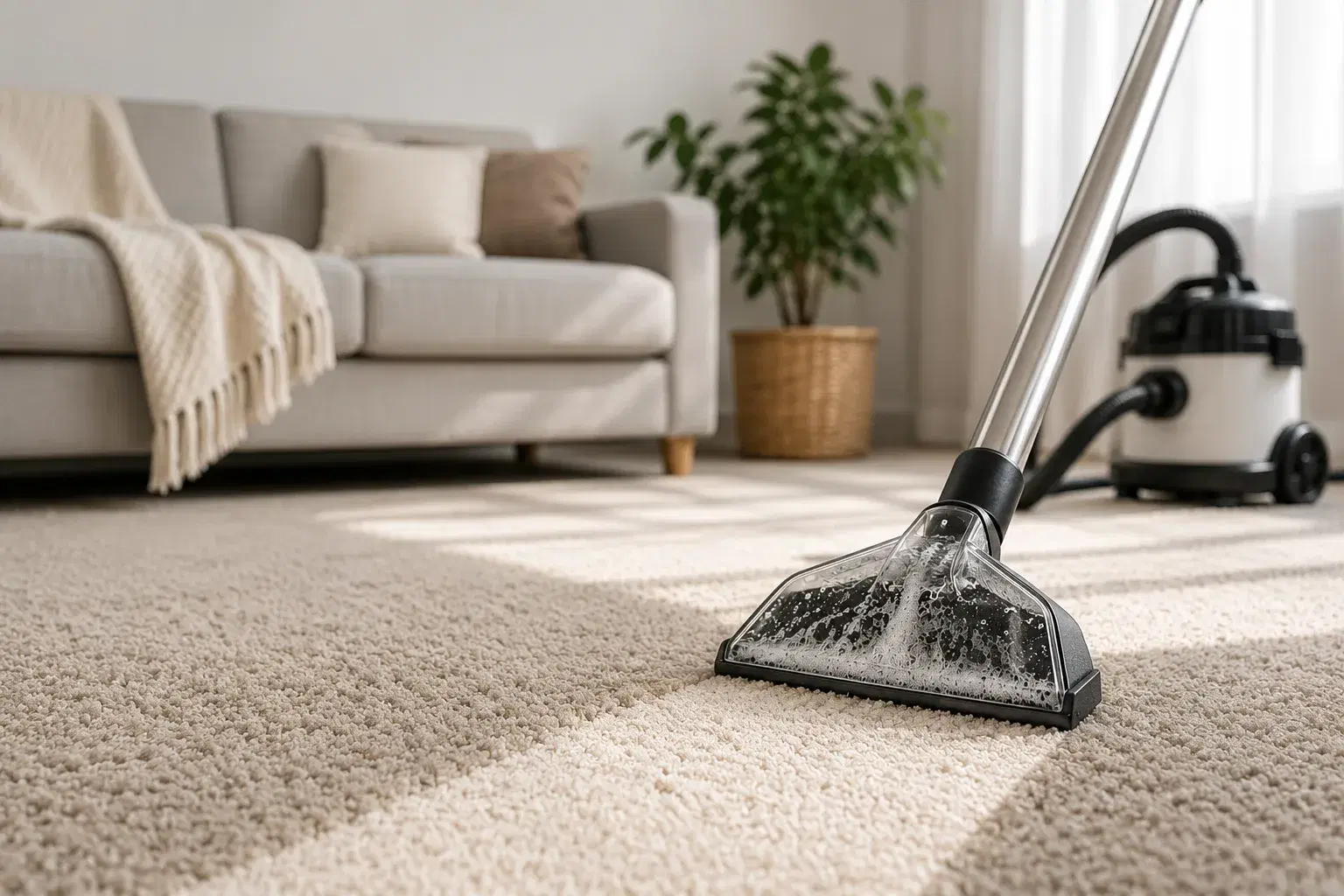
Option A: Carpet cleaning machine (steam / hot water extraction)
This method gives the deepest results. You can rent a machine from a hardware store or use your own.
-
Fill the machine with warm water and the recommended amount of carpet cleaning solution. Don't use more than the label says. Leftover soap attracts dirt.
-
Start in the corner farthest from the door. Work backward so you do not walk over wet carpet.
-
Make one slow forward pass with the spray trigger pressed.
-
Make a second pass backward with the trigger off to extract moisture.
-
Overlap each pass slightly so you do not miss strips.
Pro tip: Count two seconds per step as you move. This gives the machine time to spray, agitate, and suction properly.
Option B: Hand scrubbing with solution
No machine? No problem. This method works well for spot cleans and smaller rugs.
-
Mix warm water with a little carpet shampoo in a bowl or spray bottle.
-
Spray a small section lightly. Do not soak the carpet.
-
Scrub gently with a soft-bristled brush in circular motions.
-
Blot the section with a clean cloth to lift the dirty water.
-
Rinse by going over the area with a cloth dampened in plain water.
-
Blot dry.
Option C: Dry cleaning (low-moisture method)
This works well for quick touch-ups or for carpets that can't take much water.
-
Sprinkle a dry carpet cleaning powder over the carpet.
-
Work it in gently with a brush.
-
Let it sit for the recommended time, usually 10 to 30 minutes.
-
Vacuum well.
Baking soda works as a simpler alternative. Sprinkle it generously, let it sit for a few hours to absorb odours, then vacuum it up.
Step 5: Rinse out residue
Leftover soap is one of the biggest mistakes people make. Residue left in the carpet attracts dirt like a magnet and makes the carpet look dingy faster.
If you used a machine, do a final pass over the carpet using plain warm water in the tank, with no solution, to rinse.
If you hand-clean, go over each section with a cloth dampened in clean water.
Step 6: Dry the carpet properly
This step is critical. The US EPA notes that mould usually won't grow if wet materials dry within 24 to 48 hours. Carpet that stays damp longer is at real risk, especially in Canadian homes during humid summers or in winter when windows stay shut.
Speed up drying with these steps:
- Open windows if the weather is dry outside.
- Run fans at floor level pointing at the carpet.
- Use a dehumidifier in the room.
- Turn on your air conditioning or heating system to circulate air.
- Avoid walking on the carpet until it is fully dry, usually 4 to 6 hours for machine-cleaned carpet and up to 24 hours for thick pile.
Don't move furniture back until the carpet is fully dry. Metal or wood furniture legs can leave stains on damp carpet.
Step 7: Restore carpet texture after drying
Most people skip this step and wonder why their carpet still looks flat. Once the carpet is fully dry, vacuum it again.
This second vacuuming lifts the fibres back up and restores the soft, fluffy texture. It also picks up any baking soda or dry cleaning powder residue that remained.
For high-pile or plush carpet, use a carpet rake or stiff brush to run through the fibres in one direction. This brings the pile back to life.
Why does a rented machine leave carpet wet or dirty?
Most disappointing DIY results come down to two things: too much soap and too little suction. Rental machines are smaller than truck-mounted pro units. They pull out less water per pass. So the carpet stays wetter, and any extra soap stays behind.
That leftover soap is sticky. It grabs new dirt from your feet and socks, so traffic lanes look grey again within weeks. And a soaked carpet can wet the pad underneath. If the pad stays damp past a day or two, you get a musty smell that's hard to shift.
The fix is simple. Use less solution than you think you need. Do at least two dry suction passes for every wet pass. Finish with a plain-water rinse. And keep fans running until the carpet feels dry all the way down, not just on top.
What not to do when cleaning carpet
Avoid these common mistakes:
- Do not over-wet the carpet. Too much water soaks the pad underneath. It can grow mould and take days to dry.
- Do not scrub stains. Always blot. Scrubbing spreads the stain and damages fibres.
- Do not use hot water on protein-based stains like blood, egg, or pet accidents. Hot water sets these stains for good. Use cold or lukewarm water instead.
- Do not skip the pre-vacuum. Cleaning a carpet that still has loose debris pushes grit deeper into fibres.
- Do not leave soap in the carpet. It's a main reason carpets get dirty again fast.
How often should you clean your carpet?
Here is a simple schedule for the whole year:
| Task | Frequency |
|---|---|
| Spot clean spills | Immediately |
| Vacuum high-traffic areas | 2–3 times per week |
| Vacuum low-traffic areas | Once per week |
| Full deep clean | Every 6–12 months |
| Professional carpet cleaning | Once per year or as needed |
Homes with pets, kids, or allergies should deep clean more often. The Carpet and Rug Institute recommends professional cleaning at least once a year to keep carpet warranties valid and fibres in good condition. For more on why that yearly visit pays off, read about the benefits of regular carpet cleaning.
How much does it cost to clean carpet? DIY vs. professional
Cleaning carpet yourself costs about $40 to $70 for a one-day machine rental, plus solution. Hiring a professional usually costs $25 to $75 per room, or about $0.20 to $0.50 per square foot, based on 2026 Canadian price guides.
| Option | Typical cost | Best for |
|---|---|---|
| Baking soda or dry powder | Under $15 | Odours and light maintenance |
| Rented carpet machine | $40 to $70 per day, plus solution | One or two rooms, light soil |
| Professional cleaning | $25 to $75 per room | Whole home, heavy soil, pets, allergies |
So for a single bedroom, a rental is often the cheaper choice. For a whole home, the gap shrinks fast. A rental day plus solution can cost close to what a pro charges for two or three rooms. And the pro machine pulls out more water, so the carpet dries faster.
How to prevent carpets from getting dirty quickly
A few habits go a long way in a busy home.
- No-shoe policy indoors. Shoes track in the most dirt, oils, and bacteria from outside. A simple shoe rack at the door makes a big difference.
- Use entry mats. Place mats inside and outside every entrance. They catch most of the dirt before it reaches your carpet.
- Add rugs in high-traffic areas. A rug over your carpet in hallways, living rooms, or in front of sofas protects the fibres underneath.
- Address spills immediately. The faster you act, the easier the stain is to remove.
- Control indoor humidity. Keep indoor humidity between 30 and 50 percent. High humidity encourages dust mites and mould growth in carpet fibres. A dehumidifier helps, especially in basements.
When to call a professional instead
DIY carpet cleaning works well for regular maintenance. But some situations call for a professional carpet cleaning service.
Call a professional when:
- The carpet has not been deep cleaned in over a year.
- There are large or set-in stains that DIY methods cannot remove.
- You notice a persistent musty smell even after cleaning.
- The carpet has been exposed to flooding or significant moisture.
- Someone in the home has severe allergies or respiratory issues.
- The carpet is wool, antique, or made of a delicate fibre type.
Pro machines have far stronger suction than home ones. They pull out allergens, germs, and deep grime that home cleaning can't reach.
Why choose Ezi Home Services for carpet cleaning
Ezi Home Services books vetted service providers for carpet cleaning in Ottawa, Toronto, Montreal, Gatineau, Surrey, and Miami. You get an upfront price and a set arrival window.
Need more than carpets? Ezi also covers home cleaning, deep cleaning, and post-construction cleanup. Every provider brings professional tools and products that are safe for families and pets.
Ready to get your carpets cleaned the right way? Book your service today and let a provider handle the hard work.
Conclusion
Learning how to clean carpet at home comes down to a clear order of steps. Gather your supplies and know your carpet type. Vacuum slowly, treat stains before wetting the carpet, then deep clean with a machine, hand scrubbing, or a dry method. Rinse out the soap, dry the carpet within a day, and finish with a second vacuum to restore the texture.
Stick to a regular schedule and a few prevention habits, and your carpets stay clean longer between deep cleans. When the job is bigger than one room or the stains won't budge, a professional is the smarter call. Cleaning something else in the house today too? Our how-to-clean index links to the right guide for every room and surface.
How To
Frequently Asked Questions
How long does it take for carpet to dry after cleaning at home?
Carpet drying time after home cleaning typically takes 4 to 6 hours for machine-cleaned carpet and up to 24 hours for thick or heavily saturated carpet. Running fans and opening windows speed up the process significantly.
Can I use baking soda and vinegar to clean my carpet?
Yes, baking soda and vinegar can help clean carpet: baking soda absorbs odours and vinegar helps lift light stains. They work best on minor spots and freshening, not as a substitute for a full deep clean.
How do I get rid of pet odours from my carpet?
Getting rid of pet odours from carpet requires an enzymatic cleaner. Regular soap and water mask the smell temporarily but do not break down the odour-causing proteins in pet urine. Apply the enzymatic cleaner, let it sit, then blot and dry.
Is it better to shampoo or steam clean a carpet at home?
Steam cleaning (hot water extraction) removes more embedded dirt and dries faster than shampooing, which leaves more residue and may require a rinse step. For most carpets, hot water extraction gives better results.
How do I clean carpet without making it too wet?
Apply solution lightly in small sections and use a machine's suction or a dry cloth to extract moisture immediately after applying. Avoid pouring liquid directly on the carpet and always work in manageable sections.
How much does it cost to clean carpet?
A one-day machine rental costs about $40 to $70 plus solution. A pro charges about $25 to $75 per room in Canada. For one room, renting is cheaper. For a whole home, a pro often costs about the same and dries faster.
carpet cleaning
home cleaning tips
stain removal
deep cleaning
ottawa
Written by
Home Cleaning · Maintenance
Co-founder of Ezi Services and Draftbase, entrepreneur and builder focused on SaaS, AI, and growth — I turn ideas into scalable businesses using technology, automation, and relentless execution.