How to clean your house properly, room by room
By Lorna Beaulieu · · Updated · 13 min read

Key Takeaways
- Canadians spend over 6 hours a week cleaning their homes.
- Clean top to bottom and back to front so you never redo work.
- Start with the kitchen, since grease and spills get harder to lift later.
- Give bathrooms a full clean every week to stop mold and germs.
- Wipe remotes, light switches, and handles often between full cleans.
Most Canadians spend over 6 hours a week cleaning their homes, yet many still feel like the mess never truly goes away. If you feel like you are always cleaning but nothing stays clean, the problem is usually the approach, not the effort.
Cleaning room by room gives you a clear system to follow. You stop jumping around, wasting time, and missing spots. You clean smarter, not harder.
This guide walks you through exactly how to clean your house from top to bottom, room by room. Whether you are doing a quick weekly tidy or a full deep clean, these steps will help you get it done faster and keep it clean longer. Looking for the technique on one specific item, like how to descale a kettle, clean a couch, or lift a carpet stain? Ezi publishes a full library of item-specific cleaning guides to cover the rest.
What you need before you start
Before you touch a single surface, gather your supplies. Having everything in one caddy saves you from walking back and forth.
Basic cleaning supplies:
- Microfibre cloths (at least 4 to 6)
- All-purpose cleaner
- Glass cleaner
- Toilet brush and bowl cleaner
- Scrub brush and sponge
- Mop and bucket
- Vacuum with attachments
- Baking soda and white vinegar
- Rubber gloves
- Trash bags
One tip that professional cleaners always follow: clean from top to bottom and from back to front in every room. Dust and debris fall down. If you clean floors first, you will just have to clean them again.
How to clean your house room by room
How to clean the kitchen
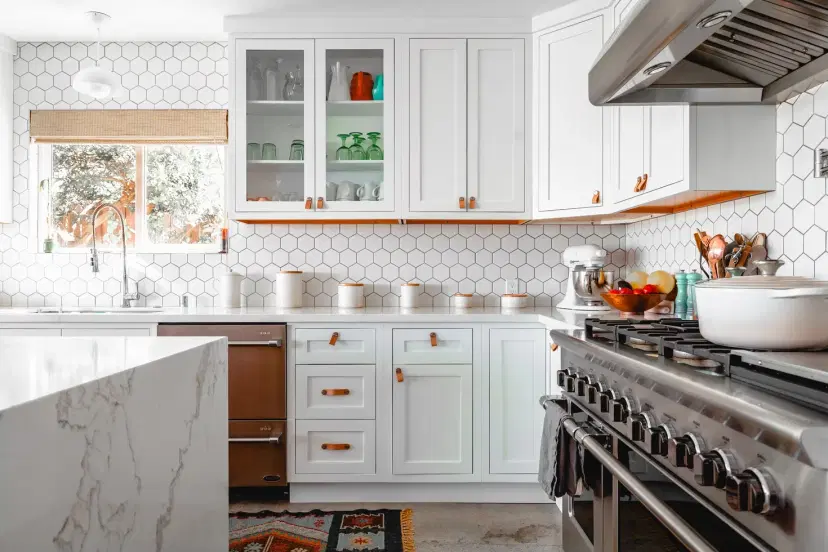
The kitchen is the hardest room to clean because it collects grease, food spills, and odors fast. Tackle it first when your energy is highest.
Step-by-step kitchen cleaning:
- Clear the counters and wipe them down with an all-purpose cleaner.
- Clean the stovetop. Remove burner grates and soak them in hot soapy water for 10 minutes, then scrub.
- Wipe down the outside of all appliances (microwave, fridge, dishwasher).
- Clean inside the microwave. Put a bowl of water with a few drops of lemon juice inside, run it for 2 minutes, then wipe the loosened grime away easily.
- Empty and wipe out the fridge at least once a month. Remove expired items and wipe shelves with a baking soda and water solution.
- Scrub the sink and faucet. Use baking soda for extra scrubbing power. Pour equal parts baking soda and white vinegar down the drain to clear buildup.
- Wipe cabinet doors and handles. These collect grease and fingerprints fast.
- Sweep and mop the floor last.
Pro tip: Run your dishwasher on an empty hot cycle with a cup of white vinegar on the top rack once a month. It removes mineral buildup and odors.
If grease and grime have really built up in your kitchen, a professional deep cleaning service can save you hours and get it back to spotless.
How to clean the bathrooms
Bathrooms need to be cleaned at least once a week. Bacteria and mold grow fast in warm, damp spaces.
Step-by-step bathroom cleaning:
- Spray the toilet bowl with cleaner and let it sit while you clean everything else.
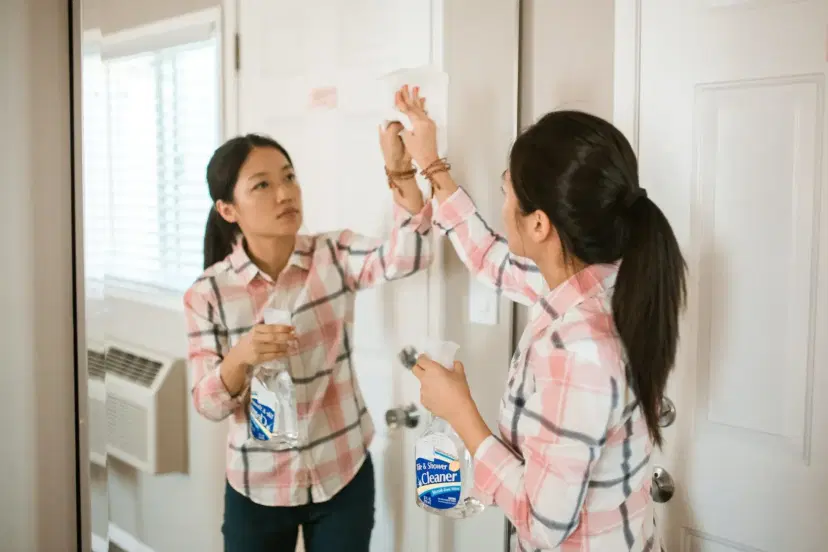
- Wipe down the mirror with glass cleaner and a lint-free cloth.
- Clean the sink and faucet. Use an old toothbrush to scrub around the faucet base where grime collects.
- Wipe countertops, soap dispensers, and toothbrush holders.
- Scrub the toilet bowl with a brush. Wipe the seat, lid, outside of the bowl, and the base with disinfectant wipes or a cloth soaked in disinfectant.
- Scrub the tub and shower walls. Use a bathroom spray and let it sit for 5 minutes before scrubbing. Pay attention to grout lines where mold builds up.
- Wash shower curtains or wipe down glass shower doors.
- Sweep and mop the floor. Get into the corners.
- Take out the trash.
According to Health Canada, cleaning high-touch surfaces like faucets and toilet handles regularly with household cleaners is one of the best ways to reduce the spread of germs at home.
How to clean the bedrooms
Bedrooms collect dust, dead skin cells, and allergens. A clean bedroom helps you sleep better and breathe easier.
Step-by-step bedroom cleaning:
- Strip the bed and wash all bedding in hot water. Do this weekly.
- Dust all surfaces from top to bottom: shelves, dressers, nightstands, ceiling fan blades, light fixtures.
- Wipe down mirrors and glass surfaces with glass cleaner.
- Vacuum or wipe under and around the bed frame. Dust bunnies love this spot.
- Vacuum the mattress with an upholstery attachment. Sprinkle baking soda, let it sit for 15 minutes, then vacuum it up to remove odors.
- Clean out the closet once a season. Clutter on floors makes the room feel dirty no matter how much you clean.
- Vacuum the floor and get into corners and along baseboards.
- Wipe down baseboards and window sills.
How to clean the living room
The living room is where dust, pet hair, crumbs, and remote controls all end up together.
Step-by-step living room cleaning:
- Declutter first. Put items back where they belong before cleaning anything.
- Dust from top to bottom: ceiling corners, light fixtures, shelves, TV stand, and furniture.
- Clean the TV screen with a dry microfibre cloth. Never spray liquid directly on a screen.
- Wipe down remote controls, light switches, and door handles. These are high-touch surfaces that carry a lot of germs.
- Vacuum the sofa and chairs. Remove cushions and vacuum underneath them.
- Clean windows and window sills.
- Vacuum the floor and all rugs. Move furniture when possible to get underneath.
- Mop hard floors last.
How to clean the laundry room
People often forget the laundry room during regular cleanings.
Quick laundry room cleaning steps:
- Wipe down the washing machine exterior and clean the detergent drawer.
- Run an empty hot wash with white vinegar to clean inside the drum.
- Wipe the dryer exterior and check and clean the lint trap after every single load.
- Sweep and mop the floor.
- Wipe down shelving and any bottles or containers.
How to clean house vents and air ducts
Dirty vents and air ducts push dust and allergens into every room in your home. Cleaning them improves air quality and can even reduce energy bills.
How to clean vents in your house:
- Turn off your HVAC system before you start.
- Remove vent covers and wash them in warm soapy water. Let them dry fully before replacing.
- Use a vacuum with a long hose attachment to pull dust and debris from inside the duct opening as far as you can reach.
- Wipe the inside of the duct opening with a damp microfibre cloth.
- Replace clean, dry vent covers.
How to clean your air ducts in your house (deeper clean):
- For a full duct cleaning, you need professional equipment. Pros use high-powered vacuums and rotary brushes that reach deep into the duct system. The CDC recommends regular cleaning of home surfaces and environments to prevent the buildup of dust and allergens, and ducts are no exception.
- Health Canada suggests vacuuming with a HEPA filter vacuum as a first line of defence for keeping indoor air clean.
- Plan a professional air duct cleaning every 3 to 5 years, or more often if you have pets, allergies, or recent renovation work.
How to clean siding on a house
Dirty siding makes even a clean home look neglected. In cities like Ottawa and Toronto where winters are harsh, siding collects salt residue, mildew, and grime fast.
Steps to clean siding:
- Rinse the siding from top to bottom with a garden hose to remove loose dirt.
- Mix a solution of 1 part white vinegar to 9 parts water, or use a dedicated siding cleaner.
- Apply the solution with a soft-bristle brush or a low-pressure sprayer.
- Scrub gently in small sections, working from top to bottom.
- Rinse thoroughly with clean water.
Avoid pressure washing vinyl siding at too high a setting, as it can force water behind the panels and cause water damage. For brick or stucco, use a soft brush and mild detergent only.
How to clean a house professionally: Tips the pros use
Wondering how to clean your house professionally without hiring a full team? Here is how the pros approach it.
Professional house cleaning tips:
- Always work in a single direction through the home. Start at the far end and work toward the exit so you are not walking through areas you just cleaned.
- Use separate cloths for different areas. A cloth used on the toilet should never touch the sink.
- Let your cleaners do the work. Spray surfaces and let product sit for 1 to 3 minutes before wiping. This cuts scrubbing time in half.
- Use a squeegee on glass shower doors after every shower to prevent soap scum buildup.
- Line trash cans with two bags at once. When one fills up, the second is already in place.
- Microfibre cloths clean better than paper towels and reduce waste.
If you are preparing a property for new tenants, a move-in/out clean covers every surface from top to bottom and meets the standard expected by landlords and property managers across Canada.
How to clean house and keep it clean: A simple routine
Knowing how to clean your house is only half the battle. The other half is keeping it clean. Here is a simple routine that works.
Daily (5 to 10 minutes):
- Wipe down kitchen counters after cooking
- Rinse and load dishes right away
- Squeegee the shower after use
- Do a quick surface tidy in the living room
Weekly (1 to 2 hours):
- Full bathroom clean
- Vacuum and mop all floors
- Wipe down kitchen appliances
- Change bed sheets
- Empty all trash cans
Monthly (2 to 3 hours):
- Deep clean the fridge
- Clean the oven
- Wash window sills and baseboards
- Clean ceiling fans and light fixtures
- Scrub grout in the kitchen and bathroom
Seasonally (half a day):
- Clean house vents and replace air filters
- Wash curtains and blinds
- Deep clean the washing machine and dishwasher
- Clean out closets and donate unused items
- Clean siding if exterior is looking grimy
Families in Montreal and Gatineau who deal with particularly harsh winter conditions may want to add an exterior walkway and entryway clean to their spring routine, as salt and sand get tracked inside all season long.
When to call in the professionals
Some jobs are too big, too time-consuming, or too specialized for a regular clean. Here are the situations where professional help makes sense.
- Moving in or out of a home: Move-in/out cleaning is thorough, covering inside cabinets, appliances, and all surfaces.
- After a renovation: Post-construction dust is fine and gets everywhere. A post-construction clean removes plaster dust, debris, and residue safely.
- Short-term rental properties: Airbnb properties need fast turnarounds between guests. An Airbnb clean keeps your listing ratings high.
- Carpets: Vacuuming alone does not remove embedded dirt, allergens, or stains. A professional carpet cleaning restores your carpets fully.
Ready to skip the scrubbing? Book a home cleaning service today and let Ezi Home Services take care of it for you.
Why choose Ezi Home Services
Ezi provides professional home cleaning services for every stage of homeownership, from routine house cleaning and deep cleaning to move-in/move-out, Airbnb, and post-construction cleaning. They also offer expert carpet cleaning to remove dirt, stains, and allergens, helping keep your home fresh, clean, and guest-ready year-round.
Ezi Home Services operates across major Canadian cities, including Ottawa, Toronto, Gatineau, Montreal, Surrey, and Miami. Whatever city you are in, experienced local cleaners are ready to help.
Book your clean today at ezi.services/order and get a spotless home without lifting a finger.
Conclusion
Cleaning your home room by room is the most efficient way to stay on top of the mess. Start with the kitchen, work through bathrooms and bedrooms, keep up with vents and siding, and follow a simple daily and weekly routine. With the right approach, a clean home is easier to maintain than most people think. Small, consistent habits beat one big stressful cleaning day every single time. Need the exact technique for one item instead of the whole house? Ezi's how-to-clean guides cover the rest.
How To
Frequently Asked Questions
How do you clean your house fast without missing anything?
Cleaning your house fast means following a top-to-bottom, room-by-room system and having all your supplies ready before you start.
How do I clean my house if I don't know where to begin?
If you don't know where to begin, start with the kitchen because it takes the longest and tackle the dirtiest rooms first.
How do you clean your air ducts in your house without professional tools?
To clean your air ducts at home, remove vent covers, wash them, and vacuum as far inside the duct opening as you can reach with a hose attachment.
How do you clean siding on a house without a pressure washer?
To clean siding without a pressure washer, scrub it with a soft-bristle brush and a mix of white vinegar and water, then rinse with a garden hose.
How do you clean a house professionally between tenants?
Cleaning a house professionally between tenants means deep cleaning all surfaces, inside appliances, cabinets, bathrooms, and floors to a move-in ready standard.
house cleaning
room by room
cleaning guide
deep cleaning
home cleaning tips
Explore more
Written by
Home Cleaning · Maintenance
Lorna has spent years in residential cleaning and home maintenance, from move-in/move-out deep cleans to seasonal upkeep routines that actually hold up. She writes about the small, practical habits that keep a home running smoothly between professional visits.