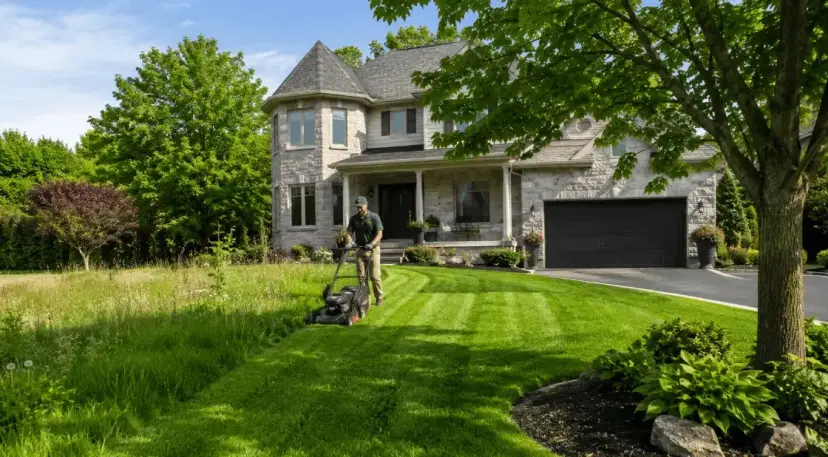
Lawn Mowing Guide: Best Height, How Often, and When to Hire a Service
By Sal Ram · · 14 min read
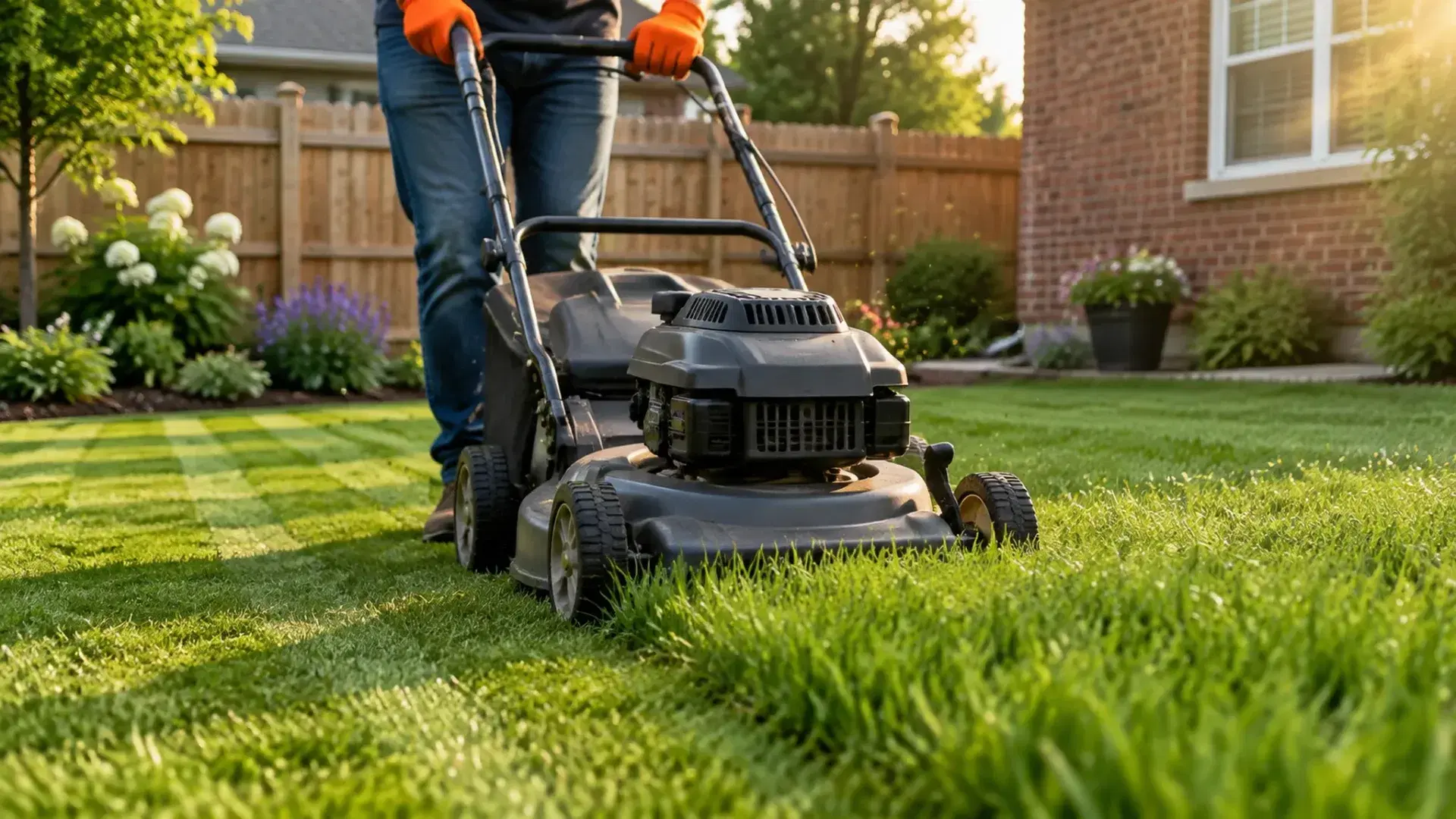
Key Takeaways
- Mow most Canadian lawns at 6.5 to 9 cm (2.5 to 3.5 in.).
- Never cut more than one-third of the blade at once.
- Mow about once a week from mid-May to late June.
- Leave clippings on the lawn. They feed it for free.
- A mowing service costs about $40 to $60 per cut for most lots.
Good lawn mowing comes down to three numbers. Keep the grass at 6.5 to 9 cm (2.5 to 3.5 in.). Never cut more than one-third of the blade at once. Mow often enough to follow that rule, which is about once a week in a Canadian spring. Get those right and your lawn will be thicker, greener, and have fewer weeds.
Most people mow too short and too late. They let the grass get long, then cut it way down to "buy time." That one habit causes more brown patches than drought or bugs. This guide covers mowing height, timing, clippings, common mistakes, and what it costs to hire help. Ezi Home Services books local lawn mowing across Ontario and Quebec, so the advice here is built for cool Canadian lawns.
What height should you mow your lawn?
Mow most Canadian lawns at 6.5 to 9 cm (2.5 to 3.5 in.), and about 7.5 cm (3 in.) is the sweet spot. The Toronto and Region Conservation Authority recommends a 7.5 cm cutting height to shade out weeds and keep the soil cool and moist. Lawns in Ottawa, Toronto, Montreal, and Gatineau are mostly cool-season grasses. That means Kentucky bluegrass, perennial ryegrass, and fine or tall fescue. They all like to be kept on the tall side.
Here's a quick guide by grass type, based on Penn State Extension heights for cool-season grass:
- Kentucky bluegrass: 6.5 to 9 cm (2.5 to 3.5 in.)
- Perennial ryegrass: 6.5 to 9 cm (2.5 to 3.5 in.)
- Fine fescue: 6.5 to 9 cm (2.5 to 3.5 in.)
- Tall fescue: 7.5 to 9 cm (3 to 3.5 in.)
Tall grass is not lazy grass. Longer blades shade the soil, so it stays cool and holds water longer. That shade also blocks the light weed seeds need to sprout. And more leaf means more energy for the plant, which pushes roots deeper.
Height should shift with the season, too. Stay near the low end of the range in spring and fall. In summer, raise the deck a notch toward 9 cm. The extra height cools the crown of the plant during hot, dry weeks. If you're not sure what grass you have, our beginner's guide to lawn care explains how to tell.
What is the one-third rule?
The one-third rule says never cut off more than one-third of the blade in one mow. If you want a 7.5 cm lawn, mow when it hits about 11 cm. Cut it back to 7.5 cm and you've removed one-third.
Why does this matter so much? Grass makes food in its blades. Cut off half the blade and you cut off half its food supply in one shot. The plant then stops growing roots and puts all its energy into new leaf. Turf experts call this "scalping stress." Do it often and the lawn thins out, browns, and lets weeds in.
So the rule really sets your schedule. It's not "mow every Saturday." It's "mow before the grass gets one-third taller than your target." In May and early June, that can mean every 4 to 5 days. In a dry August, it might be every 10 days or more.
Did you miss a week and now the grass is very long? Don't cut it all at once. Set the mower to its highest setting and mow. Wait 3 or 4 days, then lower it one notch and mow again. Step down slowly until you're back at your target height.
How often should you mow in Canada?
Most Canadian lawns need mowing once a week from mid-May to late June, then less often in summer and more often again in fall. Cool-season grass grows fastest between about 15°C and 24°C. That's why spring and fall are the busy times. Growth slows in summer heat and stops when days stay below about 5°C to 10°C.
Here's a rough mowing calendar for southern Ontario and Quebec:
- Late April to early May: first mow, once the grass is 7.5 to 10 cm (3 to 4 in.) and the ground is firm.
- Mid-May to late June: peak growth. Mow every 5 to 7 days.
- July to mid-August: slower growth. Mow every 7 to 14 days and raise the deck.
- Late August to September: growth picks up again. Back to weekly.
- October: slow down as nights get cold. Mow when needed.
- Late October to early November: final mow once growth stops.
Spring often comes later in Ottawa and Gatineau than in Toronto. Surrey's mild climate stretches the season at both ends. Watch the grass, not the calendar. For Ottawa-specific timing, see our Ottawa lawn care guide.
When should you do the first and last mow of the season?
Do your first mow when the grass reaches about 7.5 to 10 cm (3 to 4 in.) and the soil is dry enough to walk on without leaving prints. In most of southern Ontario and Quebec, that's late April or early May. Mowing soggy spring soil packs it down and leaves ruts.
For the first cut, keep the deck high. Just take the tips off. This is also a good time to rake out dead grass and debris before the season gets going.
Your last mow comes when the grass stops growing, usually late October to early November. For that final cut, many Ontario lawn guides suggest dropping the height a little, to about 5 to 6.5 cm (2 to 2.5 in.). Long grass can fold over and mat under the snow. That wet mat is where snow mould starts. Snow mould is a fungus that leaves grey or pink crusty patches in spring.
Clear the leaves before that final mow, too. Leaves left on the lawn trap moisture under the snow and smother the grass. You can rake them up or run the mower over them to chop them into the lawn.
Should you bag or mulch your grass clippings?
Mulch them. Leaving clippings on the lawn feeds it for free. The Toronto and Region Conservation Authority calls clippings the perfect fertilizer: free, convenient, and full of nutrients. As they break down, they return nitrogen, phosphorus, and potassium to the soil.
The savings add up over time. A Colorado State University study found that leaving clippings lets you cut nitrogen fertilizer by about 25 percent in the first 10 years. After 11 to 25 years, the cut rises to about 33 percent. That means less money spent and less fertilizer washing into local streams.
Many people worry that clippings cause thatch. They don't. Thatch is mostly made of tough stems and roots, not soft leaf bits. Short clippings break down within days.
There are a few times when bagging makes sense:
- The grass got very long and the clippings sit in clumps.
- The lawn has a disease you don't want to spread.
- You're about to seed bare patches and need a clean surface.
- There's a thick layer of fall leaves you want off the lawn.
Otherwise, a mulching blade or a standard mower with the bag removed works fine. Just follow the one-third rule so the clippings stay small.
What are the most common lawn mowing mistakes?
The biggest mowing mistake is cutting too short, also called scalping. It leaves brown, stressed patches that weeds move into fast. Here are the others that cause the most damage:
Mowing with a dull blade. A dull blade tears grass instead of slicing it. The torn tips turn white or brown within a day or two, and open wounds let disease in. Sharpen the blade every 20 to 25 hours of use. For most homeowners, that's once or twice a season. Sandy soil or thick grass dulls it faster.
Mowing wet grass. Wet grass clumps, clogs the deck, and cuts unevenly. The wheels can also rut soft soil. Wait until the dew dries, usually by mid-morning.
Mowing in midday heat. Cutting stresses the plant. Doing it at 2 p.m. on a 30°C day adds even more stress. Late morning or early evening is better.
Mowing the same pattern every time. Running the same lines every week packs the soil into ruts and makes the grass lean one way. Switch direction each mow.
Ignoring the edges. Long grass along fences, beds, and walkways makes a whole lawn look messy. Trim edges every second or third mow.
Skipping safety. This one matters more than people think. Canada's CHIRPP data, which tracks hospital injury visits, found 1,161 patients with 1,451 mower injuries across about 14 to 16 hospitals from 1990 to 2006. Nearly half were kids 15 or younger. The most common cause was someone slipping or tripping under the mower. Keep kids off the lawn while you mow and wear closed-toe shoes.
How much does a lawn mowing service cost?
A lawn mowing service in Canada costs about $30 to $100 per cut. Most city and suburban lawns land around $40 to $60 per visit on a weekly plan. Price depends on lot size, how often you book, and what's included.
Here's a typical range for 2026:
| Lot size | Typical price per cut |
|---|---|
| Small city lot (about 500 m², or 1/8 acre) | $30 to $50 |
| Average suburban lot (about 1,000 m², or 1/4 acre) | $45 to $75 |
| Large lot (about 2,000 m², or 1/2 acre) | $50 to $90 |
| Full acre (about 4,000 m²) | $150 to $300 |
Weekly visits usually cost less per cut than one-time jobs. A single cut on an overgrown lawn often costs $65 to $100 or more, since it takes longer and may need a double cut.
Now compare that to doing it yourself. You need a mower and a trimmer up front. Then add gas or batteries, oil, and a blade sharpening each year. And don't forget your time. Mowing every week from May to October adds up to a lot of Saturday mornings.
What does a lawn mowing service include?
A standard lawn mowing service usually includes three steps: mow, trim, and blow. The service provider cuts the lawn to the right height and trims the edges along fences, beds, and walks. Then they blow the clippings off your driveway and paths.
A good provider will also:
- Adjust the cutting height for the season.
- Mulch clippings back into the lawn unless you ask for bagging.
- Switch mowing direction from week to week.
- Keep blades sharp so the grass is cut cleanly.
- Flag problems early, like brown patches, grubs, or chinch bug damage.
Ezi's lawn care services cover regular mowing, trimming, and cleanup. You can see local details for lawn mowing in Toronto, Ottawa, Montreal, and Gatineau. Seeing yellow, dying patches in summer? Our guide on spotting and treating chinch bugs can help you rule them out.
The hidden cost of a gas mower
Here's something most mowing guides skip. Gas mowers are a real source of smog. Small mower engines don't have the emission controls a car has. Older two-stroke engines are the worst offenders, since they burn oil mixed with gas. That's why Environment and Climate Change Canada sets emission rules for small gas engines like lawn mowers, to cut smog-forming pollution.
So what can you do? Here are three easy fixes:
- Switch to a battery or electric mower. There's no exhaust at all while you mow.
- Mow less often. A taller cut, done right, often means fewer mows over the season.
- Share the work. A service provider mowing several lawns on one street makes fewer trips than each home running its own mower.
It also helps to mow less of your yard. Some homeowners turn hard-to-mow corners into garden beds or native plantings. That's less mowing every week, forever.
Methodology
Mowing heights come from the Toronto and Region Conservation Authority and Penn State Extension guidance for cool-season grass. Clipping guidance comes from the TRCA and a Colorado State University study. Injury data comes from the Public Health Agency of Canada's CHIRPP program. Small-engine emissions information comes from Environment and Climate Change Canada. Price ranges reflect published 2026 Canadian lawn care price guides. Seasonal timing reflects typical southern Ontario and Quebec growing conditions.
When should you hire a lawn mowing service?
Hire a lawn mowing service when you can't keep up with the one-third rule. In May and June, that means mowing every 5 to 7 days. Miss two weeks and you're either scalping the lawn or doing the slow step-down cut. For busy families, frequent travellers, or anyone who'd rather have Saturdays back, a weekly plan is often the simplest fix.
A service also makes sense if you don't own a mower, have a steep or awkward yard, or have health limits that make mowing hard. And if you just want a lawn that looks sharp every week, a provider with a sharp blade and an edger delivers that.
See why regular lawn maintenance pays off, then book a lawn mowing service with Ezi in a few taps.
The bottom line on lawn mowing
Good lawn mowing is simple once you know the numbers. Keep cool-season grass at 6.5 to 9 cm (2.5 to 3.5 in.). Never cut more than one-third at a time. Leave the clippings, keep the blade sharp, and adjust the schedule as growth speeds up and slows down. Drop the height a little for the last mow of fall and clear the leaves first.
Do that all season and your lawn will thicken up, crowd out weeds, and handle dry spells better. If you'd rather skip the weekly chore, Ezi's lawn care service can take it off your list.
Frequently Asked Questions
What is the best height to mow grass in Canada?
Mow most Canadian lawns at 6.5 to 9 cm (2.5 to 3.5 in.), with about 7.5 cm (3 in.) as the sweet spot. Lawns here are mostly cool-season grasses like Kentucky bluegrass and fescue. They do best when kept tall. Raise the height a bit in hot summer weeks.
How often should you mow your lawn?
Mow about once a week from mid-May to late June, when cool-season grass grows fastest. In hot, dry summer weeks, every 7 to 14 days is often enough. The real rule is to mow before the grass grows one-third past your target height.
Is it better to bag or mulch grass clippings?
Mulching is better for most lawns. Clippings return nitrogen and other nutrients to the soil as they break down. A Colorado State University study found it lets you cut nitrogen fertilizer by about 25 percent. Bag only when clippings clump or the lawn has a disease.
When should you do the last mow of the year?
Do the last mow when the grass stops growing, usually late October to early November in Ontario and Quebec. Drop the height to about 5 to 6.5 cm (2 to 2.5 in.) and clear the leaves first. This helps keep snow mould from forming under the snow.
How much does lawn mowing cost in Canada?
Lawn mowing costs about $30 to $100 per cut in Canada, and most city lots land around $40 to $60 on a weekly plan. One-time cuts on overgrown lawns often cost $65 to $100 or more. Ezi Home Services offers lawn mowing with upfront pricing in several Canadian cities.
Can you mow wet grass?
It's best not to mow wet grass. Wet clippings clump, clog the mower, and leave an uneven cut. The wheels can also rut soft soil. Wait until the dew dries, usually by mid-morning.
lawn mowing
lawn care
mowing height
grass clippings
lawn mowing service
Written by
Lawncare · Car Detailing
Sal Ram brings an engineer's problem-solving mindset to lawn care and car detailing — the same diagnostic instincts from his engineering background now go into reading turf problems and chasing paint-perfect finishes. Hands-on, technical, and big on getting the details right.