How to Clean a Leather Handbag or Purse (Without Damaging It)
By Lorna Beaulieu · · 13 min read
Key Takeaways
- Test every cleaner on a hidden spot first.
- Clean with a barely damp cloth and mild, pH-neutral soap.
- Never dry leather with a hair dryer or heater.
- Condition a thin layer every 3 to 6 months.
- Store leather at 45% to 55% humidity, in a cotton dust bag.
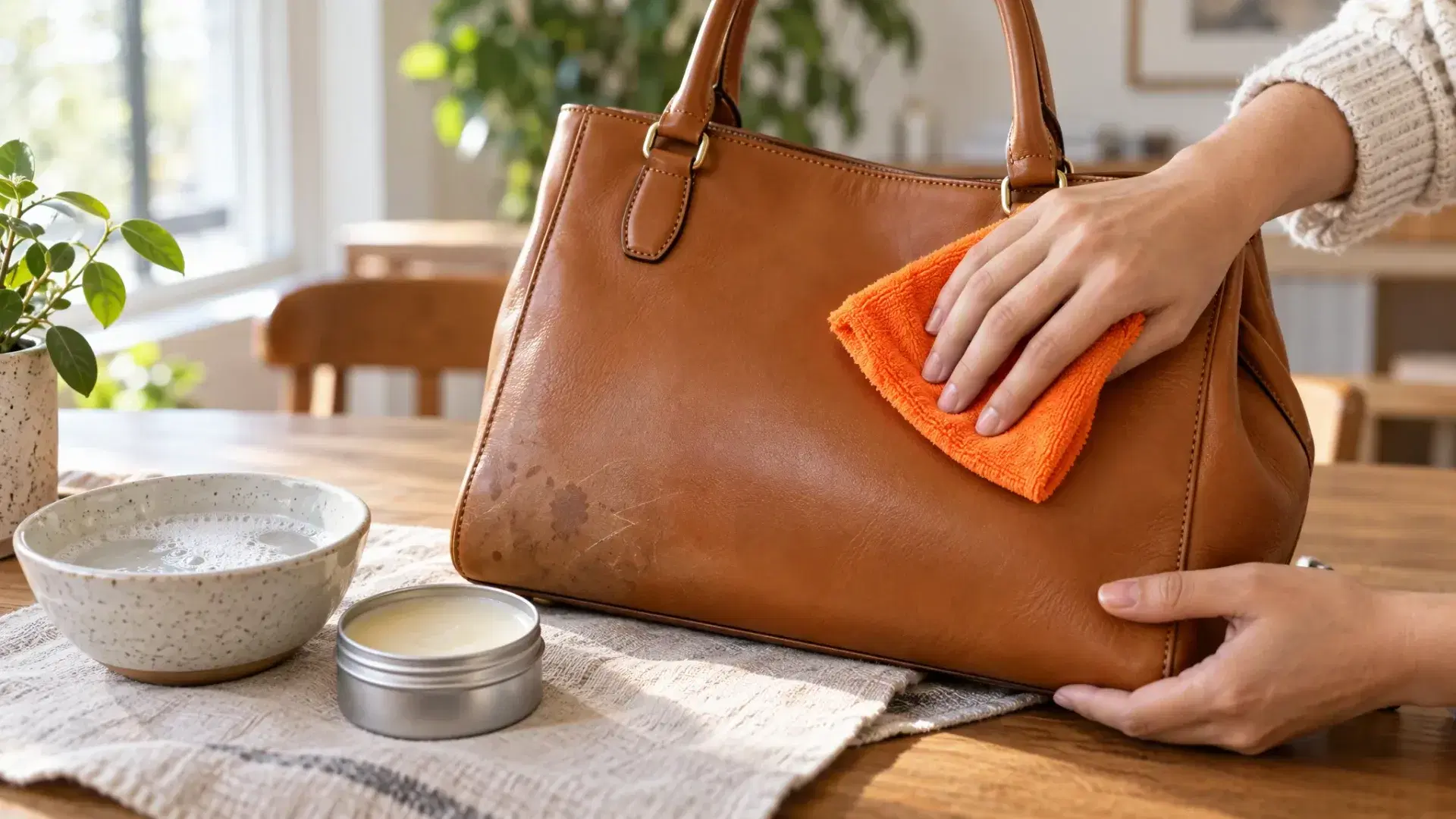
To clean a leather handbag, empty it and brush off dust. Then wipe the outside with a soft cloth, barely damp with water and a drop of mild, pH-neutral soap. Wipe again with a clean, damp cloth and let it air dry away from heat. Once it's dry, rub in a thin layer of leather conditioner. Always test any product on a hidden spot first.
That last step matters more than most people think. Leather isn't one material. A glossy, coated bag can handle a damp cloth with no trouble. A soft, natural-finish bag can darken from a single drop of water. This guide shows how to tell which one you have, how to clean it, and how to treat common stains like ink, grease, and water spots. It also covers a problem most guides skip: Canadian winter air. Ezi Home Services books house cleaning in Ottawa, Toronto, Montreal, and other cities, and handbags are one of the few things in a closet that need a careful hand.
First, find out what kind of leather you have
Before you clean anything, do a quick water test. Different leathers react very differently to water and cleaners, so this step guides every choice after it.
The water drop test:
- Find a hidden spot, like the inside of a strap or the bottom edge.
- Put one small drop of water on it.
- Wait 30 seconds.
If the drop beads up and sits on top, you have finished or pigmented leather. It has a coating that protects it. This is the most common type for everyday bags. It's the easiest to clean.
If the drop soaks in and leaves a dark spot, you have unfinished leather, often called aniline or nubuck. It has little or no coating. It's soft and natural, but it stains easily. Use as little water as you can, and test every product first. Let the test spot dry fully. It should fade.
If the surface feels fuzzy or velvety, it's suede or nubuck. Don't use water or soap at all. Use a suede brush and a suede eraser instead.
What you need
- Two or three soft, white microfibre cloths. White, so no dye rubs off onto the bag.
- A soft brush, like a clean makeup brush or soft toothbrush.
- Mild, pH-neutral soap, or a leather cleaner made for bags.
- Distilled water, if your tap water is hard.
- Leather conditioner.
- A lint roller or small vacuum for the lining.
- Cornstarch, for grease stains.
- Cotton swabs.
Skip these: baby wipes, all-purpose sprays, vinegar, bleach, and household glass cleaner. Most are too harsh for leather. They can strip oils and dye. Many baby wipes also contain alcohol or oils that leave marks.
How to clean a leather handbag, step by step
Plan for about 30 minutes of work, plus drying time.
Step 1: Empty it out
Take everything out, including inner pockets. Turn the bag upside down and give it a gentle shake to drop out crumbs and dust.
Step 2: Clean the lining
Use a lint roller or a small vacuum with a brush tool to pick up dust and crumbs inside. For a fabric lining with a spot, dab it with a cloth dipped in a little soapy water. Don't soak it. Leave the bag open to dry.
Step 3: Dust the outside
Brush the outside with a soft, dry brush or wipe it with a dry cloth. Pay attention to seams, corners, and the base. Dust and grit act like sandpaper when you wipe.
Step 4: Test your cleaner
Put a little cleaner on a hidden spot. Wait 10 to 15 minutes. Check for colour change, dark marks, or a new shine. If the spot looks the same once dry, go ahead.
Step 5: Wipe with a barely damp cloth
Mix a few drops of mild soap in a bowl of lukewarm water. Dip a cloth, then wring it out until it's barely damp. It should feel cool, not wet.
Wipe the bag in small, gentle circles. Work one panel at a time. Don't scrub. Rinse and wring out the cloth often.
Step 6: Remove the soap
Wipe the bag again with a clean cloth dampened with plain water. Soap left on leather can dry it out over time.
Step 7: Air dry
Stuff the bag with clean paper or a towel to hold its shape. Let it dry at room temperature, away from heaters, vents, and direct sun. Never use a hair dryer. Heat makes leather shrink, stiffen, and crack.
Step 8: Condition it
Once the bag is fully dry, put a small amount of conditioner on a clean cloth. Rub it in a thin, even layer. Wait 10 minutes, then buff off any extra with a dry cloth.
How to remove common stains from a leather bag
Act fast. The sooner you treat a stain, the better your chances. Always blot, don't rub. Rubbing pushes the stain deeper and spreads it.
Ink
Ink is the most common purse stain, thanks to pens left uncapped inside.
- Finished leather: Dip a cotton swab in a little rubbing alcohol. Dab only the ink line, not the leather around it. Blot with a dry cloth. Repeat with a fresh swab. Then condition the spot, since alcohol dries leather.
- Unfinished leather: Don't use alcohol. It can lift the dye and leave a pale patch. Take it to a leather specialist.
Grease and oil
Lotion, food, and hand oils leave dark spots.
- Blot off any fresh oil with a dry cloth.
- Cover the spot with cornstarch or baking soda.
- Leave it overnight to draw out the oil.
- Brush it off gently the next day.
- Repeat if needed.
Don't use water on a grease stain. It can spread the oil.
Water spots
Rain and snow can leave rings on leather, especially unfinished types. The fix sounds odd, but it works. Dampen a soft cloth with distilled water. Wipe the whole panel evenly, from seam to seam, not just the spot. That way the panel dries to one even colour, with no edge line. Let it dry away from heat, then condition it.
Makeup
Brush off loose powder with a dry, soft brush. For liquid makeup on finished leather, blot with a barely damp cloth and a drop of mild soap. Then wipe with plain water.
Salt stains
In a Canadian winter, salt from sidewalks can splash onto bags set down on floors or car mats. It leaves a white, chalky line. Wipe it with a cloth dampened in water and a few drops of white vinegar. Then wipe with plain water, dry, and condition. Vinegar is acidic, so keep it to this one use and rinse well. For salt on boots and car mats, our guide on how to remove salt stains from car carpet covers the rest.
How often should you clean a leather bag?
| Task | How often |
|---|---|
| Empty and shake out | Weekly |
| Dry dust the outside | Weekly, for a daily bag |
| Wipe with mild soap | Every 1 to 3 months |
| Condition | Every 3 to 6 months |
| Treat stains | Right away |
Don't over-condition. It's easy to think more is better. It isn't. The Canadian Conservation Institute notes that museums now use as few dressings and cleaners as they can, because over time they can harm leather. Too much conditioner can darken the leather, make it sticky, and attract dirt. A thin layer a few times a year is enough for most bags.
The underused angle: Canadian winter air is hard on leather
Most leather care guides come from places with mild, steady weather. Canada is different. Our homes swing from very dry in winter to damp in summer, and leather reacts to both.
The Canadian Conservation Institute says leather does best at a steady relative humidity of 45% to 55%, at about 18°C to 20°C. But in winter, Canadian homes often run much drier. Health Canada suggests aiming for about 30% to 35% indoor humidity during the coldest months to keep condensation off windows. That's well below what leather prefers.
In dry air, leather loses moisture. It gets stiff and can crack, most often at folds, handles, and corners. Then in summer, the risk flips. The CCI warns that mould grows on leather when relative humidity sits between 65% and 100%, with warm air and poor airflow. A bag tucked in a damp basement or a closed closet can grow mould in one humid summer.
Here's how to plan for both seasons:
- Winter: Condition your bags in late fall, before the heat comes on. Keep them away from heat vents and radiators. Check handles and folds for dry, cracked spots in January.
- Summer: Don't store leather in a basement or a damp closet. Leave a little space between bags so air can move. A small packet of silica gel inside each bag helps.
- All year: A cheap hygrometer in your closet tells you what your leather is living in.
How to remove mould from a leather bag
If you find white or green fuzz on a bag, take it outside before you clean it. That keeps spores out of your home. Wear a mask.
Following CCI guidance on mould and leather:
- Brush off surface mould gently with a soft brush, or vacuum it with a brush tool. A vacuum with a HEPA filter is best.
- Wipe lightly with a cloth dampened with 2 parts rubbing alcohol to 1 part water. The CCI says the mix should be at least 40% alcohol. This helps kill spores left in the leather. Test it first, since alcohol can lift dye.
- Let the bag dry in a cool, airy spot.
- Condition it once it's fully dry.
- Find the cause. Move the bag to a drier spot.
If the mould is widespread, or the bag is valuable, take it to a leather specialist.
How to store leather bags
- Use a breathable dust bag. Cotton is best. Never store leather in plastic. It traps moisture and can lead to mould.
- Stuff it to hold its shape. Use clean, acid-free tissue paper or a small towel. Skip newspaper. The ink can rub off.
- Store it upright. Don't stack bags. Weight crushes the shape and creases the leather.
- Don't hang it by the strap. Long-term hanging stretches handles and straps.
- Keep it out of the sun. Light fades leather and dries it out.
- Unclip metal hardware where you can, or wrap it in tissue, so it can't scratch or press into the leather.
When to see a leather specialist
Some jobs are better left to a pro:
- Designer or high-value bags.
- Unfinished or aniline leather with a large stain.
- Ink on unfinished leather.
- Colour loss, deep scuffs, or worn edges.
- Torn seams or broken hardware.
- Widespread mould.
A leather repair shop can often clean, re-dye, and seal a bag that looks past saving.
Methodology
Storage humidity, temperature, and mould guidance come from the Canadian Conservation Institute, part of the Government of Canada. Indoor winter humidity advice reflects Health Canada guidance. Cleaning and stain removal steps reflect common leather care practice for finished and unfinished bag leathers, including the water drop test used across the leather industry. Always follow your bag maker's care instructions first.
When to call a professional
Your handbag is a small job you can do at the kitchen table. But closets, entryways, and storage spaces are often where dust and damp build up, and where your leather spends most of its time.
A regular general house cleaning keeps closets and entryways dust-free. A deep clean gets into the corners most people skip. For the leather in your car, an interior car detailing cleans and conditions the seats. You can book with Ezi in a few taps, with an upfront price and a set arrival window.
The bottom line on cleaning a leather handbag
Start with the water drop test so you know what you're working with. Dust the bag, then wipe it with a barely damp cloth and a drop of mild soap. Wipe again with plain water, air dry, and condition with a thin layer. Treat stains right away, and blot rather than rub.
In Canada, plan for the seasons. Condition in late fall, keep bags away from heat vents in winter, and keep them out of damp basements in summer. A cotton dust bag and some tissue paper do the rest. For other delicate items in your closet, see how to dry clean clothes at home.
How To
- 1Empty the bagTake everything out, including inner pockets, and shake out crumbs and dust.
- 2Clean the liningUse a lint roller or small vacuum inside. Dab spots on fabric lining with a little soapy water.
- 3Dust the outsideBrush or wipe the outside with a soft, dry cloth, paying attention to seams and corners.
- 4Test your cleanerTry the cleaner on a hidden spot and wait 10 to 15 minutes to check for colour change.
- 5Wipe with a barely damp clothWipe in small, gentle circles with a cloth wrung out in water and a few drops of mild soap.
- 6Remove the soapWipe again with a clean cloth dampened with plain water.
- 7Air dryStuff the bag to hold its shape and let it dry at room temperature, away from heat and sun.
- 8Condition itRub in a thin layer of leather conditioner, wait 10 minutes, then buff off the extra.
Frequently Asked Questions
How do you clean a leather handbag?
Do the water drop test first. Put one drop on a hidden spot. If it beads up, wipe the bag with a barely damp cloth and mild soap. If it soaks in, use as little water as you can.
How often should you condition a leather bag?
Rub a thin layer of conditioner every 3 to 6 months. Too much can darken leather and make it sticky. Condition in late fall, before dry winter heat.
Can you use rubbing alcohol on a leather purse?
Only on finished leather that beads water. Dab just the ink line with a swab. Then condition the spot. On unfinished leather, alcohol can lift the dye.
How do you get a grease stain out of a leather bag?
Cover it with cornstarch or baking soda and leave it overnight. Brush it off the next day. Repeat if needed. Don't use water, which can spread the oil.
How do you remove water spots from a leather bag?
Dampen a cloth with distilled water and wipe the whole panel, seam to seam. That way it dries to one even colour. Let it air dry, then condition.
How should you store a leather handbag?
Keep it in a cotton dust bag, stuffed with tissue, standing upright. Avoid plastic, basements, and direct sun. Leather does best at 45% to 55% humidity.
leather care
handbag cleaning
stain removal
closet care
storage
Explore more
Written by
Home Cleaning · Maintenance
Lorna has spent years in residential cleaning and home maintenance, from move-in/move-out deep cleans to seasonal upkeep routines that actually hold up. She writes about the small, practical habits that keep a home running smoothly between professional visits.