How to Clean a Washing Machine (Front-Load and Top-Load)
By Samer Alsayegh · · 8 min read
Key Takeaways
- Clean a washing machine once a month, or every 30 to 50 loads.
- Front-load washers get mould 13% of the time. Top-loaders, just 1% to 3%.
- Vinegar handles everyday mould fine. Bleach is stronger, but never mix the two.
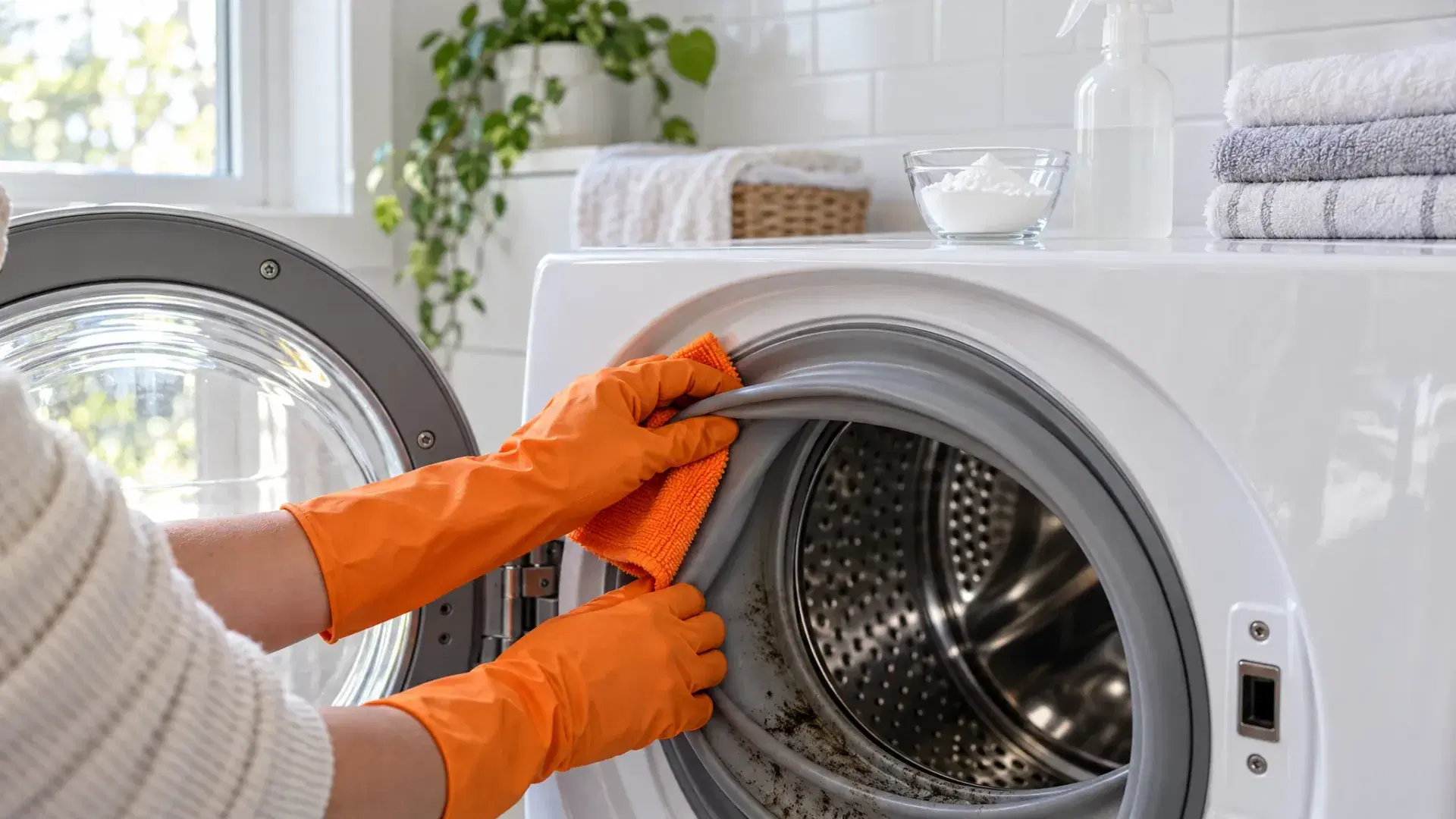
- Wipe the rubber door seal every fold. It's the top source of odour.
- Leave the door propped open between loads to stop moisture buildup.
Run an empty hot cycle with vinegar or a washer-cleaner tablet once a month. Then wipe the door seal and drawer dry. That's the whole fix for a musty washing machine, front-load or top-load. Front-load machines carry the bigger risk. A 2025 Consumer Reports survey found mould or mildew in 13% of front-load washers. That compares to just 3% of high-efficiency top-loaders and 1% of older top-load agitators. The same airtight rubber seal that makes front-loaders efficient also traps moisture. Top-loaders just air that moisture out on their own. Ezi Home Services sees this exact grime often. It shows up in laundry-room deep cleans all the time. Here's the routine that keeps a washer smelling clean between visits.
Why do front-load washers smell worse than top-loaders?
Front-load washers seal tight to stop water from leaking out during the wash. That same seal traps warm, damp air after the cycle ends. Mould and mildew thrive in that environment. A 2025 Consumer Reports survey found mould in 13% of front-load machines. High-efficiency top-loaders scored 3%. Older agitator top-loaders scored just 1%. Top-loaders don't have a sealed door, so trapped moisture escapes on its own. Whirlpool's own care guidance backs up the same fix either way. Run a monthly deep-clean cycle, and leave the door propped open between loads.
How to deep clean a front-load washing machine
Run this once a month. Notice a smell sooner? Run it again right away.
- Start the machine empty. Use the built-in clean cycle if it has one, or the hottest, longest cycle available.
- Pour 2 cups of white vinegar into the soap drawer. Or use a washer-cleaning tablet in the detergent dispenser instead.
- While that cycle runs, wipe every fold of the rubber door gasket. Use a cloth dampened in vinegar. Lint, hair, and coins collect in those folds more than anywhere else in the machine.
- Pull out the detergent and fabric softener drawer. Rinse it under hot water and scrub off soap buildup with an old toothbrush.
- Once the cycle ends, wipe the drum dry with a towel. Leave the door open to air out.
Want the rest of the laundry room handled too? A general house cleaning from Ezi covers the machine exterior. It also covers the space behind it and the rest of the room, in one visit.
How to clean a top-load washing machine
Top-loaders need less frequent attention. But skip this step, and detergent residue still builds up.
- Add 4 cups of white vinegar to the empty drum and run a hot cycle.
- Add 1 cup of baking soda to the drum and run a second hot cycle. Keep the vinegar and baking soda in separate cycles. Mixed together, they just fizz and rinse away before they can clean anything.
- Wipe the inside of the drum and the underside of the lid with a cloth.
- Leave the lid open so the drum dries fully before the next load.
Clean a top-load washer once a month. That stops dirt, grime, and detergent film from building up on the drum walls.
Cleaning the detergent drawer and dispensers
Fabric softener and detergent residue turn into a sticky paste. It happens right in there. It's easy to forget, since it's tucked out of sight. Slide the drawer all the way out. Most models release with a firm pull or a small tab underneath. Soak it in hot water for 10 minutes, then scrub the compartments with an old toothbrush. Rinse the drawer's housing inside the machine too. Residue builds up there even when the drawer itself looks clean. Let both dry completely before sliding the drawer back in. A damp drawer left in place is another spot mould can start.
Vinegar or bleach: which one actually kills washing machine mould?
Bleach kills mould more aggressively than vinegar. But vinegar handles most everyday mildew fine, and it's gentler on rubber seals over time. Distilled white vinegar is acidic enough to break down soap scum. It also kills many common mould strains. That makes it the go-to choice for a routine monthly clean. Bleach works faster on a stubborn mould problem. But use it too often, and it can dry out and crack the rubber door gasket. Never run vinegar and bleach in the same cycle. Mixing them produces chlorine gas, which is dangerous to breathe in an enclosed laundry room. Pick one per cycle. Stick to vinegar, unless a vinegar cycle alone won't clear the smell.
Daily habits that keep odour from coming back
A few small habits between monthly cleans help. They cut down on how much scrubbing you'll need later.
- Leave the door or lid propped open after every load. Closed doors trap the exact moisture that starts mould growth.
- Pull wet laundry out within an hour. Clothes left in a damp drum pick up a musty smell fast. That smell often transfers to the machine itself.
- Wipe the gasket dry after wash days. A quick pass with a dry cloth takes 30 seconds. It stops water from pooling in the folds overnight.
- Use the right amount of detergent. Extra detergent doesn't clean better. It just leaves more residue for mould to feed on, per Whirlpool's own care guidance.
- Run an extra rinse cycle for very large or heavily soiled loads. That flushes out detergent that a standard cycle sometimes leaves behind.
Methodology
The cleaning steps and frequency here come from care guides published by Whirlpool and Maytag. Those were checked against Consumer Reports' testing, including its 2025 survey on mould rates by washer type. Where the manufacturers and the independent testing agreed, that guidance is listed first.
When to call a professional
A monthly vinegar cycle handles most washing machine odour by itself. But a laundry room collects more than washer grime. Dryer lint behind the vents, detergent spills, and dust on shelves all add up too. Ezi's deep cleaning service covers the laundry room too. That includes baseboards and appliance exteriors most weekly cleaning skips.
Does your washer's stainless-steel exterior have water spots or fingerprints too? That needs a different fix than the inside of the drum. See our guide to cleaning stainless steel appliances without streaks for the outside of the machine.
The bottom line
A washing machine cleans your clothes. But it needs its own clean too, to keep doing that job well. Run a vinegar cycle monthly. Wipe the door seal and drawer dry every time. Leave the door propped open between loads. Front-load owners should treat that gasket wipe-down as non-negotiable. It's the single biggest source of the smell Consumer Reports found in 13% of front-load machines. Skip the guesswork on the rest of the house. Book a cleaning with Ezi and let a vetted provider handle it.
How To
Frequently Asked Questions
What's the best way to clean a washing machine?
Run an empty cycle on the hottest setting with 2 cups of white vinegar in the soap drawer. Then wipe the drum, the rubber door seal, and the detergent drawer. Do this once a month, or every 30 to 50 loads, to keep mould and smell from coming back.
How do you deep clean a washing machine?
Pull out the detergent drawer and soak it in hot, soapy water. Scrub every fold of the door seal and empty the drain pump filter. Run a hot empty cycle with 2 cups of vinegar, then a second hot cycle with 1/2 cup of baking soda. Leave the door open to dry.
How do you sanitize a washing machine?
Run the Clean Washer cycle, or the hottest cycle, with liquid chlorine bleach in the bleach dispenser. Whirlpool caps a single-load dispenser at 2/3 cup (165 mL). Never run bleach in the same cycle as vinegar. The two make toxic chlorine gas.
How do you clean a washing machine step by step?
1. Empty the drum. 2. Soak and scrub the detergent drawer. 3. Wipe every fold of the door seal. 4. Clean the drain pump filter. 5. Run a hot empty cycle with vinegar. 6. Run a hot empty cycle with baking soda. 7. Wipe the drum dry and leave the door open.
How often should you clean a washing machine?
Clean a washing machine once a month, or every 30 to 50 loads. That's what Whirlpool and Maytag both say. Front-load owners with a bad smell may need to clean it every two weeks, until the smell goes away.
Is vinegar or bleach better for washing machine mould?
Bleach kills mould more aggressively than vinegar. But plain white vinegar handles most everyday mould and mildew just fine. Never mix the two in one cycle. Bleach plus vinegar makes dangerous fumes.
Why do front-load washers smell more than top-load washers?
Front-load washers trap more water behind their sealed rubber door. A 2025 Consumer Reports survey found mould in 13% of front-load machines. Top-loaders scored just 3%, and older top-loaders scored only 1%.
Can you put vinegar in a washing machine dispenser?
Yes. Pour 2 cups of white vinegar into the soap drawer, not the drum. Then run a hot empty cycle. Keep vinegar away from baking soda or bleach to avoid clogs and bad reactions.
How do you clean the rubber seal on a front-load washer?
Pull back every fold of the rubber door seal. Wipe it with a cloth dipped in vinegar or soapy water. Lint, hair, and coins collect there. It's the top cause of washer smell.
Does leaving the washing machine door open help?
Yes. Leaving the door or lid open lets trapped water dry out. It's one of the easiest ways to stop mould, per Whirlpool's own care guide.
washing machine cleaning
clean washer
laundry room cleaning
how to clean washing machine
washing machine mold
home maintenance
Explore more
Written by
Home Cleaning · Maintenance
Co-founder of Ezi Services and Draftbase, entrepreneur and builder focused on SaaS, AI, and growth — I turn ideas into scalable businesses using technology, automation, and relentless execution.