How to Descale a Kettle With Vinegar or Citric Acid
By Samer Alsayegh · · Updated · 9 min read
Key Takeaways
- Boil equal parts water and white vinegar, then let it sit one hour
- Citric acid works faster: 2 teaspoons, boiled, then rest 10 minutes
- Limescale is not harmful; it's just calcium and magnesium minerals
- Descale every 1 to 2 months in hard water areas
- Never mix vinegar or citric acid with bleach-based cleaners
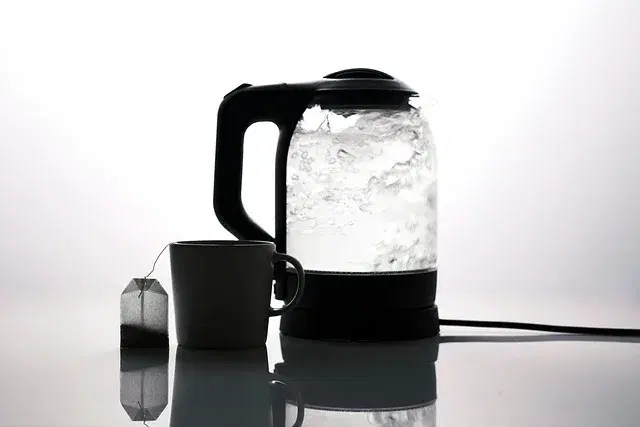
The fastest way to descale a kettle is to fill it with equal parts water and white vinegar, boil it, let it sit for an hour, then rinse thoroughly and boil plain water once more before use.
That chalky white crust lining your kettle isn't dirt, it's limescale, the mineral residue hard water leaves behind every time it boils. It's not dangerous (calcium and magnesium are minerals you already eat), but it does make your tea taste off, slows down how fast your kettle boils, and eventually clogs the spout filter. A vinegar or citric acid soak clears it out in under an hour, no scrubbing required.
How fast that crust builds back up depends entirely on your water. Hard water areas can see visible limescale within a few weeks, while soft water areas might go months without a trace. Either way, the fix below is identical, the only thing that changes is how often you need it.
How to clean a kettle with vinegar and water
Fill the kettle with equal parts water and white vinegar, bring the mixture to a boil once, then let the solution sit undisturbed for an hour before pouring it out and rinsing thoroughly. White vinegar's acidity dissolves limescale without any scrubbing, just make sure it's white vinegar specifically, since malt, apple cider, or wine vinegars aren't acidic enough to do the job.
- Fill the kettle halfway with equal parts water and white vinegar (for example, 250 ml of each).
- Boil the kettle once, then unplug it and let the solution sit for a full hour.
- Pour out the solution. Any remaining flecks of mineral buildup should wipe away easily with a soft sponge or cloth.
- Rinse the kettle thoroughly with clean water, then boil a full kettle of plain water and discard it to clear any lingering vinegar taste or smell.
Removing limescale with citric acid
Add 2 heaped teaspoons of citric acid to a kettle filled halfway with water, bring it to a boil, then stop it and let it sit for 10 minutes before rinsing. Citric acid works faster than vinegar and doesn't leave a lingering smell, so you can skip the extra rinse-boil that vinegar requires.
- Fill the kettle with water to about halfway, enough to cover the heating element.
- Add 2 heaped teaspoons of citric acid (available at most grocery or hardware stores).
- Bring to a boil, then switch off and let it sit for 10 minutes.
- Pour out the water and rinse the kettle well, paying extra attention to the spout filter where limescale tends to collect.
For heavier buildup, use 1 tablespoon of citric acid in a half-full kettle and extend the soak to a full hour before rinsing.
Can you clean a kettle with lemon juice or baking soda?
Yes. Both work for lighter mineral buildup and are handy if you are out of vinegar.
- Lemon juice: Squeeze one lemon (or use about 60 ml of bottled lemon juice) into a half-full kettle, bring the mixture to a boil, and let it sit for an hour. Lemon juice contains citric acid, so it works the same way as the powder, just more gently, and leaves a fresh smell instead of a vinegar one.
- Baking soda: Add 1 tablespoon of baking soda to a half-full kettle, boil, and let it sit for 20 minutes. Baking soda is mildly alkaline rather than acidic, so it lifts stains and film but does little against heavy limescale. Finish with a gentle wipe using a soft sponge.
Whichever you use, rinse with clean water and boil one fresh kettle of water before making tea.
Is limescale in a kettle harmful to drink?
No, limescale is not harmful, it's mostly calcium carbonate and magnesium carbonate, minerals you already consume daily through food and water. There's no research linking hard water or limescale to health issues like kidney stones. The real downsides are practical: it affects taste, slows boiling, and increases energy use as the heating element works harder through the buildup.
How often should you do it?
Descale every 1–2 months in a hard water area and every 2–3 months in a soft water area, or sooner if you notice visible white buildup or a change in how your tea or coffee tastes. Daily kettle use in hard water areas pushes toward the more frequent end of that range, if you're boiling water every day and see chalky residue after a few weeks, don't wait for the recommended interval to descale.
Not sure how hard your water is? A quick visual check works: if a kettle shows visible white residue within 2–3 weeks of regular use, your water is on the harder end and you should descale monthly.
Can you mix vinegar or citric acid with other cleaners?
No, never mix vinegar or citric acid with bleach or any bleach-containing cleaner, since the combination can release dangerous gases. Stick to one descaling agent at a time, rinse thoroughly between any cleaning steps, and never combine kettle-cleaning products without checking their ingredients first.
Does this work on every electric tea kettle?
Yes, both vinegar and citric acid are safe on stainless steel, glass, and plastic electric tea kettle interiors, since neither is abrasive or damages either material. The one difference is scrubbing: stainless steel tolerates a soft scrub brush for stubborn spots, while plastic interiors should only get a soft cloth to avoid fine scratches that can harbor bacteria over time.
Copper or other decorative kettles may need a gentler approach, check manufacturer guidance before using vinegar on any metal beyond stainless steel, since some finishes react differently to acid.
What about the outside of the kettle and the spout filter?
Always unplug an electric kettle and keep the base and power contacts dry. Wipe the exterior with a damp cloth and a drop of dish soap, and remove the spout filter (if it's detachable) to rinse it separately under running water, since limescale collects there even after an interior descale. A toothbrush works well for scrubbing limescale out of the fine mesh of a spout filter, it's a small step that's easy to skip but makes a real difference in how cleanly the kettle pours.
Methodology
This guide draws on descaling guidance from KitchenAid, Bob Vila, and Moral Fibres, along with water-hardness data from Harvey Water Softeners and Fellow. Descaling frequency recommendations vary by source depending on regional water hardness, so we presented a range rather than a single number and noted how to judge your own water hardness visually.
When kitchen cleaning needs a bigger hand
A descaled kettle is a small win in a kitchen that also needs its counters, appliances, and floors kept up. Ezi's vetted house cleaning providers handle the rest of the kitchen so you're not doing it all on a Saturday morning. Learn more about Ezi's house cleaning service. Book a cleaning with an upfront price in a few taps.
For more kitchen cleaning tips, or to round out your supply list with our pick of the best all-surface cleaners, see those guides next. Got a waffle maker with stubborn residue too? Here's how to clean a waffle maker. For every other room and surface in the house, our room-by-room cleaning guide covers the rest.
The bottom line
Vinegar or citric acid, a boil, a soak, and a rinse, that's the entire process, no scrubbing or special tools required. Do it every 1–3 months depending on your water, and your kettle will boil faster and your tea will taste like tea again.
How To
Frequently Asked Questions
How do you descale a kettle?
Fill the kettle with equal parts water and white vinegar, boil it once, let it sit for an hour, then rinse thoroughly and boil plain water once more. Citric acid works as a faster alternative: 2 heaped teaspoons in a half-full kettle, boiled and left for 10 minutes, with no lingering smell.
Is limescale in a kettle harmful?
No, limescale is mostly calcium carbonate and magnesium carbonate, minerals already present in the food and water you consume daily. There's no research linking it to health issues; the real downsides are taste, slower boiling, and higher energy use.
How often should you descale a kettle?
Every 1 to 2 months with hard water and every 2 to 3 months with soft water, or sooner if white scale appears.
Can you mix vinegar and bleach to clean a kettle?
No, never mix vinegar or citric acid with bleach or bleach-containing cleaners, since the combination can release dangerous gases. Use one descaling agent at a time and rinse thoroughly between cleaning steps.
Does descaling damage stainless steel or plastic kettles?
No, both vinegar and citric acid are safe on stainless steel and plastic kettle interiors since neither is abrasive. Stainless steel can tolerate a soft scrub brush for stubborn spots, while plastic should only be wiped with a soft cloth to avoid fine scratches.
kitchen cleaning
descaling
limescale
home cleaning tips
appliance care
Explore more
Written by
Home Cleaning · Maintenance
Co-founder of Ezi Services and Draftbase, entrepreneur and builder focused on SaaS, AI, and growth — I turn ideas into scalable businesses using technology, automation, and relentless execution.