How to Organize a Kitchen So Cooking Actually Gets Easier
By Samer Alsayegh · · Updated · 9 min read

Key Takeaways
- Empty every cabinet first, sorting items into keep, donate, discard.
- NSF testing found coliform bacteria in 75% of kitchen sponges.
- Microwave a wet sponge two minutes daily, replace it every two weeks.
- Use separate cutting boards for raw meat and ready-to-eat food.
- Group countertop items in clusters of three for visual balance.
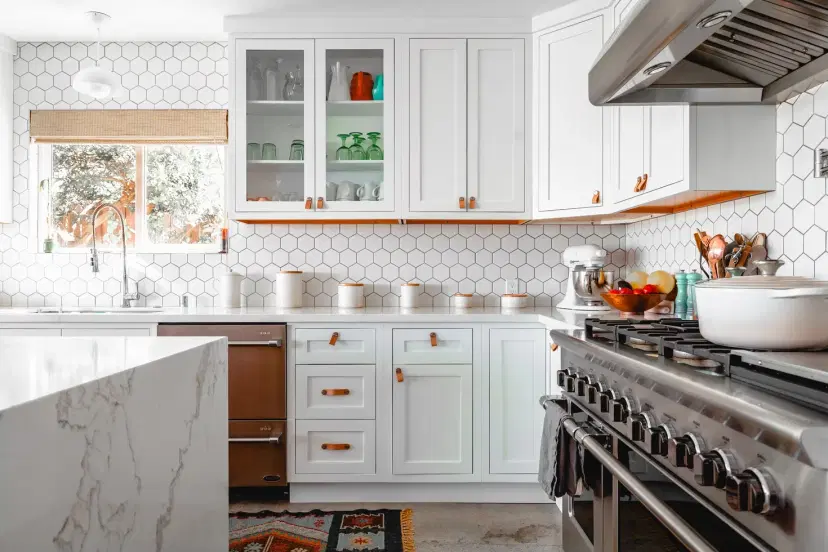
Organizing a kitchen starts with one step: empty every cabinet and drawer, sort contents into keep, donate, and discard, then group what's left into clear categories before anything goes back. Skipping straight to buying bins and labels just organizes the clutter instead of removing it.
A well-organized kitchen means everyone in the house can find what they need without digging, and it makes your next kitchen deep clean faster, since there's nothing left to shuffle around. Here's how to tackle cabinets, counters, the fridge, and everyday hygiene.
How do you organize kitchen cabinets without a pantry?
Cabinet contents should be arranged so you can see what's there at a glance, which prevents spills and stops you from buying duplicates of things you already have. Dedicate one cabinet to items you use daily, at eye or waist height, so they're always the fastest to grab.
- Determine the strategy: look at your available space before you buy organizers, and plan for enough clearance to move around comfortably.
- Remove unused and expired items: checking expiration dates during this pass is standard food safety practice and usually clears more space than any organizer will.
- Define categories: dry goods, canned food, and spices can share a cabinet but belong in separate bins or drawers; cookware and dish towels form their own group.
- Create storage zones and label them: labeling shelves means anyone in the household can find (and put back) items correctly, not just whoever did the organizing.
Deep corner cabinets are where things get lost. A turntable (lazy Susan) or a pull-out bin brings the back of the shelf to you. Store heavy items like a stand mixer or cast iron pans low, and light, rarely used items like party platters up high.
How do you set up kitchen zones?
A zone is a spot where everything for one task lives together. Set them up around the three fixed points in any kitchen: the sink, the stove, and the fridge.
| Zone | Where it goes | What lives there |
|---|---|---|
| Prep | Counter between the sink and stove | Knives, cutting boards, mixing bowls, measuring cups |
| Cooking | Beside or under the stove | Pots, pans, utensils, oils, spices |
| Cleaning | Under and beside the sink | Dish soap, cloths, sponges, garbage and recycling |
| Food storage | Near the fridge or pantry cabinet | Dry goods, canned food, food containers and lids |
| Dishes | Near the dishwasher | Plates, glasses, cutlery |
Putting dishes near the dishwasher sounds small, but it makes unloading take a fraction of the walking. Keep coffee, mugs, and the kettle together in their own small station if you use them every morning.
How do you organize kitchen counters?
Group countertop items in clusters of three or another odd number, which tends to read as more visually balanced than paired items, and keep only what you use daily within reach. Everything else goes back in a cabinet, since a crowded counter is harder to wipe down and actually disinfect between uses.
- Spices: a rack near the stove, arranged from most- to least-used, saves you from digging through the back of a cabinet mid-recipe. Keep them out of direct heat, so not right above the burners.
- Utensils: use a holder and keep it dry, since damp utensil crocks are an easy breeding ground for bacteria.
- Trays and cutting boards: store vertically by size rather than stacked flat; it takes less counter space and is easier to pull one out without disturbing the rest.
How do you organize a small kitchen?
Many condo and apartment kitchens in Toronto, Montreal, and Ottawa have one short counter and a few upper cabinets. The fix is to use height and doors, not more floor space.
- Shelf risers double the usable space in tall cabinets, so plates and bowls don't have to stack on top of each other.
- A magnetic knife strip on the wall frees a full drawer or a chunk of counter that a knife block would take.
- Over-the-door hooks or racks on the pantry or under-sink door hold foil, wrap, and cutting boards.
- Nesting cookware and lids sorted by size take a fraction of the space of mismatched sets. Donate pots you haven't used in a year.
How do you organize the fridge?
A tidy fridge cuts food waste because you can see what needs to be eaten first.
- Top shelves: leftovers, drinks, and ready-to-eat food.
- Bottom shelf: raw meat and fish, in a tray or container, so nothing drips onto food below.
- Crisper drawers: keep fruit and vegetables in separate drawers if you have two.
- Door: condiments and sauces, since it's the warmest part of the fridge.
Use the "first in, first out" rule: put new groceries behind the older ones so the older food gets used first. The same rule works for pantry shelves. If you stock up before a winter storm, keep the extra cans and dry goods in one labelled bin rather than squeezing them into everyday cabinets.
What kitchen hygiene habits matter most?
Organization and hygiene overlap more than people expect. NSF International's household germ testing found coliform bacteria, the family that includes E. coli and Salmonella, in 75% of kitchen sponges sampled, making the sponge one of the germiest items in most homes. Microwave a wet sponge for two minutes daily and replace it every two weeks, or switch to dishcloths you can sanitize in the wash.
Cutting boards need the same attention: NSF guidance recommends using separate boards for raw meat and ready-to-eat foods to prevent cross-contamination, and storing them upright and dry rather than stacked wet.
Under the sink, keep cleaners in their original bottles so the label and hazard symbols stay with them. If you have young kids or pets, add a child-safety latch to that cabinet, or move cleaners to a high shelf.
How do you keep a kitchen organized long-term?
Think in zones: cooking, cleaning, and food storage areas should sit near each other so gathering ingredients doesn't mean crossing the whole kitchen. Keep cooking appliances away from the sink so dirty water doesn't splash onto them while you're washing dishes, and store cleaning supplies away from heat and steam so they don't degrade.
A simple clean-as-you-spill habit, wiping counters immediately and washing dishes after use, does more for long-term organization than any storage product. Tackle one zone at a time (cabinets, then counters, then cupboards) rather than the whole kitchen at once.
Common mistakes to avoid
- Buying organizers first. Measure your shelves after you declutter, then buy. Bins that don't fit become clutter themselves.
- Organizing by looks instead of use. A matching set of canisters on the counter isn't helpful if you only bake twice a year.
- Filling every shelf to the edge. Leave a little room so you can put things back without a struggle.
- Forgetting to reset. Spend ten minutes once a month putting stray items back in their zone.
Methodology
Kitchen hygiene recommendations reference NSF International's household germ study and published food safety guidance on cutting board and sponge sanitation.
When it's worth calling a professional
Once your kitchen is organized, keeping it that way is easier with a recurring clean. Ezi's general cleaning service keeps counters, appliance exteriors, and floors on a regular schedule, while a deep clean handles the inside of cabinets, appliances, and grout after a bigger reorganization. See what's included in a professional kitchen cleaning service, or follow our room-by-room guide to the fastest way to clean a kitchen for extra tips.
Conclusion
Organizing a kitchen well means tackling one zone at a time, sorting by category rather than convenience, and treating hygiene as part of organization, not a separate chore. Do it methodically once and the upkeep gets a lot easier. If you'd rather hand off the cleaning side, book a quote with Ezi for reliable cleaning services in Ottawa.
Frequently Asked Questions
What's the first step to organizing a kitchen?
Empty every cabinet and drawer first and sort contents into keep, donate, and discard piles, since organizing around clutter just moves the mess instead of solving it. NSF food safety guidance also recommends checking expiration dates during this pass, since expired food is one of the most common things found during a kitchen declutter.
How should I organize kitchen cabinets without a pantry?
Group items into clear categories (dry goods, canned food, spices, cookware) and give your most-used items the most accessible shelf, at eye or waist height. Labeling shelves saves time for everyone in the household, not just whoever organized it.
How often should cutting boards and sponges be replaced or sanitized?
Replace kitchen sponges every two weeks and microwave a wet sponge for two minutes daily in between, since NSF testing found coliform bacteria (the family that includes E. coli and Salmonella) in 75% of sampled kitchen sponges. Use separate cutting boards for raw meat and ready-to-eat food to avoid cross-contamination, per NSF guidance.
What's the best way to organize kitchen counters?
Group countertop items in clusters of three or another odd number, which reads as more visually balanced than pairs, and keep only what you use daily within reach. Everything else belongs in a cabinet or drawer, since a crowded counter is harder to wipe down and disinfect.
How do I keep a kitchen organized long-term?
Think in zones: keep cooking appliances, food storage, and cleaning supplies in separate areas so gathering ingredients doesn't require crossing the whole kitchen. A simple clean-as-you-go habit, wiping spills immediately and washing dishes after each use, does more for long-term organization than any single storage product.
kitchen organization
house cleaning tips
Written by
Home Cleaning · Maintenance
Co-founder of Ezi Services and Draftbase, entrepreneur and builder focused on SaaS, AI, and growth — I turn ideas into scalable businesses using technology, automation, and relentless execution.