How to Deep Clean a Bathroom: Shower, Tub, Tile, and Grout
By Samer Alsayegh · · Updated · 9 min read
Key Takeaways
- Deep clean the bathroom monthly, with lighter cleaning weekly between.
- Clean top to bottom: mirrors first, then toilet, tub, shower, tile, floor.
- Vinegar and dish soap mix cuts soap scum in 15 minutes.
- Baking soda paste or hydrogen peroxide brightens dull or gray grout.
- Run the bathroom fan 20 to 30 minutes after every shower.
Here's how to deep clean a bathroom the right way: start high, then work down. Clean the mirror and fixtures first. Move to the toilet, tub, shower, and sink next. Finish with tile, grout, and the floor. Health Canada says daily showers add moisture to bathroom air. That moisture feeds soap scum, hard water spots, and mildew. A monthly deep clean stops buildup before it sets in. Do this even if you wipe surfaces down each week. This guide covers that order, the tools that work, and how to brighten dull grout. Ezi's house cleaning service can handle the whole job too, if you'd rather book it than do it yourself.
How to deep clean a bathroom: What it covers
A deep clean goes past a quick wipe-down. It targets buildup that regular cleaning misses. Think soap scum on glass. Think hard water rings in the tub. Think grime packed into grout lines. Weekly cleaning keeps a bathroom presentable. A deep clean, done monthly, resets it fully.
The two jobs work together. Skip the deep clean, and soap scum turns into a hazy film. No daily wipe removes that film. Keep up with both, and each session gets easier. Buildup never gets the chance to harden.
Gather your supplies before you start
Grab everything before you begin. That way, you're not hunting for a sponge mid-scrub. You'll want:
- Distilled white vinegar, baking soda, and dish soap
- A toilet brush and a scrub brush
- An old toothbrush for grout lines
- Microfiber cloths, a squeegee, and rubber gloves
- Hydrogen peroxide, if your grout looks gray or yellow
Skip mixing bleach with vinegar or ammonia. That combination releases harsh fumes. Stick to one active ingredient per pass, and rinse well between products.
How to deep clean a bathroom in the right order
Working in the wrong order means redoing steps. Clean top to bottom. Clean dirty areas before clean ones. That way, nothing you've already scrubbed gets dirty again.
Start with the toilet
Squirt toilet bowl cleaner under the rim. Let it sit for five minutes. Scrub the bowl, the rim, and the trap with a toilet brush. Wipe the seat, lid, tank, and base next, using a disinfecting wipe or a vinegar-water mix. Let everything air dry.
Tackle the tub and shower
This is where most buildup lives. Mix equal parts white vinegar and water in a spray bottle. Spray it on the tile, glass, and tub surface. Let it sit for 10 to 15 minutes so it can break down mineral deposits. Scrub with a non-scratch sponge in small circles, then rinse well with hot water.
Chrome fixtures and showerheads need extra care. Wrap them in a vinegar-soaked cloth for 15 minutes, then scrub the buildup off. This one habit clears most hard water spots without harsh chemicals.
Clean the sink and counter
Clear everything off the counter first. Spray the sink, faucet, and counter with an all-purpose cleaner (the vinegar mix works fine too). Scrub around the faucet base and drain, where grime collects fastest. Wipe everything dry with a microfiber cloth to stop new water spots from forming.
Scrub tile and brighten grout
Mix baking soda with a little water to form a paste. Spread it over the grout lines with an old toothbrush. Let it sit for 10 minutes, then scrub in short strokes along the grout line, not across it. Strokes along the line lift grime more effectively. For floor grout that has gone dingy, see how to get grout white again without scrubbing on your hands and knees.
For grout that's gone dull or gray, try a swap: use 3% hydrogen peroxide instead of water. It's a mild oxygen bleach, and it lifts stains without the fumes of chlorine bleach. Note: this step targets stains, not mold. Mold in grout and caulk needs its own approach, and that's a topic worth covering on its own.
Finish with mirrors and floors
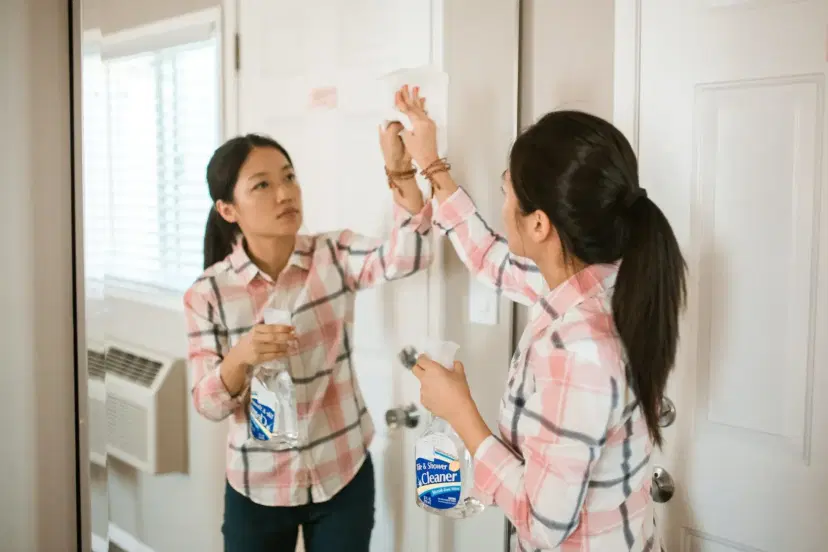
Spray mirrors with a vinegar-water mix. Wipe with a lint-free cloth, using vertical strokes on one side and horizontal strokes on the other, so any streaks are easy to spot. Next, sweep or vacuum the floor to clear hair and dust, then mop with a bathroom-safe cleaner. Pay extra attention to corners and the area around the toilet base.
Ezi's deep cleaning services follow this exact routine. Book one if you'd rather hand the job off.
Clearing soap scum and hard water buildup for good
Soap scum forms when soap meets minerals in hard water, leaving a cloudy film on glass and tile. This Old House recommends a vinegar-and-dish-soap mix for cutting through it: the soap breaks down body oils, and the vinegar dissolves mineral deposits. Spray it on, wait 15 minutes, then scrub.
Want to prevent buildup instead of fighting it? Keep a squeegee in the shower. Give the glass and tile a 30-second pass after each shower. This one habit stops most soap scum and hard water spotting before it starts, and it saves a much bigger scrub later.
Hard water stains on chrome or stainless fixtures respond well too. Use the same vinegar soak described above. One exception: skip vinegar on natural stone like marble or granite, since the acid can etch the surface. Use a stone-safe cleaner there instead.
Related read: our guide on eco-friendly cleaning products covers gentler options, if you'd rather skip vinegar altogether.
How often should you deep clean a bathroom?
Most cleaning experts recommend a full deep clean once a month, with lighter maintenance cleaning weekly in between. Bathrooms shared by more people, or used by kids or pets, may need more: a deep clean every two to three weeks works better there.
Ventilation matters too. Health Canada recommends running the bathroom fan for 20 to 30 minutes after every shower. This keeps indoor humidity between 30% and 50%, a range that slows soap scum, hard water buildup, and mildew growth alike.
Methodology
This guide draws on published Health Canada guidance on indoor moisture and mould control, along with cleaning methods from This Old House and Bob Vila. Those sources cover soap scum, hard water, and grout treatment in detail. Where we name a specific product or technique, it reflects that source's tested method, not a guess.
When to call a professional instead
Some bathroom problems go past a weekend project. Grout that's cracked or spongy is one example. Grout that stays stained despite repeated cleaning is another. Both can signal water damage behind the tile. Mold in caulk or grout lines is a separate issue too, and it needs targeted treatment, not just a deeper scrub.
Has the buildup gotten ahead of you? Does a deep clean keep slipping off your calendar? A professional house cleaning service can reset the whole bathroom in one visit.
Final thoughts
That's how to deep clean a bathroom, start to finish. It comes down to two things: order and follow-through. Work top to bottom. Tackle soap scum and hard water before they harden. Give grout an occasional brightening pass. Stick to a monthly deep clean, with weekly upkeep in between, and the harder scrubbing sessions become rare. Not sure it's time? Check these 10 signs your home needs deep cleaning in Toronto. Want to skip the scrubbing altogether? Book a house cleaning service and let a pro handle it, from toilet to tile.
How To
Frequently Asked Questions
Is once a month often enough to deep clean a bathroom?
Yes, for most homes, with lighter cleaning weekly in between. Bathrooms shared by more people, or used by kids or pets, often need it every two to three weeks.
What removes soap scum from a shower?
A 1:1 mix of white vinegar and dish soap removes soap scum, according to This Old House: the soap breaks down body oils while the vinegar dissolves mineral deposits. Spray it on, let it sit for 15 minutes, then scrub with a non-scratch sponge.
How do you get hard water stains off a bathtub?
Spray equal parts white vinegar and water on the stained surface, let it sit for 10 to 15 minutes, then scrub with a non-scratch sponge and rinse. For chrome fixtures and showerheads, wrap them in a vinegar-soaked cloth for 15 minutes before scrubbing.
How do you brighten dull or grey grout?
Apply a paste of baking soda and water, or 3% hydrogen peroxide for tougher discolouration, and let it sit for 10 minutes before scrubbing with an old toothbrush. Hydrogen peroxide works as a mild oxygen bleach that lifts stains without chlorine fumes.
What order should you clean a bathroom in?
Clean top to bottom and dirty to clean: mirrors and fixtures first, then the toilet, tub, shower, and sink, then tile, grout, and the floor last. This order stops already-cleaned surfaces from getting dirty again mid-clean.
Does using a squeegee actually prevent shower buildup?
Yes, a 30-second squeegee pass on glass and tile after every shower stops most soap scum and hard water spotting before it forms. It's a small daily habit that noticeably cuts down on deep-clean scrubbing time.
bathroom cleaning
deep cleaning
grout
soap scum
hard water
house cleaning tips
Written by
Home Cleaning · Maintenance
Co-founder of Ezi Services and Draftbase, entrepreneur and builder focused on SaaS, AI, and growth — I turn ideas into scalable businesses using technology, automation, and relentless execution.