How to Remove Hard Water Stains (Without Damaging the Surface)
By Samer Alsayegh · · 8 min read
Key Takeaways
- Soak stains in white vinegar for 15 to 30 minutes, then rinse.
- CLR clears tough, old stains faster than vinegar.
- Never use vinegar on marble, travertine, or limestone. It eats the stone.
- Health Canada counts water over 120 mg/L as hard, over 180 mg/L as very hard.
- Squeegee glass and wipe faucets dry daily to stop new stains.
Remove hard water stains with a 15 to 30 minute soak in white vinegar, then wipe and rinse. That clears calcium and magnesium spots on glass, chrome, and most fixtures. Health Canada classes water above 120 mg/L as hard and above 180 mg/L as very hard. Groundwater runs even harder. Raw groundwater feeding Ontario's public water systems has a median hardness of 320 mg/L, per the same Health Canada report. Ezi Home Services sees these white spots on almost every shower door and tap it visits. Here's the fix for each surface. And here's the one mistake that ruins stone for good.
What causes hard water stains?
Hard water carries calcium and magnesium picked up as it moves through soil and rock. The water sits on a surface and dries out. The minerals stay behind as a chalky white or grey film. Splash a glass shower door every day, and that film builds into a stain fast. Regions with limestone bedrock see the hardest water and the worst staining. That's much of southern Ontario, the Prairies, and parts of Quebec. Soft-water regions like coastal BC rarely see this problem at all.
How to remove hard water stains from glass shower doors
- Spray full-strength white vinegar right on the glass. Cover the whole stained spot.
- Let it sit for 15 to 30 minutes. Heavy, older stains may need up to an hour.
- Scrub gently with a soft sponge or cloth.
- Rinse with warm water and dry with a squeegee or microfibre cloth.
Stain won't budge? Add a thin paste of baking soda over the wet spot before you scrub. The grit gives the acid something to grip.
Want the whole bathroom refreshed at once? A general house cleaning from Ezi covers glass, tile, and taps too.
How to remove hard water stains from faucets and fixtures
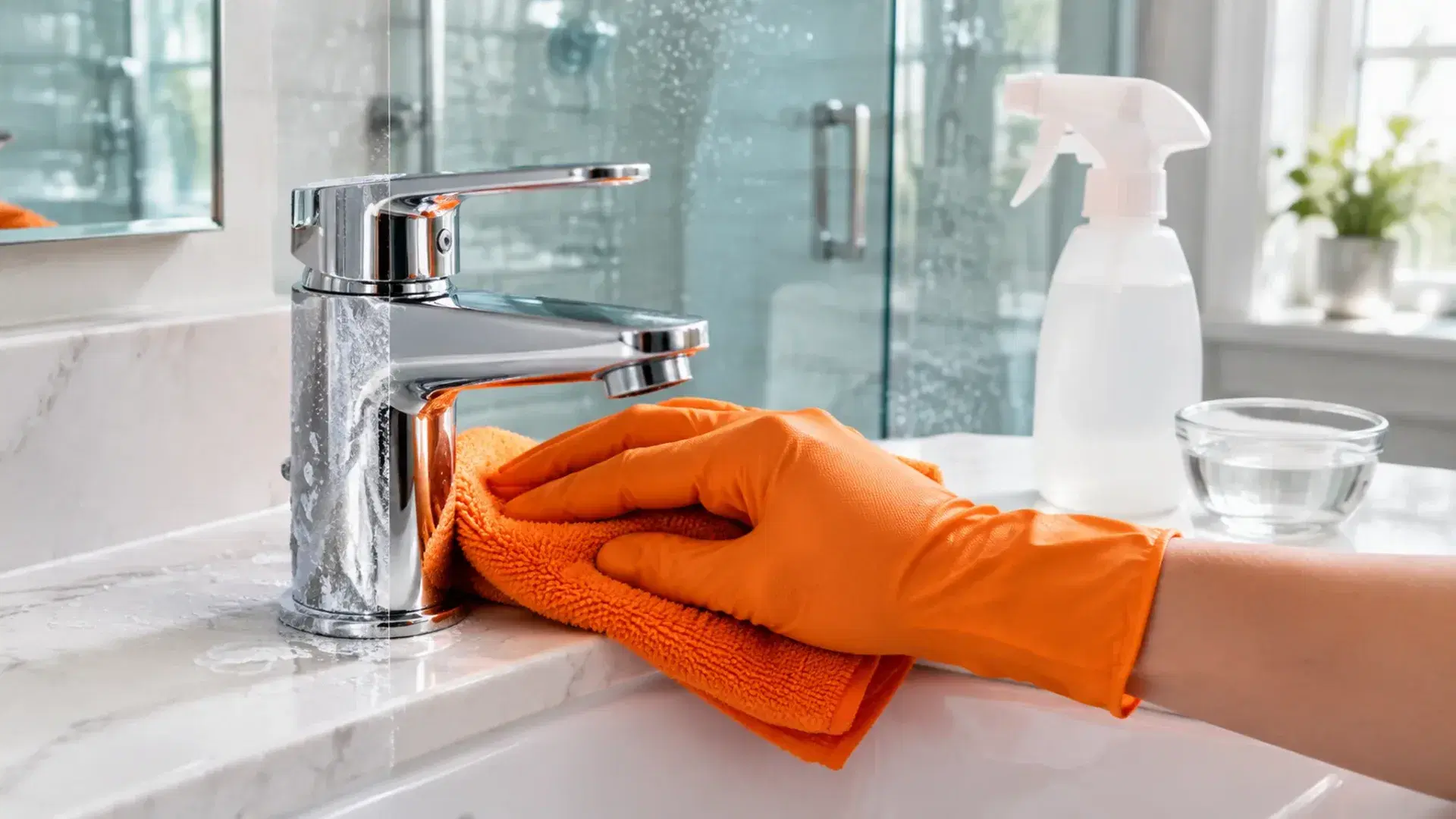
- Soak a cloth or paper towel in white vinegar. Wrap it around the tap spout or handle.
- Leave it in place for 15 to 30 minutes.
- Unwrap it. Scrub lightly with an old toothbrush to reach grooves and threads.
- Rinse well with warm water and buff dry with a clean microfibre cloth so it doesn't spot again.
Chrome and stainless steel fixtures handle this well. Check the section below before trying it on anything else.
Vinegar or CLR: which works better on hard water stains?
Plain white vinegar handles everyday spots fine, but it works slowly. Light stains often need a 15 to 30 minute soak. Older ones can take an hour. CLR is a stronger acid cleaner made for calcium, lime, and rust. It breaks down the same mineral spots in a few minutes instead. That speed comes from more acid than vinegar's 5%. For a quick weekly wipe-down, vinegar is enough. Got a shower door that hasn't been touched in months? CLR clears it faster, with less scrubbing. Either one needs a full rinse after. Leftover acid just draws in more spots.
Surfaces where vinegar can do more harm than good
This is the step most guides skip. Vinegar is an acid, and acid doesn't just eat mineral spots. It can also eat the surface underneath. Marble, travertine, and limestone counters and tile should never touch vinegar or any acid cleaner. The acid eats into the stone itself. That leaves it duller and more likely to stain again. Brushed nickel and other special metal finishes need care too. Full-strength vinegar left sitting too long can wear through the coating. A weaker mix and a quick rinse matter more here than they do on plain chrome. When in doubt, test a hidden spot first. Never let vinegar sit on specialty metal longer than a couple of minutes, and keep it off stone entirely.
Is your water hard? How to check
Not sure if your water is the cause? A cheap test strip from a hardware store gives you an answer in seconds. Dip it in tap water and match the colour to the chart on the box. Health Canada's guideline document counts a reading over 120 mg/L as hard. Over 180 mg/L is very hard.
Well water is often the hardest of all. Raw groundwater in Ontario's public systems has a median hardness of 320 mg/L, per Health Canada, and private wells can test higher. If your home runs on a well and stains build up fast, that's likely why. A whole-home water softener is worth pricing out at that point. It cuts stains everywhere at once, not just on the surfaces you scrub by hand.
How to prevent hard water stains from coming back
A few daily habits help. They cut down how often you need to break out the vinegar.
- Squeegee the shower door after every use. This one step stops most new spots.
- Wipe faucets dry after each use. Standing water is what leaves the mineral film behind.
- Use a daily shower spray on glass and tile to slow mineral buildup between deep cleans.
- Fit a screen filter on faucets in the hardest-water areas. It catches some minerals before they reach the tap.
- Consider a water softener if staining comes back within days, not weeks. That points to unusually hard water rather than a cleaning habit problem.
Methodology
The steps here come from product labels for CLR and plain white vinegar. Hardness levels and categories come from Health Canada's drinking water guideline document on calcium, magnesium, and hardness. Where a maker's care guide and general cleaning practice agreed, that guidance is listed first.
When to call a professional
A vinegar soak handles most stains on your own. But some jobs are easy to make worse with the wrong stuff. Stains on stone, tight spots, or a whole room at once are some of those jobs. Ezi's deep cleaning service covers bathrooms and kitchens. Every surface gets the right care, stone included.
Got the same mineral spots on stainless steel appliances? Our other guide has that fix: cleaning stainless steel appliances without streaks.
The bottom line
Hard water stains come from calcium and magnesium left behind as water dries out. A vinegar soak clears most of them in under half an hour. CLR works faster on old, set-in spots. Neither one belongs on natural stone or bare special finishes. Check the surface first, every time. Squeegee glass and wipe faucets dry daily, and the stains mostly stop coming back. Skip the guesswork on the rest of the house. Book a cleaning with Ezi and let a vetted provider handle it.
How To
Frequently Asked Questions
How long should vinegar sit on a hard water stain?
Leave white vinegar on the stain for 15 to 30 minutes. Older, thicker stains may need up to an hour. Scrub gently after, then rinse and dry.
Is CLR better than vinegar for hard water stains?
CLR works faster on tough, set-in stains. Plain vinegar handles routine spots just as well, and it's gentler on rubber and metal over time.
Can you use vinegar on natural stone?
No. Vinegar is an acid, and it can eat into marble, travertine, and limestone. It leaves the stone duller and more likely to stain again. Use a cleaner made for stone instead.
Why is my well water so hard?
Groundwater picks up calcium and magnesium as it moves through rock, often more than lake or river water. Health Canada data puts the median hardness of raw groundwater in Ontario's public systems at 320 mg/L, well above the 180 mg/L very hard mark. Private wells can test higher.
How do you stop hard water stains from coming back?
Squeegee glass and wipe faucets dry after every use. That single habit stops most new spots before they form. A water softener helps if stains return within days.
Does vinegar damage brushed nickel faucets?
It can, if left on too long. Use a diluted mix, keep contact short, and rinse right away to protect the finish.
Does glass cleaner remove hard water spots?
Not really. Most glass cleaners are made to cut grease and smudges, not minerals, so they wipe over hard water spots without dissolving them. Soak the spots in white vinegar or use CLR first, rinse, and then use glass cleaner for a streak-free finish. A daily squeegee keeps new spots from forming.
hard water stains
remove hard water stains
limescale removal
cleaning products
bathroom cleaning tips
home maintenance
Written by
Home Cleaning · Maintenance
Co-founder of Ezi Services and Draftbase, entrepreneur and builder focused on SaaS, AI, and growth — I turn ideas into scalable businesses using technology, automation, and relentless execution.