Best Disinfectant Sprays for Household Cleaning (Canadian Stores)
By Samer Alsayegh · · Updated · 8 min read

Key Takeaways
- A real disinfectant carries a Health Canada DIN; a plain cleaner does not.
- Disinfectants kill 99.999% of germs versus 99.9% for sanitizers.
- Contact time ranges from 15 seconds to 10 minutes and must be followed exactly.
- Never mix bleach with ammonia: it produces a potentially fatal gas.
- Clean a surface before disinfecting; dirt blocks the disinfectant's kill power.
A real disinfectant spray carries a Health Canada DIN. That's an 8-digit code that proves it's cleared to kill germs. A plain "cleaner" or "all-purpose spray" makes no kill claim at all. It just lifts dirt. If you need to kill germs, not just clean a spot, check the label for a DIN first.
This guide covers what makes a spray a true disinfectant. It covers how contact time works, and what to buy at Canadian stores.
Cleaner, sanitizer, disinfectant: three different jobs
These three words get used like they mean the same thing. They don't.
A cleaner lifts dirt, grease, and soil with soap. It doesn't kill germs. It just removes them along with the grime. A sanitizer cuts bacteria by 99.9%. It has no claim against viruses at all. A disinfectant goes further. It kills 99.999% of germs, and its claims cover both bacteria and viruses.
If someone in the house is sick, reach for a disinfectant, not a sanitizer. Only a disinfectant carries a tested claim against viruses like norovirus or the flu.
What a DIN actually confirms
In Canada, a disinfectant counts as a drug, not a cosmetic or a cleaner. Health Canada checks its safety and its kill claims. Then it hands out an 8-digit code, called a DIN. That DIN sits on the label, and in Health Canada's public drug list online. No DIN means no proof the spray does what the label says.
A plant-based "non-toxic" cleaner can still be a fine everyday product. But unless the label states a kill claim and shows a DIN, it's not built to kill germs. Read the front of the label, not just the parts list, to see which job a bottle is meant for.
Contact time is the part everyone skips
A disinfectant only works if it stays wet on the surface for a set time. That's called contact time, or dwell time. The maker tests and sets this number. It runs from 15 seconds up to 10 minutes, based on the product and the germ it targets.
Spray a surface and wipe it dry after five seconds, and most of the kill claim on the label never happens. The germs on the label (MRSA, norovirus, cold viruses) only die if the surface stays wet for the full time in the directions. Check the back label for this number. It matters more than the brand you pick.
What's actually in a disinfectant
Three main active parts show up in most home disinfectants sold in Canada.
Quaternary ammonium compounds ("quats") show up in wipes and trigger sprays. They're gentler on fabric and metal than bleach. They're safe on finished wood and most soft furniture as a spot treatment. Quats break down the outer wall of a germ to kill it.
Bleach is a strong, cheap disinfectant. A few teaspoons per litre of water does the job. More isn't more effective, and full-strength bleach can harm a surface. It's a poor pick for laundry too. It strips fabric dyes rather than truly whitening, which can turn white items yellow over time.
Hydrogen peroxide breaks down a germ's cell wall. It reacts with the germ and falls apart. It's often gentler than bleach, and it breaks down into water and air after use, so it leaves less behind.
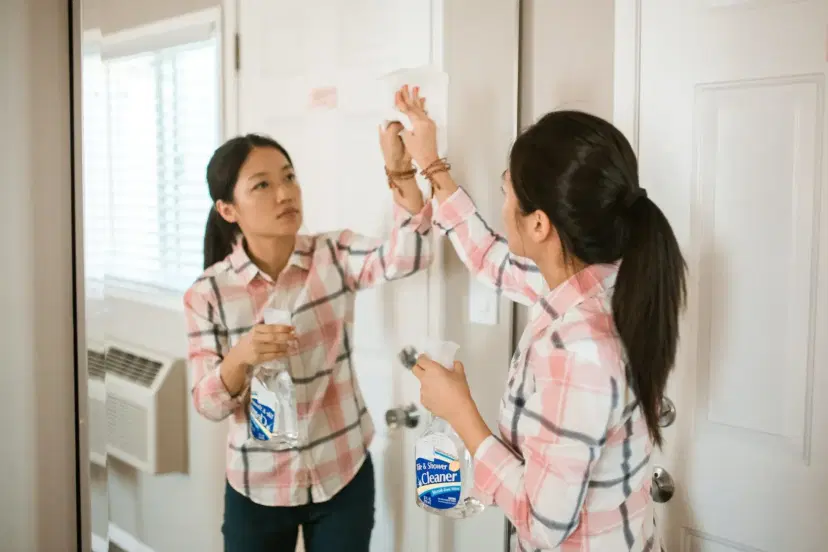
All three lose their strength when they hit dirt or grease first. Clean a surface before you disinfect it. A dirty surface blocks the spray from reaching the germs underneath.
The one safety rule that matters most
Never mix bleach with anything that has ammonia in it. Some glass cleaners and quat sprays have it too. The combination makes chloramine gas. It's a serious lung hazard, and in a closed bathroom it can be fatal. Check two products' labels before combining them, even if each one seems safe on its own. Here's the full list of cleaning products you should never mix.
Where to buy in Canadian stores
Lysol and Clorox both sell DIN-registered lines. Find both at Walmart, Shoppers Drug Mart, and most Canadian grocery chains. Lysol's disinfectant spray uses a stronger scent and works well on larger areas at a lower cost per use. Clorox's disinfecting mist has a shorter contact time, about 15 seconds on hard surfaces. That suits a quick daily wipe of counters and sinks.
For a plant-based option with a DIN, try Seventh Generation's disinfectant spray. It's sold at most large grocery and drugstore chains. It uses thyme oil as its active part, and it carries a lighter scent than bleach or quat sprays. If scent or allergies are a concern, see this hypoallergenic cleaning supplies buying guide.
Surfaces to match to the right product
Quats suit fabric, finished wood, and daily counter wipes. Bleach suits hard, non-porous surfaces like tile and sealed grout, but never wood, metal fixtures, or fabric. Hydrogen peroxide works well on most hard surfaces and leaves less residue behind. That makes it a fair pick for kitchen counters that touch food.
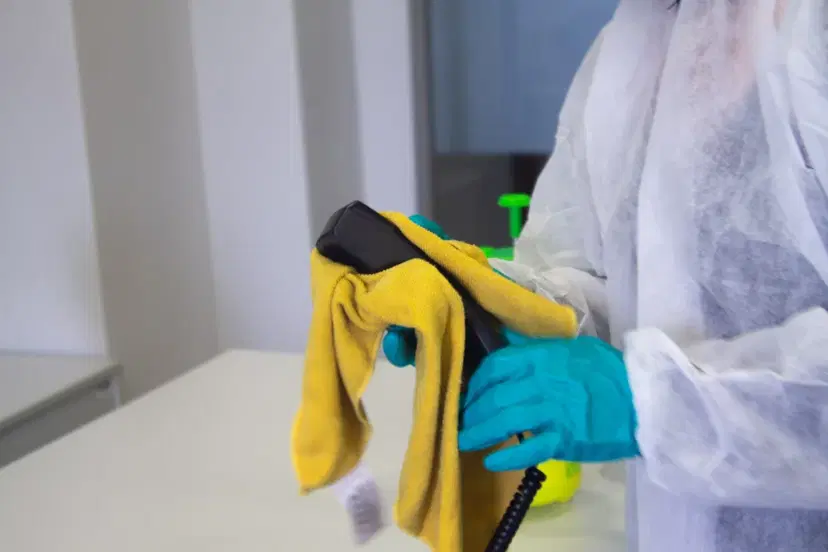
Whatever the surface, disinfecting comes after cleaning, not in place of it. Skip the dirt-removal step or cut the contact time short, and the surface just looks clean.
For the wider picture on everyday cleaners, see this guide to all-surface cleaners and where they fail. It covers which cleaner suits which surface in your home. To stock the rest of the kit, see our list of cleaning supplies for house cleaning.
If you'd rather hand off the scrubbing and wiping, our house cleaning service covers kitchens, bathrooms, and high-touch surfaces. You can book online in a few minutes. See the full range of house cleaning services for deeper options.
Methodology
DIN facts here come from Health Canada's own disinfectant guidance. Contact time and kill-claim facts come from EPA-tested standards, used across disinfectant trade sources. Active part notes come from maker safety data and cleaning trade guides current for 2026.
The bottom line
Check for a DIN before you call a spray a disinfectant, since a plain cleaner won't carry one. Match contact time to the label, not to how long feels right. Clean the surface first, since dirt blocks a disinfectant's kill power. And never mix bleach with ammonia. Get those four things right, and the brand on the bottle matters far less. A cheap DIN-marked spray used the right way beats a costly one used wrong.
Frequently Asked Questions
What's the difference between a cleaner, sanitizer, and disinfectant?
A cleaner removes dirt but doesn't kill germs. A sanitizer kills 99.9% of bacteria with no virus claim. A disinfectant kills 99.999% of germs and carries claims against both bacteria and viruses.
What does a DIN on a disinfectant label mean?
A DIN (Drug Identification Number) is an 8-digit code Health Canada issues after checking a product's safety and kill claims. Without a DIN, there's no proof a spray disinfects as claimed.
How long should a disinfectant stay wet on a surface?
Contact time (dwell time) ranges from 15 seconds to 10 minutes depending on the product and target germ. The kill claim on the label only applies if the surface stays visibly wet for that full time.
Can I mix bleach with other cleaning products?
Never mix bleach with anything containing ammonia, including some glass cleaners and quat-based sprays. The combination produces chloramine gas, which is a serious respiratory hazard and can be fatal in enclosed spaces.
Do I need to clean a surface before disinfecting it?
Yes. Dirt and grease block disinfectants from reaching germs and reduce their effectiveness. Clean the surface first, then apply the disinfectant for the full contact time.
disinfectant
DIN
household cleaning
Health Canada
buying guide
Written by
Home Cleaning · Maintenance
Co-founder of Ezi Services and Draftbase, entrepreneur and builder focused on SaaS, AI, and growth — I turn ideas into scalable businesses using technology, automation, and relentless execution.