How to Safely Dispose of Broken Glass (Cleanup, Packing, and Recycling Rules)
By Samer Alsayegh · · 12 min read
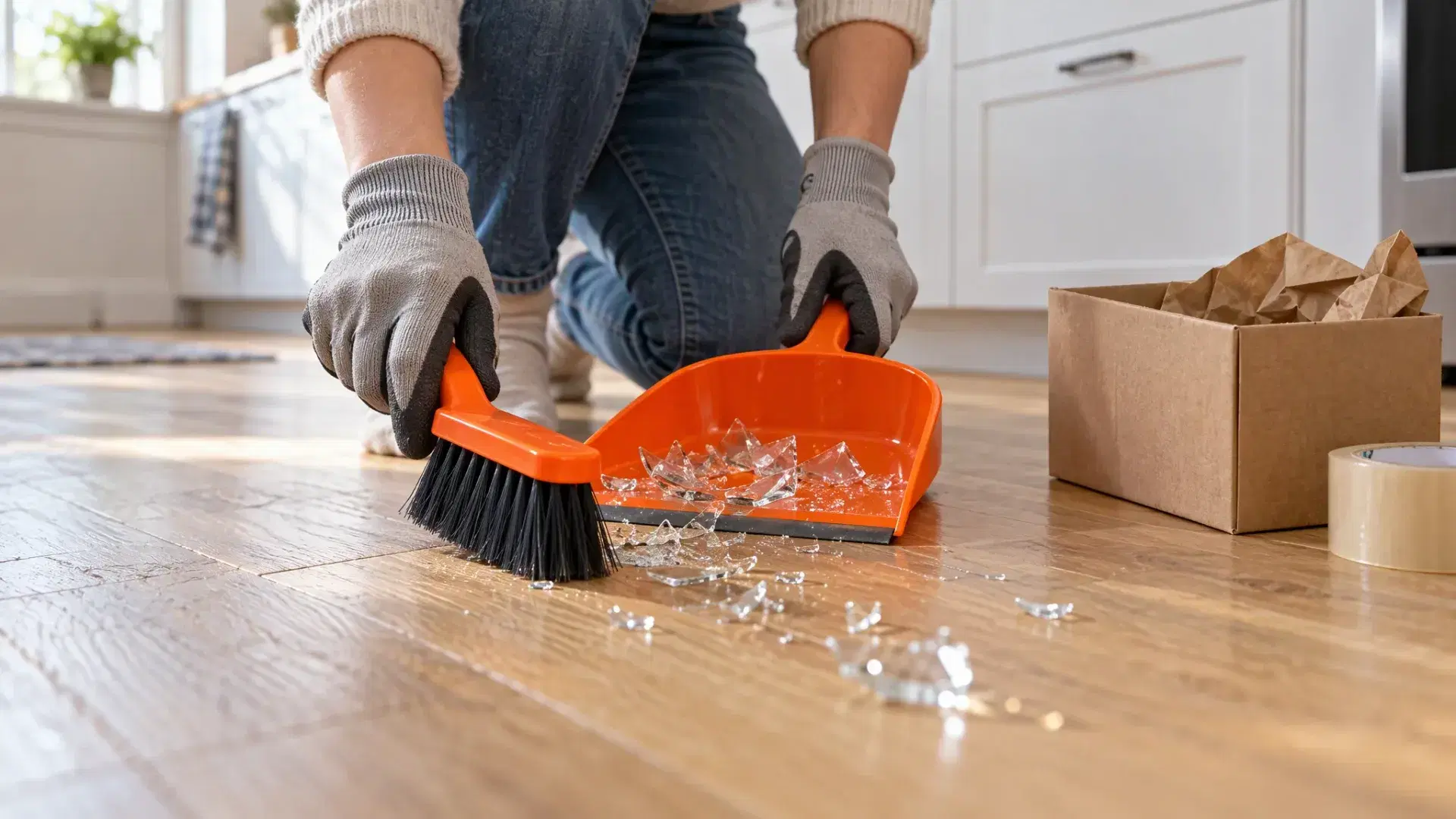
Key Takeaways
- Put on shoes and thick gloves before you touch any glass.
- Catch tiny slivers with a damp paper towel or bread.
- Pack glass in a sturdy box, taped and labelled.
- Broken glass goes in the garbage, not the blue bin.
- Never vacuum a broken CFL bulb. Take it to a hazardous waste depot.
To safely dispose of broken glass, pick up the large pieces with gloves on. Catch the small shards with a damp paper towel or a slice of bread. Then vacuum the area. Put everything in a sturdy cardboard box or a hard plastic tub. Tape it shut, write "BROKEN GLASS" on it in large letters, and put it out with your garbage. Broken glass does not go in the blue bin.
That last part trips up a lot of people. It feels like glass should be recycled. But most broken glass, like drinking glasses, Pyrex, mirrors, and window panes, can't be. And a loose shard in a thin garbage bag is a real hazard for the person who picks it up. This guide covers how to clean up every kind of break, how to pack it, where it goes in Canada, and what to do if the broken glass is a light bulb. Ezi Home Services books house cleaning in Ottawa, Toronto, Montreal, and other cities, and a dropped glass is one of the most common kitchen mishaps.
First, stop and protect yourself
When a glass breaks, the urge is to grab the pieces right away. Slow down. Most cuts happen in the first minute.
- Stay still for a second. Look at where the glass landed before you move. Shards can travel farther than you think, often across the room and under furniture.
- Keep kids and pets out. Close the door or carry them away. Paws and bare feet find the tiny pieces you miss.
- Put on shoes. Hard-soled shoes, not slippers or sandals.
- Put on gloves. Thick rubber gloves, work gloves, or gardening gloves all work. Thin disposable gloves won't stop a sharp edge.
- Turn on more light. Bright light helps you see small pieces.
What you need
- Thick gloves and closed shoes.
- A broom and dustpan you can rinse.
- Damp paper towels.
- A slice of soft bread, a raw potato cut in half, or wide tape.
- A flashlight.
- A vacuum with a hose.
- A sturdy cardboard box or a hard plastic tub with a lid. An empty laundry detergent jug works well.
- Packing tape and a thick marker.
How to clean up broken glass, step by step
Step 1: Pick up the large pieces
With your gloves on, pick up the big pieces by hand. Hold them by the flat sides, not the edges. Put them straight into your box or tub. Don't stack them in your hand.
Step 2: Sweep toward the centre
Sweep from the outside edge of the area in toward the middle. This stops you from pushing shards farther out. Use short, gentle strokes. Sweep the pile into a dustpan and tip it into the box.
Step 3: Catch the small shards
Tiny slivers are the ones that end up in your foot a week later. Press one of these gently over the area:
- A damp paper towel. Fold it a few times so no glass pokes through. Press, don't wipe.
- A slice of soft bread. Bread is soft enough to grab tiny pieces. Press it down and lift.
- Half a raw potato. The wet, cut side picks up small slivers.
- Wide tape. Duct tape or packing tape, sticky side down.
Put each used towel, slice, or piece of tape in the box with the rest.
Step 4: Use a flashlight
Turn off the overhead light. Hold a flashlight low to the floor, almost flat. Small glass pieces catch the light and sparkle. Check under the edges of cabinets, the fridge, and nearby furniture.
Step 5: Vacuum
Once the big pieces are gone, vacuum the whole area, plus a wide space around it. Use the hose, not the beater bar. Larger glass can damage the brush and cut the bag. Empty the canister or change the bag once you're done, outside if you can.
Step 6: Wipe the floor
Wipe the floor with a damp cloth or paper towel. Toss it in the box. Then wash the broom and dustpan bristles over a trash can, or rinse them outside.
How to pack broken glass for the garbage
This is the part that matters most for safety. Loose glass in a garbage bag can cut through the plastic, and the person who handles it next.
The Region of Durham gives four simple steps:
- Box it. Put the broken glass inside a sturdy cardboard box.
- Tape it. Seal the box well with tape.
- Label it. Write "Broken Glass" on it in large, bold letters.
- Set it out beside your garbage on collection day.
The City of Calgary adds two more options. You can use a puncture-proof container with a lid. Or you can wrap the pieces in two layers of paper and put them in a tied bag. Either way, label it "sharps."
A few extra tips:
- Write the label on the top and on the sides, so it's easy to see from any angle.
- Don't overfill a box. It should close flat and feel solid.
- If you don't have a box, a hard plastic jug or tub with a screw-on lid works well.
- Never put loose glass straight into a garbage bag.
Can you recycle broken glass?
Usually not. Most Canadian blue box programs only take glass food and drink containers, like jars and bottles. Even then, many cities ask for them whole.
These kinds of glass go in the garbage, not recycling:
- Drinking glasses and wine glasses.
- Pyrex and other baking dishes.
- Mirrors.
- Window glass and picture frame glass.
- Light bulbs.
- Ceramic plates, mugs, and porcelain.
Why? The glass in these items isn't made the same way as a jar. The City of Calgary says the glass used for drinking glasses "is different than food jars and is not recyclable." These types of glass are made to be tougher, so they melt at a different temperature. Mixed into a batch of bottle glass, they can ruin the new glass.
Rules vary by city. Check your local tool before you guess. In Toronto, the Waste Wizard lets you search more than 2,000 items. Most Canadian cities have a similar search tool or app.
The underused angle: the person who picks up your garbage
Most guides focus on keeping you safe during cleanup. But the bigger risk often comes later, to someone you never see.
Waste collectors grab and lift bags all day. When a bag holds loose glass, a shard can slice through the plastic and cut their hands or lower legs. In July 2026, the Region of Durham put out a public notice. It said injuries to its waste collection workers had gone up in recent weeks, and it named broken glass, broken porcelain, and medical sharps as the causes.
That's why the box-and-label step isn't just a nice extra. A labelled box tells the collector what's inside and how to lift it. A loose shard in a bag gives them no warning at all.
It also protects people in your own home. Anyone who takes out the trash, or a pet that tears into a bag, faces the same risk.
How to clean up broken glass on carpet
Carpet hides glass well. Small pieces sink between the fibres.
- Pick up large pieces by hand with gloves on.
- Press wide tape over the area, sticky side down, to lift what you can see.
- Vacuum slowly, going over the area in several directions. Use the hose for the first pass.
- Run a flashlight low over the carpet to spot more.
- Vacuum again a day later. Pieces can work their way up as people walk on it.
If a wine glass broke with wine in it, deal with the glass first, then the stain. Our carpet stain removal guide covers wine step by step.
How to clean up shattered tempered glass
Tempered glass, used in shower doors, oven doors, glass tables, and some baking dishes, breaks differently. Instead of long shards, it shatters into many small, rounded cubes. They're less sharp, but there are hundreds of them, and they scatter.
Sweep up the cubes first, then vacuum. Wear gloves anyway. Some cubes still have sharp corners. If a shower door shatters, leave the room and call the installer or a glass repair company. Large panes can keep falling apart after the first break.
What to do if a light bulb breaks
Regular old-style bulbs are just glass and metal. Clean them up like any other broken glass.
Compact fluorescent bulbs (CFLs) are different. The twisty, spiral bulbs contain a small amount of mercury. The Ontario Poison Centre says the risk is very low with proper cleanup. Here are its steps:
- Have everyone leave the room. Open a window and let it air out for at least 15 minutes.
- Don't use a vacuum or a broom. They can spread mercury.
- Put on gloves.
- Scoop up the pieces with stiff cardboard.
- Pick up small pieces and dust with sticky tape.
- Wipe the spot with damp paper towels.
- Seal everything in a glass jar with a tight lid.
- Take it to a household hazardous waste depot. Don't put it in the garbage.
LED bulbs don't contain mercury. If one breaks, clean it up as you would any broken glass.
What if you cut yourself?
Small cuts are common. Here's what to do:
- Rinse the cut with clean, running water.
- Check for glass in the wound. If you can see a piece, don't dig for it.
- Press on it with a clean cloth to stop the bleeding.
- Cover it with a clean bandage.
Get medical care if the cut is deep, won't stop bleeding, or still has glass in it. Also get care if it shows signs of infection, like redness, swelling, or pus.
Methodology
Packing and labelling steps come from the Region of Durham and the City of Calgary. Recycling guidance reflects Canadian municipal rules for drinking glass and housewares. Light bulb cleanup steps come from the Ontario Poison Centre. Cleanup tips, such as damp paper towels, bread, and a low flashlight, reflect common household and professional cleaning practice. Always check your own city's rules, since collection rules vary.
When to call a professional
Most broken glass is a five-minute job. But some breaks are bigger than a dropped cup. A shattered glass table, a broken window, or glass spread through a room with deep carpet can take hours to clear fully.
After any big break, a deep clean gets into the corners, baseboards, and under furniture where slivers hide. For glass in carpet, a carpet cleaning pulls out what a home vacuum leaves behind. You can book with Ezi in a few taps, with an upfront price and a set arrival window.
The bottom line on disposing of broken glass
Put on shoes and gloves first. Pick up big pieces by hand, sweep toward the centre, and catch slivers with a damp paper towel or bread. Use a flashlight held low, then vacuum.
Pack the glass in a sturdy box or hard tub. Tape it and label it "BROKEN GLASS" before it goes out with the garbage. Don't put it in the blue bin. If the bulb was a CFL, skip the vacuum and take it to a hazardous waste depot. For the rest of the room, see the fastest way to clean a kitchen from top to bottom.
How To
- 1Protect yourselfPut on hard-soled shoes and thick gloves. Keep kids and pets out of the room.
- 2Pick up the large piecesPick up big pieces by their flat sides and put them straight into a sturdy box or tub.
- 3Sweep toward the centreSweep from the outside edge in toward the middle with short, gentle strokes.
- 4Catch the small shardsPress a folded damp paper towel, a slice of soft bread, or wide tape over the area to lift slivers.
- 5Check with a flashlightHold a flashlight low to the floor so small pieces sparkle, and check under cabinets and furniture.
- 6Vacuum and wipeVacuum a wide area with the hose, then wipe the floor with a damp cloth.
- 7Box, tape, and labelSeal the glass in the box with tape, write BROKEN GLASS on it in large letters, and set it out with the garbage.
Frequently Asked Questions
How do you throw away broken glass?
Pack it in a sturdy cardboard box or hard plastic tub. Tape it shut. Write "BROKEN GLASS" on it in large letters. Set it out with your regular garbage.
Can broken glass go in the blue bin?
Usually not. Most Canadian blue box programs only take glass jars and bottles. Drinking glasses, Pyrex, mirrors, and window glass go in the garbage.
How do you pick up tiny pieces of broken glass?
Press a folded damp paper towel or a slice of soft bread over the area. Lift it straight up. Then shine a flashlight low across the floor to spot more.
Can you vacuum broken glass?
Yes, once the big pieces are gone. Use the hose, not the beater bar. Don't vacuum a broken CFL bulb, since that can spread mercury.
What do you do if a CFL light bulb breaks?
Leave the room and let it air out for 15 minutes. Scoop the pieces with cardboard and tape. Seal them in a jar and take it to a hazardous waste depot.
Why shouldn't you put broken glass in a garbage bag?
Loose glass can cut through the bag. It can injure you, your family, or the waste collector who lifts it. A taped, labelled box warns them what's inside.
broken glass
home safety
waste disposal
recycling
kitchen cleanup
Written by
Home Cleaning · Maintenance
Co-founder of Ezi Services and Draftbase, entrepreneur and builder focused on SaaS, AI, and growth — I turn ideas into scalable businesses using technology, automation, and relentless execution.