How to Remove Grease Stains From Kitchen Surfaces
By Samer Alsayegh · · Updated · 11 min read
Key Takeaways
- Dish soap breaks grease bonds. Water alone can't do it.
- Grease mist can drift 3 to 8 feet from the stove.
- Wash range hood filters every 1 to 3 months.
- Cooking causes 32% of Canada's home fire incidents.
- Wipe with the grain on stainless steel to stop streaks.
What grease actually is (and why it's hard to remove)
Cooking grease is oil and fat that got heated. It then cooled onto a surface. Fresh grease wipes away easily. Once it sits, it hardens. It bonds to paint, wood finish, or metal. Over weeks, it turns into a sticky film that catches dust.
Water alone can't break this bond. Grease and water don't mix. That's just how oil behaves. That's where dish soap comes in. Its molecules grab onto grease on one end and water on the other. They surround each oil particle and pull it off the surface. Then it rinses away with the water.
Vinegar helps too, but for a different reason. Its acid breaks down some of the oil, say home-care cleaning guides. Baking soda isn't a grease cutter on its own. It works as a mild scrub. It lifts loosened grease off without scratching most surfaces.
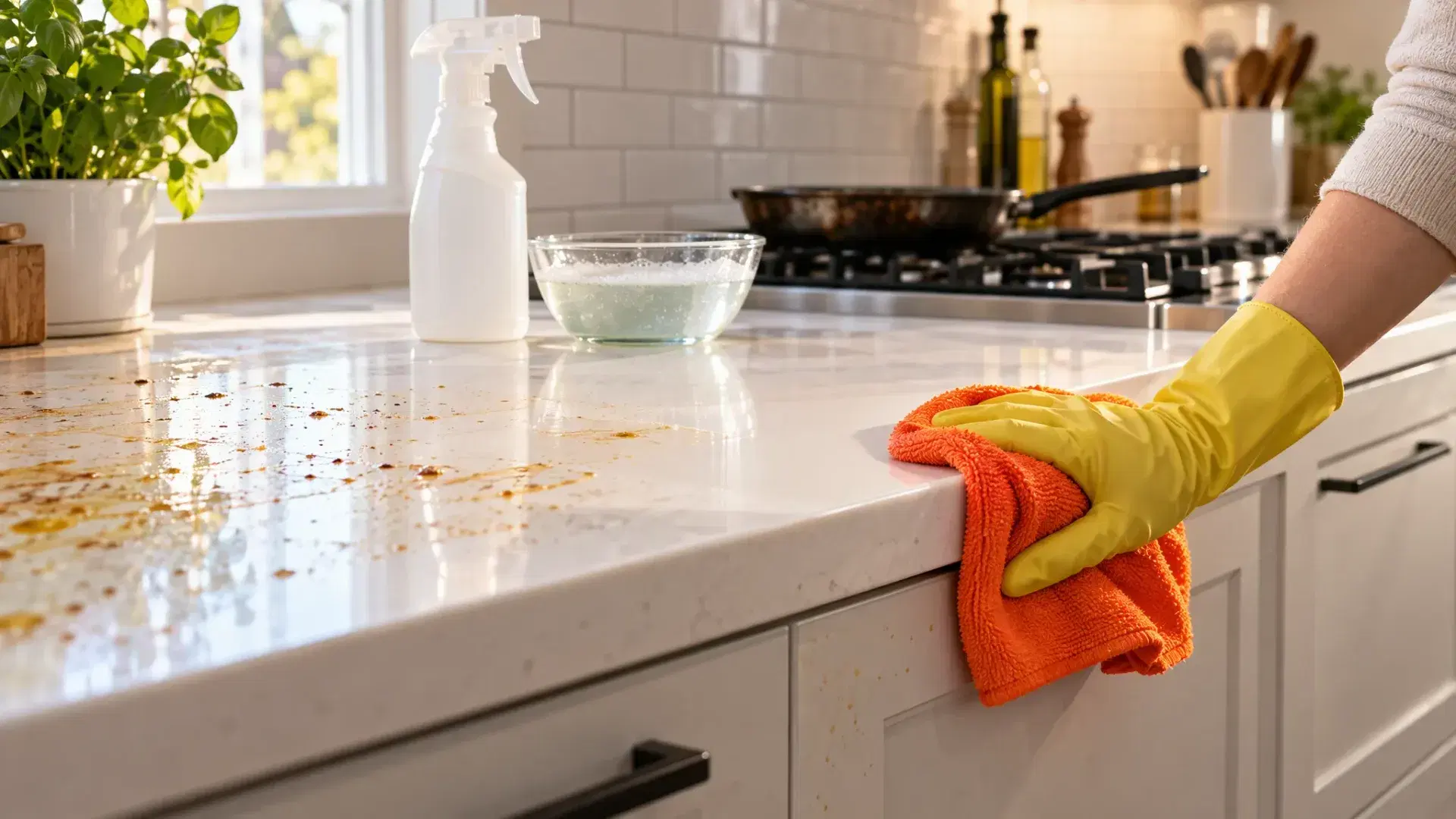
Cut grease on kitchen surfaces with warm water, a few drops of dish soap, and a microfiber cloth for daily splatter. For baked-on buildup, use a baking soda paste or a degreaser made for the surface. This works on cabinets, backsplashes, and range hoods. Cooking is the leading cause of home fires in Canada. It's tied to 32% of fire incidents, says Statistics Canada. Grease residue is a big part of why. Removing it is a safety task, not just a tidy-kitchen task.
Most people wipe the stovetop and call it done. But grease doesn't stay near the stove. Tiny oil droplets float on rising heat. Some are as small as half a micron. They land on cabinet doors, walls, and even upper shelves feet away. A study on home range hoods, in the journal Building and Environment, found this. Ezi Home Services cleaning teams see it often. A greasy film on a cabinet across the room. Sticky dust in a corner nobody thinks to wipe. For the full top-to-bottom routine beyond grease alone, see our guide to cleaning a kitchen from top to bottom.
Everyday splatter: stovetop, backsplash, and countertops
For grease you wipe weekly, keep it simple:
- Mix a few drops of dish soap into a cup of warm water.
- Wipe the surface with a soft cloth soaked in the solution. Wring it out first.
- Follow with a dry microfiber cloth. This stops streaks.
- On glass or ceramic cooktops, use a cloth only. Scrubbers can scratch the surface for good.
For grease dried onto tile or laminate backsplash, add baking soda to the soap mix. This makes a light paste. Apply it. Let it sit for 5–10 minutes. Wipe with a damp cloth. This combination handles most cooked-on splatter with no store-bought product needed. If keeping basics like dish soap and baking soda stocked is the part you forget, see whether a cleaning supply subscription box is worth it for your household.
If the backsplash is heavily coated, try a degreasing spray made for kitchens. Spray it on. Wait the time the label says, usually 5–10 minutes. Wipe clean. Always open a window or turn on the fan first. Canadian safety sheets for these sprays call for fresh air, since the fumes can irritate eyes and lungs. If strong fumes bother you, see what actually makes a cleaning product green before you pick your next degreaser.
Cabinets: wood, painted, and laminate need different care
Cabinets take the worst of it. Grease mist drifts and lands on any flat, upright surface near the stove. The right method depends on the finish.
Painted or laminate cabinets: Warm water and dish soap is usually enough. Wipe with the grain. Dry right away. Standing water can dull paint over time.
Wood cabinets with a sealed finish: Use the same mild soap mix. Wring the cloth almost dry first. Too much water can soak into seams and warp the wood. For grease stuck in grooves or handles, a soft toothbrush dipped in soapy water reaches spots a cloth can't.
Unfinished or oiled wood: Skip water-based cleaners here. Use a dry microfiber cloth, or one lightly damp. This avoids water spots and finish damage. For built-up grease, reach for a cleaner made just for wood cabinets.
Cabinet handles pick up grease from hands as much as from the air. Wipe them every time you clean the cabinet faces. They're some of the most-touched, least-cleaned spots in any kitchen.
Range hoods and filters: the spot everyone skips
The range hood filter traps grease before it spreads through the kitchen. That also makes it the greasiest object in the room. A dirty filter can't pull smoke and grease out of the air as well. More of it settles everywhere else instead. Even a thin layer of buildup can cause trouble. Studies on commercial kitchen systems have tied fires to buildup as thin as 2 millimetres.
Most metal filters are dishwasher-safe. Run them through a hot cycle every one to three months. How often depends on how much you cook with oil. For stuck-on grease, soak the filter first. Use hot water with a few tablespoons of baking soda and a squirt of dish soap. Soak for 10–15 minutes, then wash.
Wipe the hood's outside with the same soap-and-water mix you use on cabinets. Do this every three to four months. That timing matches general fire-safety advice for kitchen exhaust systems.
Stainless steel appliances: grease without the streaks
Stainless steel fridges, ovens, and range hoods show grease and fingerprints fast. Wipe them with a microfiber cloth and a drop of dish soap. Always move with the grain of the steel, never against it. Wiping against the grain pushes grease into the metal's tiny grooves instead of lifting it out. That's why the same spot can look streaky no matter how many times you wipe it the wrong way.
For heavier grease film, put a few drops of undiluted dish soap on a damp cloth. Wipe the surface, then go over it with a dry cloth for shine. Skip anything abrasive. Scouring pads and powders scratch the finish for good, and grease clings harder to a scratched surface afterward. For more on keeping stainless steel streak-free between cleans, see our full stainless steel appliance cleaning guide. Greasy cookware needs its own approach, so see how to clean stainless steel pots and pans without scratching them.
Common mistakes that make grease worse
A few habits actually spread grease instead of removing it:
- Wiping dry first. A dry cloth just smears grease across the surface instead of lifting it.
- Using too much water on wood. Extra moisture soaks into seams and joints. Over time, this warps cabinets.
- Skipping the range hood filter. A greasy filter keeps releasing particles into the air, even after every visible surface looks clean.
- Scrubbing hard instead of soaking first. Grease softens fast with soap and warm water. Skip the soak, and you scrub harder, which risks scratching the surface underneath.
The angle most guides skip: grease travels farther than you think
Most cleaning advice treats grease as a stovetop problem. Research on home range hoods says otherwise. Cooking oil splatters into two types. Larger droplets, called spatter, land fast on nearby surfaces. A finer mist, made of tiny particles, stays in the air much longer. It drifts across the room before it lands.
That mist is why grease shows up on cabinet doors across the kitchen. It lands on wall art near the dining table. It settles on top of cabinets nobody looks at. A stovetop wipe-down handles the spatter. It does nothing for mist that lands three, five, or eight feet away, out of sight.
Here's the practical takeaway: when you clean the stovetop, widen the wipe-down. Include the nearest two cabinet faces and the wall behind the stove. Do this even if they don't look greasy yet. The film builds up before you can see it. By the time it's obvious, it's had months to set in.
Why this isn't just a cosmetic problem
Grease buildup is a fire-safety issue, not only a looks issue. Cooking is the top cause of home fire incidents in Canada. It made up roughly a third of them from 2015 to 2021, per Statistics Canada. Grease on range hoods, filters, and nearby surfaces is fuel sitting close to a heat source.
The National Fire Code of Canada has a rule for this. Grease on kitchen exhaust systems must be checked and cleaned before it turns into a hazard. That rule is written for commercial kitchens. But the same risk applies at home: grease, plus heat, plus time. Cleaning the range hood, filter, and nearby surfaces isn't just about a spotless kitchen. It clears away fuel a stovetop flare-up could catch onto.
Methodology
These cleaning methods draw on home-care cleaning research, safety sheets from Canadian degreaser makers, and a study on cooking oil particles published in Building and Environment. Fire-risk numbers come from Statistics Canada's fire data and fire-safety research on kitchen exhaust systems.
When to call in a professional clean
Some grease jobs are worth handing off. A built-up range hood interior. Cabinet tops above eye level. A kitchen that hasn't had a deep clean in months. Ezi's general house cleaning service covers this kind of surface-by-surface degreasing. Each material gets the right method, not one product used on everything. It's a fast way to reset a kitchen before grease has months to bond to every surface it touched. Book a cleaning whenever the buildup gets ahead of you. For the whole home, browse Ezi's house cleaning services.
Conclusion
Grease on kitchen surfaces is a fire-safety issue as much as a looks issue. It settles farther from the stove than most people clean. A soap-and-water wipe handles daily splatter. Baked-on buildup on cabinets, backsplashes, and range hood filters needs a paste, a degreaser, or a professional reset every few months. Widen the wipe-down past the stovetop. Clean the range hood filter on a schedule. Call in a professional cleaning once buildup has had months to set.
Frequently Asked Questions
What removes grease from kitchen cabinets fastest?
Warm water with a few drops of dish soap removes most grease from painted or laminate cabinets. Wipe with the grain, then dry the surface right away. For grease stuck in grooves or handles, use a soft toothbrush dipped in the same solution.
Does vinegar remove grease as well as dish soap?
Vinegar helps, but it works differently than soap. Its acid breaks down some of the oil. Dish soap's molecules grab grease and pull it off the surface instead. For daily splatter, dish soap alone usually works faster.
How often should you clean a range hood filter?
Clean metal range hood filters every one to three months. Clean more often if you cook with oil daily. Most filters are dishwasher-safe. Soaking stubborn grease first, in hot water with baking soda and dish soap, loosens it before washing.
Why does grease show up on cabinets far from the stove?
Cooking oil releases a fine mist of tiny particles. Some are as small as half a micron, per a study on home range hoods in Building and Environment. This mist stays in the air and can drift several feet before it settles on cabinets, walls, and shelves.
Is kitchen grease buildup actually a fire risk?
Yes, grease buildup near a stove is fuel that can catch fire. Cooking is the top cause of home fire incidents in Canada. It's tied to about 32% of them from 2015 to 2021, says Statistics Canada. The National Fire Code also requires exhaust systems to stay free of hazardous buildup.
How do you clean grease off stainless steel without streaks?
Wipe stainless steel with a microfiber cloth and a drop of dish soap. Move with the grain of the metal, not against it. Wiping against the grain pushes grease into the surface texture. That's what causes streaks that won't lift, no matter how hard you scrub.
kitchen cleaning
grease removal
degreasing
range hood
stainless steel
fire safety
Explore more
Written by
Home Cleaning · Maintenance
Co-founder of Ezi Services and Draftbase, entrepreneur and builder focused on SaaS, AI, and growth — I turn ideas into scalable businesses using technology, automation, and relentless execution.