New-Construction Move-In Cleaning in North Dallas: What Builders Leave Behind
By Samer Alsayegh · · 11 min read
Key Takeaways
- A builder's clean is not a full clean. It often skips cabinets, vents, and tracks.
- Book your move-in clean after the final walkthrough and before furniture arrives.
- Vacuum before you wipe or mop. Wet dust turns into streaks.
- Put in a new HVAC filter on move-in day. Check it every month.
- If homes nearby are still being built, plan a follow-up clean.
A new-construction move-in clean removes the fine dust, stickers, film, and grime that builders leave behind. Builders in North Dallas usually do a "builder's clean" before closing. That clears debris and the worst of the dust. But it rarely gets inside cabinets, vents, or window tracks. Plan a full move-in clean after your final walkthrough and before your furniture arrives. Then swap the HVAC filter and keep checking it every month while the homes around you are still being built.
New homes are everywhere in Collin County right now. Ezi Home Services books move-in and post-construction cleaning across North Dallas, including Frisco, McKinney, Prosper, Plano, and Allen. This guide covers what a builder's clean misses, how to deal with construction dust, and how to time your clean around closing.
Why new homes need a real clean before you move in
A brand-new house looks clean at first glance. The floors shine and the counters are clear. But run a finger along a window sill, the top of a door frame, or the inside of a kitchen drawer, and you'll see a fine white or grey film. That's construction dust, and most of it comes from drywall.
Drywall dust is hard to clean because the particles are so small. They float through the air for a long time, then settle on every flat surface. They also get pulled into the HVAC system and blown back out after you move in.
The National Institute for Occupational Safety and Health notes that drywall joint compound can contain talc, mica, gypsum, calcite, and silica. Breathing the dust can irritate the eyes, nose, throat, and lungs. Workers get the most exposure. Still, it's worth clearing the dust before kids and pets move in. We cover the health side in more detail in our guide to the hidden health risks of construction dust.
Builder's clean vs. move-in clean
Most new-home buyers assume the house is "move-in ready" when they get the keys. Here's what a typical builder's clean covers, and what it often misses.
| Area | Builder's clean (typical) | Full move-in clean |
|---|---|---|
| Debris and scraps | Removed | Removed |
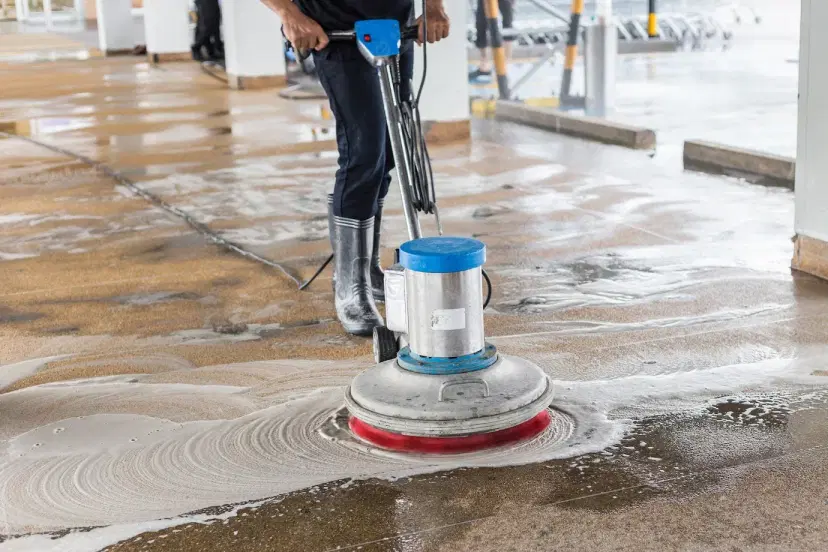
| Floors | Swept | HEPA vacuum, then mop |
| Counters and sinks | Wiped | Washed, haze removed |
| Inside cabinets | Often skipped | Vacuumed and wiped |
| Window tracks and sills | Often skipped | Vacuumed and wiped |
| Air vents | Often skipped | Washed |
| Lights and fans | Often skipped | Dusted |
| Baseboards | Quick wipe | Wiped by hand |
| Stickers and film | Some removed | All removed |
| Paint drips and grout haze | Rarely | Removed |
Every builder is different, so ask yours what their final clean includes. Some large builders bring in a crew for a detailed clean. Others hand over a home that's broom-clean and nothing more.
What to clean in a new home, room by room
A new build doesn't need scrubbing the way an older home does. The job is about dust, residue, and the small leftovers of construction. Here's where to focus.
Kitchen
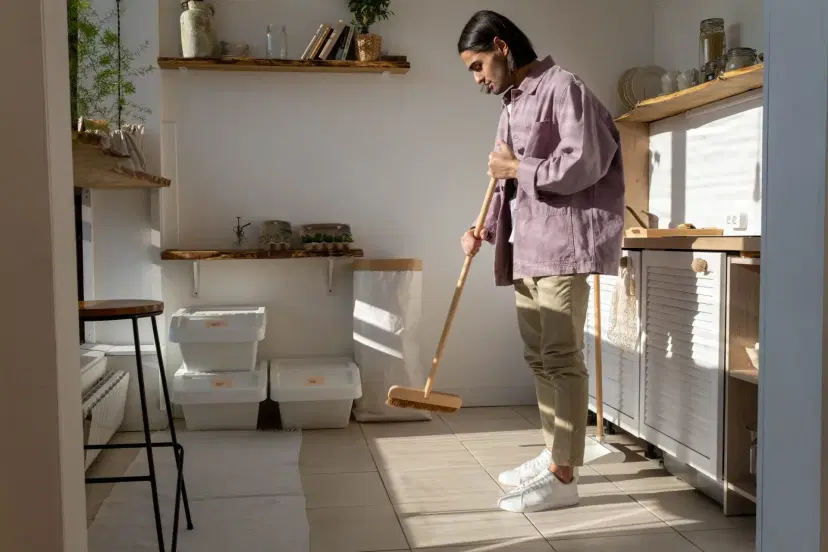
- Cabinets and drawers. Vacuum out the dust with a brush tool first, then wipe. Wiping first turns dust into paste in the corners.
- Appliances. Peel off the blue or clear protective film. Wipe the inside of the fridge, oven, and dishwasher. Read the manuals before you run the oven's first heat cycle.
- Range hood. Wipe the hood and clean or replace the filter. Dust collects there while the kitchen is being finished.
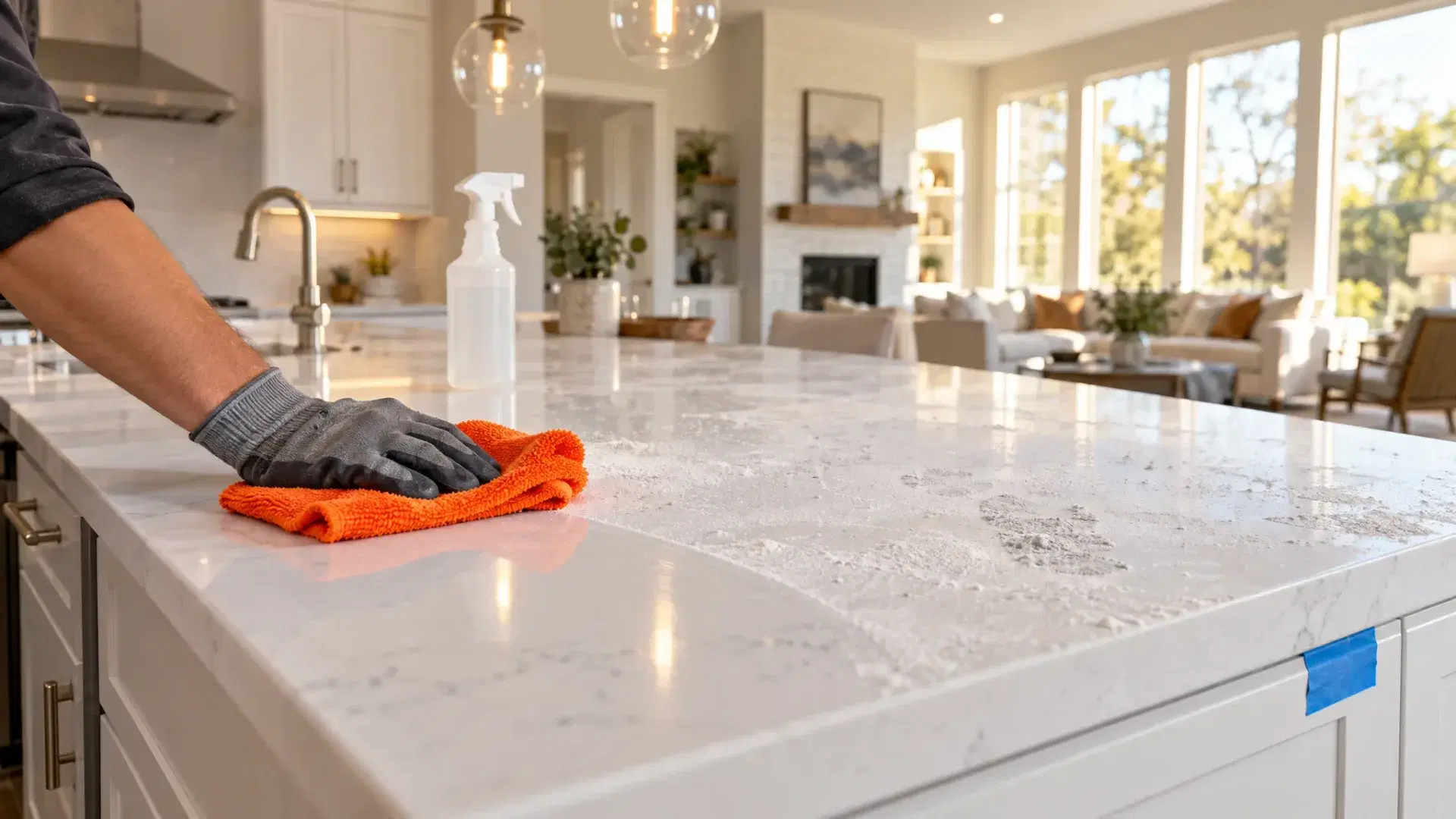
- Counters and backsplash. Look for grout haze, a dull film left after tiling. Use a cleaner made for your stone or tile, not a general acid cleaner.
Bathrooms
- Glass shower doors. Remove stickers and film, then clean the glass. Wipe the frame and tracks.
- Grout and caulk. Wipe off grout haze. Leave new caulk alone for the time listed on the product before you clean it hard.
- Toilets and tubs. Wipe off dust and labels. Check the tub for paint drips or drywall mud.
- Mirrors and fixtures. Clean labels and fingerprints off faucets and towel bars.
If you start to see white spots on new glass or fixtures in the first few months, that's usually mineral buildup from hard water. Our guide to removing hard water stains covers how to handle it without damaging new finishes.
Floors
- Vacuum before you mop, always. Mopping dust turns it into a thin layer of mud that dries into streaks.
- Use a vacuum with a HEPA filter. Regular vacuums can blow the finest dust right back into the air.
- Vacuum new carpet two or three times in the first weeks. Carpet holds construction dust that keeps working its way up.
- Check the floor maker's care guide before you use any cleaner on new hardwood or luxury vinyl.
Windows, doors, and trim
- Window tracks. Vacuum them out with a narrow tool. Tracks in new builds often hold sawdust, drywall dust, and small screws.
- Window stickers. Peel slowly. For residue, use a little dish soap and water or a citrus-based remover, then scrape with a plastic blade.
- Baseboards and door frames. Wipe every edge by hand, including the tops of doors.
Vents, fans, and fixtures
- Remove vent covers and return grilles, and wash them.
- Vacuum just inside each vent opening.
- Dust ceiling fans and light fixtures. Fixtures often hold bugs and dust that fell in during the build.
For a more detailed, step-by-step list, see our post-construction cleaning checklist. It's written for Ottawa, but the checklist works for any new home.
Clear the air: HVAC filters and ventilation
Cleaning surfaces is only half the job. The other half is the air.
The EPA's Indoor airPLUS program for new homes requires the HVAC system and ductwork to be checked as dry and clean, with a new filter put in before anyone moves in. Not every builder follows that program, so don't assume it was done.
Here's what to do:
- Put in a new filter on move-in day. Write the date on the filter's edge.
- Check it every month. ENERGY STAR says to check, clean, or change air filters once a month. In a new build, plan on a fresh filter each month at first.
- Ask about the ducts. If the HVAC system ran during drywall work, ask your builder whether the ducts were sealed off or cleaned.
- Bring in fresh air. New cabinets, carpet, and paint give off gases called VOCs. Most of it happens in the first months. The EPA says to air out a newly finished home before you move in and to keep up ventilation for several months after. In North Texas heat, that may mean running bath and kitchen fans and opening windows on mild mornings.
The underused angle: you're moving into a construction zone
Most move-in guides assume your street is finished. In North Dallas, it often isn't.
The Census Bureau's 2025 estimates show how fast this area is growing. Celina was the fastest-growing U.S. city with 20,000 or more people, up 24.6% in a single year to about 64,400 people. Princeton, Melissa, and Anna, all in Collin County, also ranked in the top five.
So many new owners in Prosper, Celina, McKinney, and north Frisco move in while the lots nearby are still being built. Next door, crews are cutting lumber, sanding drywall, and grading dirt. That dust doesn't stay on their lot. It blows in through doors, gets tracked in on shoes, and gets pulled into your HVAC return.
So a single move-in clean is not the end of it. Here's how to plan for months of building around you:
- Change your HVAC filter monthly until the homes around you are finished, not just for your first month.
- Use doormats inside and out, and make your home shoe-free if you can.
- Keep windows closed on windy days when crews are grading or cutting nearby.
- Wipe window sills and tracks every couple of weeks. That's where outside dust lands first.
- Book a follow-up clean a few weeks after move-in. Dust that was in the air and the ducts settles after the first clean.
When to book your move-in clean
Timing makes a big difference. Book too early and you'll clean twice. Book too late and you'll be cleaning around boxes and furniture.
- Do your final walkthrough first. Note any paint touch-ups, drywall fixes, or punch-list work the builder still needs to finish.
- Wait for punch-list repairs. Every drywall patch and paint touch-up makes new dust. Clean after the last one, if you can.
- Clean before the furniture arrives. Empty rooms take less time and let the crew reach every baseboard and closet.
- Change the HVAC filter after the clean and again a month later.
- Book a touch-up clean a few weeks in, once your home has settled.
If your move-in date is fixed and repairs are still going, clean anyway. Then schedule a lighter touch-up once the last repair is done.
Methodology
Population figures come from U.S. Census Bureau 2025 estimates, as reported by Community Impact. Drywall dust details come from the National Institute for Occupational Safety and Health. HVAC and ventilation guidance comes from the EPA's Indoor airPLUS program, the EPA, and ENERGY STAR. Room-by-room cleaning steps reflect common professional cleaning practice for newly built homes. Always follow your builder's care guide and product warranties for new finishes.
When to call a professional
A full move-in clean on a new build can take one person a full day or more. Large homes with high ceilings take longer. Most new homeowners would rather spend that time moving in.
Ezi books post-construction cleaning in Dallas and move-in cleaning in Dallas across Frisco, McKinney, Prosper, Plano, and Allen. For pricing, see our house cleaning cost guide for Dallas. You can book with Ezi in a few minutes, with an upfront price and a set arrival window.
The bottom line on cleaning a new-construction home
A builder's clean gets your home close, but not all the way. Plan a full move-in clean after your final walkthrough and before your furniture arrives. Vacuum before you wipe, use a HEPA vacuum, and get inside every cabinet, vent, and window track.
Put in a new HVAC filter on move-in day and check it monthly. In fast-growing parts of North Dallas, keep that up until the homes around you are finished. A follow-up clean a few weeks later catches the dust that settles after the first one.
Frequently Asked Questions
Does a new construction home need to be cleaned before moving in?
Yes. A builder's clean removes debris, but fine drywall dust stays in cabinets, vents, window tracks, and fixtures.
What is a builder's clean?
It's the basic clean a builder does before closing. It covers debris, floors, and counters. It often skips cabinets, vents, and window tracks.
When should I book a move-in clean for a new build?
Book it after your final walkthrough and punch-list repairs, and before your furniture arrives.
How often should I change the air filter in a new home?
Check it every month. ENERGY STAR says to inspect, clean, or change filters monthly, and new homes collect extra dust at first.
How do I remove stickers from new windows?
Peel slowly, then wipe the residue with soapy water or a citrus-based remover. Scrape gently with a plastic blade, not metal.
Does Ezi clean new homes in Frisco and McKinney?
Yes. Ezi books post-construction and move-in cleaning in Frisco, McKinney, Prosper, Plano, and Allen.
post-construction cleaning
move-in cleaning
new construction
Frisco
McKinney
Dallas
Written by
Home Cleaning · Maintenance
Co-founder of Ezi Services and Draftbase, entrepreneur and builder focused on SaaS, AI, and growth — I turn ideas into scalable businesses using technology, automation, and relentless execution.