How to Clean a Cat Litter Box (and Keep the Odour Down)
By Lorna Beaulieu · · 12 min read
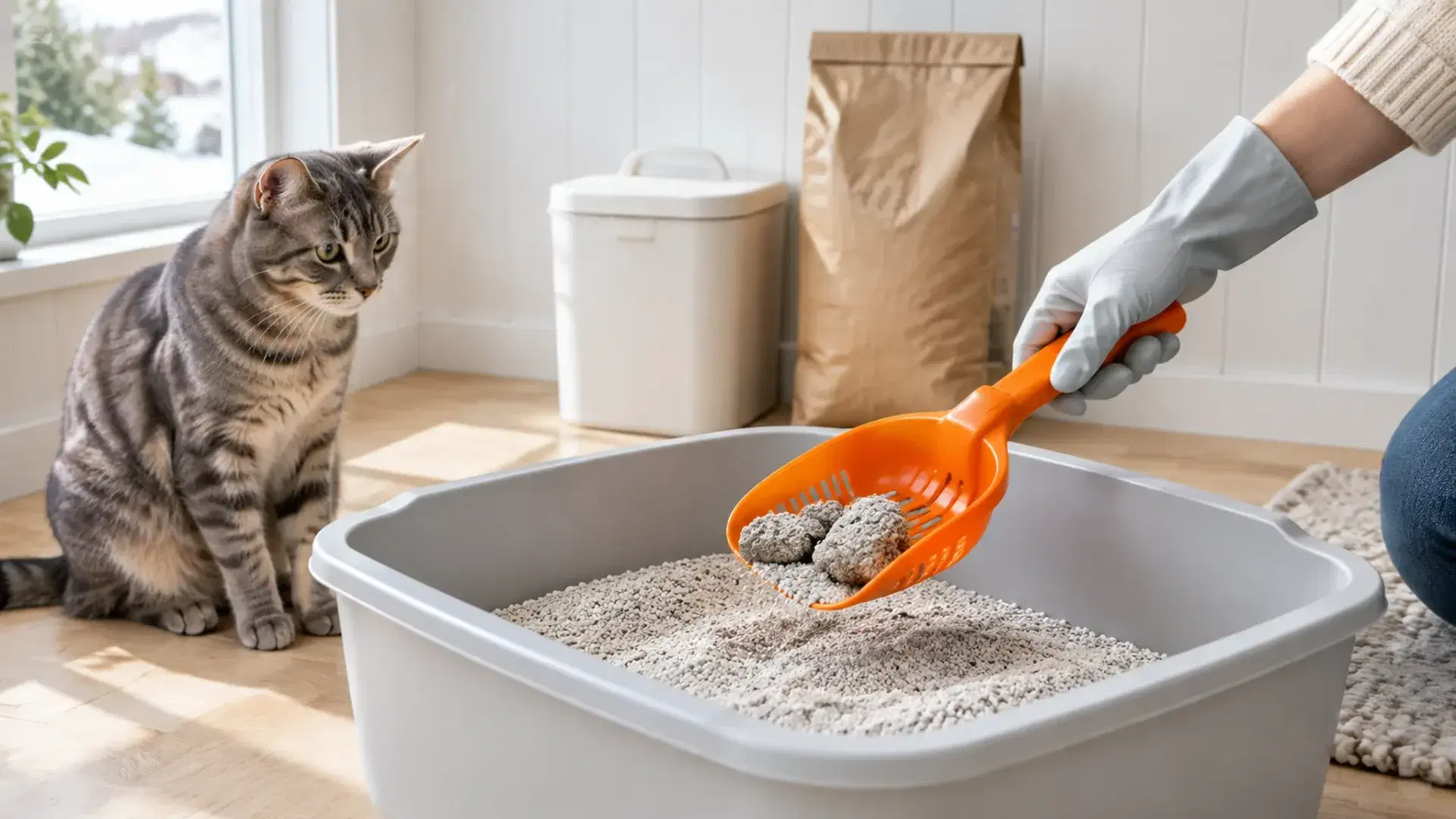
Key Takeaways
- Scoop the litter box at least once a day.
- Keep litter 5 to 8 cm deep.
- Wash the box with mild, unscented soap at each full change.
- Have one box per cat, plus one extra.
- If you're pregnant, let someone else clean the box.
To clean a cat litter box, scoop out clumps and waste at least once a day. Top up the litter so it stays 5 to 8 cm deep. Once a week for non-clumping litter, or every 2 to 4 weeks for clumping litter, dump it all out. Wash the box with hot water and mild, unscented dish soap. Dry it fully and refill. That routine keeps odour down and keeps your cat using the box.
Odour is the most common complaint about litter boxes, but it isn't the biggest risk. The bigger risk is your cat deciding the box is too dirty and going somewhere else. A large University of Helsinki study found a link between box cleaning habits and peeing outside the box. This guide covers the daily routine, the deep clean, how to control smell, and how to stay safe while you do it. Ezi Home Services books house cleaning in Ottawa, Toronto, Montreal, and other cities, and pet homes are some of the most common homes we visit.
Why a clean litter box matters
Cats are very clean animals. They have a much stronger sense of smell than we do. A box that smells "fine" to you can smell awful to them.
When a box gets too dirty, many cats will:
- Hover over the edge instead of stepping in.
- Go right next to the box.
- Pick a new spot, like a rug, a bathtub, or a pile of laundry.
Once a cat starts going outside the box, the habit can be hard to break. The smell left in carpet or floors draws them back. So a clean box is less about looks and more about stopping a problem before it starts.
There's a health side, too. Ammonia from old urine builds up in a dirty box. It irritates your cat's eyes and lungs, and yours. Cat waste can also carry germs and parasites, which matters a lot for some people in your home. More on that below.
How often should you clean a litter box?
Here's a simple schedule that works for most homes:
| Task | How often |
|---|---|
| Scoop clumps and waste | At least once a day, twice for 2+ cats |
| Top up fresh litter | Every few days, as needed |
| Full litter change (clumping) | Every 2 to 4 weeks |
| Full litter change (non-clumping) | Every week, or more |
| Wash the box | At each full litter change |
| Replace the plastic box | About once a year |
The once-a-day scoop is the most important habit. Purina's guidance, in line with feline vets, says to scoop daily and add litter as needed. More cats means more scooping.
How many litter boxes do you need?
Plan for one box per cat, plus one extra. Two cats need three boxes. This is the standard rule from cat behaviour experts.
Why so many? Some cats won't use a box another cat just used. Others guard a box and block a shy cat from it. Extra boxes in different spots give every cat a clean, safe option.
Place boxes in quiet, easy-to-reach spots. Keep them away from food and water bowls. Avoid loud spots, like right next to the furnace or washing machine. In a multi-level home, put at least one box on each floor.
What you need
- A litter scoop. Metal lasts longer than plastic.
- Disposable gloves.
- Small bags for waste. Compostable or reused bags work.
- A lidded trash can for scooped waste.
- Mild, unscented dish soap.
- A scrub brush or sponge used only for the litter box.
- Paper towels or an old towel for drying.
- Fresh litter.
- A mask if your litter is dusty.
How to scoop a litter box every day
Step 1: Put on gloves
Gloves keep your hands clean and protect small cuts from germs. Wash your hands after, even if you wore gloves.
Step 2: Scoop out clumps and waste
Dig gently through the litter with the scoop. Lift out urine clumps and feces. Shake the scoop so clean litter falls back into the box. Get the clumps stuck to the sides and bottom, too.
Step 3: Bag and bin the waste
Put the waste in a small bag, tie it, and drop it in a lidded trash can. Take it out often. Don't flush cat waste or litter. Most litter swells and clogs pipes. Many Canadian cities also list cat litter on their "do not flush" lists.
Step 4: Top up the litter
Add fresh litter to keep the depth around 5 to 8 cm. Too little and urine pools on the bottom of the box. Too much and some cats won't step in.
Step 5: Tidy the area
Sweep or vacuum scattered litter around the box. A litter mat under the box catches most of it.
How to deep clean a litter box
Do this at every full litter change. It takes about 15 minutes.
Step 1: Empty the box
Pour all the old litter into a garbage bag. Do it outside or over the trash to keep dust down. Wear a mask if your litter is dusty.
Step 2: Wash with hot, soapy water
Rinse the box. Then scrub it with hot water and a few drops of mild, unscented dish soap. Use a brush kept just for this job. Scrub the corners and the rim, where urine likes to build up.
Skip strong-smelling cleaners. Scents from citrus, pine, or perfume can put your cat off the box. Some cleaners are also unsafe for cats. Our guide to safe cleaning products for pets lists which ones to avoid.
Step 3: Rinse well
Rinse until no soap is left. Leftover soap can leave a smell your cat doesn't like.
Step 4: Disinfect if needed
Most of the time, soap and water are enough. If your cat has been sick, or you're switching boxes between cats, you can disinfect. Use a weak bleach mix, about 1 part bleach to 32 parts water. Let it sit for a few minutes, then rinse very well and let it air out.
Never use bleach on a box with urine still in it. Urine contains ammonia. Bleach and ammonia make toxic fumes. Our guide on cleaning chemicals you should never mix explains why. Always wash with soap first.
Step 5: Dry fully
Dry the box with a towel, or let it air dry in the sun. Sunlight helps kill germs and fade smells. A damp box makes clumping litter stick to the bottom.
Step 6: Refill
Add 5 to 8 cm of fresh litter and put the box back in the same spot. Cats like routine, so don't move it unless you need to.
How to keep litter box odour down
Most odour comes from waste left too long. Daily scooping fixes most of it. These tips help with the rest.
- Use baking soda. Sprinkle a thin layer on the bottom of the clean box before you add litter. It helps absorb urine smell. Don't mix in so much that it changes how the litter feels.
- Choose unscented litter. It sounds backwards, but strong scents can drive cats away. Many cats prefer unscented litter, and scent only covers up smells for you.
- Pick a clumping litter. Clumps make it easy to remove all the urine each day, not just the solids.
- Replace old boxes. Plastic gets scratched over time. Urine soaks into the scratches and keeps smelling, even after washing. Swap the box about once a year.
- Improve airflow. A small, closed space traps smell. A spot near a window or with good airflow helps.
- Empty the trash can often. A full bin of used litter can smell as bad as a dirty box.
Lidded or hooded boxes hide the box from view, but they also trap smell inside for your cat. Many cats prefer an open box. If you use a lid, you may need to scoop more often.
The underused angle: who should not clean the box
Most guides skip this part. Cat waste can carry a parasite called Toxoplasma gondii. Most healthy adults who catch it have mild or no symptoms. But it can seriously harm an unborn baby.
The Canadian Veterinary Medical Association advises that people who are pregnant should avoid cleaning cat litter. If they have to do it, they should wear gloves and wash their hands well after. The BC Centre for Disease Control gives the same advice and adds a timing tip: change the litter daily.
Here's why daily matters. The parasite eggs in fresh cat feces aren't infectious right away. They need about 1 to 5 days to become infectious. So a box that's scooped every day is much safer than one cleaned twice a week.
The same care makes sense for:
- People with weak immune systems.
- Young children, who shouldn't play near or clean the box.
- Anyone with open cuts on their hands.
If someone in your home falls into one of these groups, have someone else clean the box. If that's not possible, wear gloves, scoop daily, and wash your hands well after every clean.
What if your cat goes outside the box?
First, call your vet. Peeing outside the box can be a sign of a urinary tract infection, bladder stones, or other health problems. Rule those out first.
If your cat is healthy, look at the box itself:
- Is it scooped every day?
- Is there one box per cat, plus one?
- Has the litter type or scent changed?
- Is the box in a loud or busy spot?
- Is the box big enough? It should be about 1.5 times your cat's length.
Clean any accident spots with an enzyme cleaner made for pet urine. Regular cleaners don't break down the urine, and the smell draws the cat back. For accidents on carpet, our carpet stain removal guide covers pet stains step by step.
Methodology
Scooping and litter change schedules reflect guidance from Purina and feline veterinary sources. The link between box cleanliness and house soiling comes from a University of Helsinki study of cat litter box behaviour. Toxoplasmosis advice comes from the Canadian Veterinary Medical Association and the BC Centre for Disease Control. The one-box-per-cat-plus-one rule reflects standard cat behaviour guidance. Always ask your vet about your own cat's health.
When to call a professional
A clean litter box is a daily job only you can do. But pet homes need more than that. Litter dust, fur, and odour build up on floors, baseboards, and furniture over time.
A regular general house cleaning keeps fur and litter dust under control. For set-in smells in carpet, book a carpet cleaning. You can book with Ezi in a few taps, with an upfront price and a set arrival window.
The bottom line on cleaning a litter box
Scoop at least once a day and keep the litter 5 to 8 cm deep. Do a full change and wash the box with mild, unscented soap every 1 to 4 weeks, depending on your litter. Never mix bleach with a urine-soaked box.
Keep one box per cat, plus one. Use unscented litter and replace the box each year. If anyone in your home is pregnant, have someone else clean the box, or wear gloves and scoop daily.
How To
- 1Empty the boxPour all the old litter into a garbage bag, outside or over the trash. Wear a mask if the litter is dusty.
- 2Wash with hot, soapy waterScrub the box with hot water and mild, unscented dish soap using a brush kept only for this job. Focus on corners and the rim.
- 3Rinse wellRinse until no soap is left, since leftover scent can put your cat off the box.
- 4Disinfect if neededOnly after washing with soap, wipe with about 1 part bleach to 32 parts water, then rinse very well. Never use bleach on a box with urine still in it.
- 5Dry fullyTowel dry or air dry in the sun so clumping litter won't stick to the bottom.
- 6RefillAdd 5 to 8 cm of fresh litter and put the box back in the same spot.
Frequently Asked Questions
How often should you clean a cat litter box?
Scoop at least once a day, and twice a day with two or more cats. Change clumping litter fully every 2 to 4 weeks. Change non-clumping litter every week.
What should you use to wash a litter box?
Use hot water and a few drops of mild, unscented dish soap. Scrub with a brush kept only for the box. Rinse well and dry it fully before you refill it.
How many litter boxes do you need?
Plan for one box per cat, plus one extra. Two cats need three boxes. Put them in quiet spots, away from food and water.
How do you stop a litter box from smelling?
Scoop daily and use unscented, clumping litter. Sprinkle a thin layer of baking soda under the litter. Replace the plastic box about once a year, since scratches hold odour.
Can you clean a litter box while pregnant?
It's best not to. Cat waste can carry a parasite that harms unborn babies. If you must, wear gloves, scoop daily, and wash your hands well after.
Can you use bleach on a litter box?
Yes, but only after washing the box with soap first. Use about 1 part bleach to 32 parts water, then rinse very well. Bleach and urine make toxic fumes.
cat litter box
pet cleaning
odour control
pet owners
home hygiene
Written by
Home Cleaning · Maintenance
Lorna has spent years in residential cleaning and home maintenance, from move-in/move-out deep cleans to seasonal upkeep routines that actually hold up. She writes about the small, practical habits that keep a home running smoothly between professional visits.