How to Clean a Toilet (Step by Step, Including the Spots Most People Miss)
By Samer Alsayegh · · 12 min read
Key Takeaways
- Clean the toilet fully once a week.
- Let cleaner sit under the rim for 5 to 10 minutes.
- Close the lid before every flush.
- Skip tank tablets. They wear out the seals.
- Never flush wipes, even "flushable" ones.
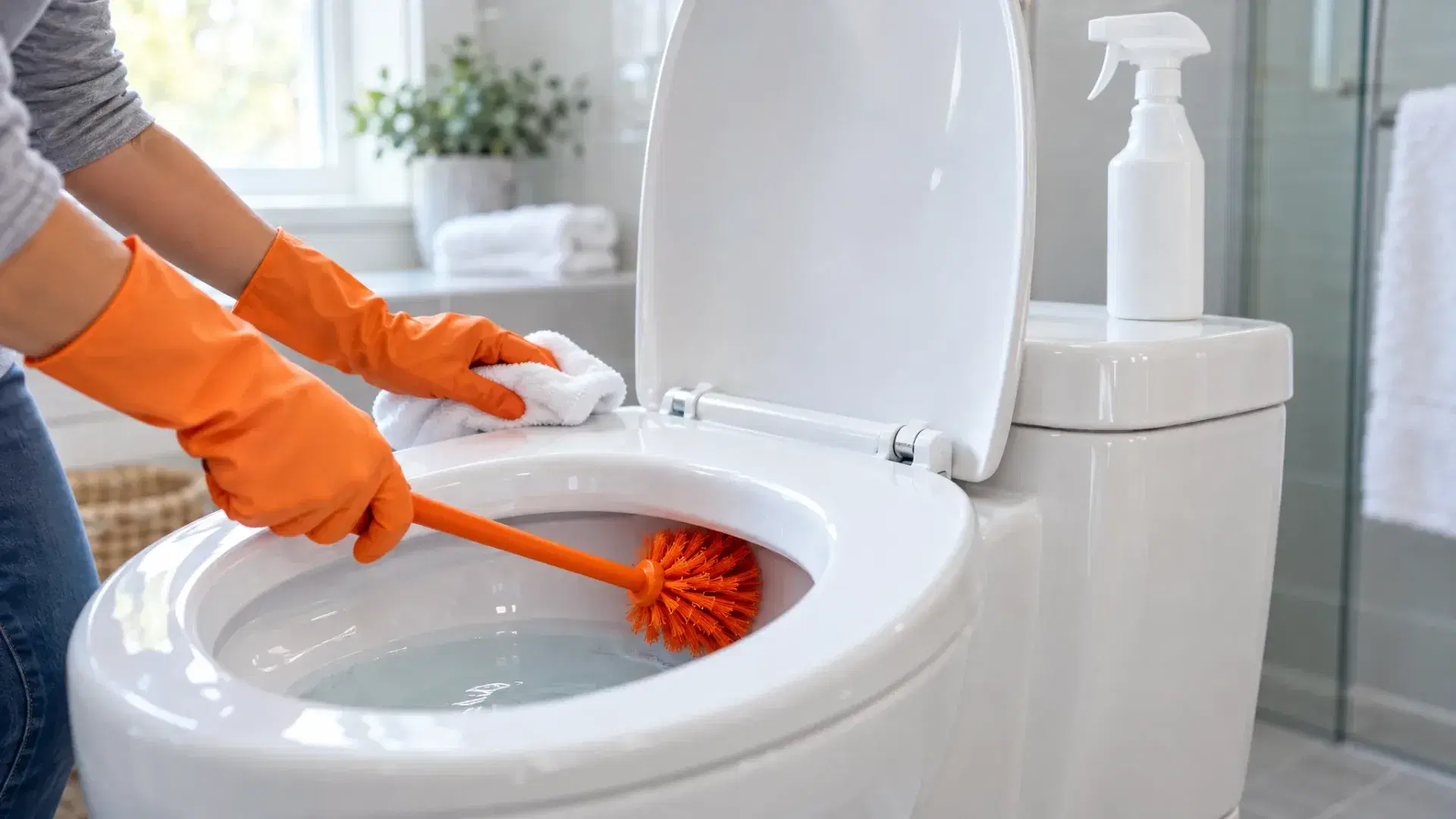
To clean a toilet, put on gloves and squirt toilet bowl cleaner under the rim. Let it sit for 5 to 10 minutes while you wipe the outside, top to bottom: tank, handle, lid, seat, hinges, and base. Then scrub the bowl with a toilet brush, going up under the rim and down into the drain hole. Flush to rinse. Clean the floor around the base last.
That's the weekly routine. But most toilets have problem spots a quick scrub never reaches: the hard water ring, the rim jets, the bolts at the base, and the hinge gap under the seat. This guide covers each one, plus two common habits that cause expensive damage. Ezi Home Services books house cleaning in Ottawa, Toronto, Montreal, and other cities, and the toilet is the one fixture every bathroom clean starts with.
How often should you clean a toilet?
| Task | How often |
|---|---|
| Quick wipe of the seat and handle | Every few days |
| Full clean (bowl, outside, base) | Once a week |
| Rim jets, hinges, and bolts | Once a month |
| Hard water ring treatment | When you see it, or monthly in hard water areas |
| Replace the toilet brush | Every 6 months |
Homes with kids, several people sharing one bathroom, or someone sick may need a full clean twice a week.
What you need
- Rubber gloves, kept only for the bathroom.
- Toilet bowl cleaner, or white vinegar and baking soda.
- A toilet brush with stiff bristles.
- An all-purpose or disinfecting spray.
- Paper towels or a cloth kept only for the toilet.
- An old toothbrush.
- A pumice stone, for hard water rings.
Never mix cleaners. Bleach-based toilet cleaners and ammonia or acid cleaners make toxic gas when they meet. That includes flushing one product and adding another to the same bowl water. Our guide on cleaning chemicals you should never mix has the full list.
How to clean a toilet, step by step
Step 1: Close the lid and flush
Close the lid before you flush, every time. More on why below. Flushing first gives you clean water to work with.
Step 2: Apply cleaner under the rim
Lift the lid and seat. Squirt bowl cleaner just under the rim, all the way around, so it runs down the sides. Let it sit for 5 to 10 minutes. The cleaner needs contact time to work. Scrubbing right away does less.
Step 3: Clean the outside, top to bottom
While the cleaner sits, spray and wipe the outside. Go from the cleanest part to the dirtiest, so you don't spread germs upward:
- The tank lid and the flush handle.
- The tank sides.
- The top of the lid.
- Both sides of the seat.
- The rim, under the seat.
- The outside of the bowl.
- The base, and the floor around it.
Use paper towels, or a cloth you only use on the toilet. Don't use the same cloth on the sink.
Step 4: Clean the hinges
The gap where the seat bolts to the bowl traps grime and urine. Most people never clean it. Many seats have caps you can flip open, or a quick-release button that lets the seat lift off. Spray the hinges and scrub with an old toothbrush. Wipe dry.
Step 5: Scrub the bowl
Scrub the whole bowl with the toilet brush. Push the brush up under the rim, where the water jets are. Then push it down into the drain hole as far as it goes. Most stains and smells start in those two spots.
Step 6: Flush and rinse the brush
Flush with the lid closed. Hold the brush over the bowl and flush again to rinse it. Let it drip dry over the bowl, with the seat holding the handle, before you put it back in its holder.
Step 7: Clean the base and bolts
The floor around the base gets splashed more than you'd think. Spray it, along with the bolt caps on each side. Wipe with paper towels. Pop off the bolt caps once a month and clean underneath. Our guide to deep cleaning a bathroom covers the rest of the room, from the tub to the grout.
How to remove a hard water ring
That brown or grey line at the waterline is usually mineral buildup, not dirt. It's common in hard water areas across Canada. Regular toilet cleaner often can't touch it.
Try vinegar first.
- Pour about 2 cups of white vinegar into the bowl, aiming at the ring.
- Sprinkle a little baking soda on top. It will fizz.
- Leave it for at least 30 minutes, or overnight for a thick ring.
- Scrub with the toilet brush and flush.
If that fails, use a pumice stone.
- Wet the pumice stone and the bowl. Both must stay wet, or the stone can scratch.
- Rub the ring gently with light pressure.
- Rinse and flush.
Pumice is safe on standard white porcelain when kept wet. Don't use it on coloured, painted, or plastic surfaces.
Prevent it. Pour a cup of vinegar into the bowl once a week and let it sit overnight. Flush in the morning.
How to clean the rim jets
The rim has small holes that spray water when you flush. In hard water, minerals build up and block them. A blocked rim means a weak flush and streaks down the bowl.
- Dry the rim with paper towels.
- Stuff paper towels soaked in white vinegar up under the rim, all the way around.
- Leave them for an hour.
- Remove the towels and poke each hole with a small wire or an old toothbrush.
- Flush.
Why you should close the lid before you flush
This is the step most people skip. A 2022 study from the University of Colorado Boulder used lasers to see what comes out of a toilet during a flush. The researchers found that tiny droplets shoot out at about 2 metres per second. They reach 1.5 metres above the bowl within 8 seconds.
Those droplets can carry germs and land on nearby surfaces, like the counter, your toothbrush, and the towel rack. The researchers noted that closing the lid helps cut this down, though it doesn't stop it fully.
So close the lid every time you flush. Store toothbrushes in a cabinet, or as far from the toilet as you can. And wipe the counter and the flush handle often.
The underused angle: two habits that damage your toilet
Most cleaning guides focus on what to use. These two habits matter just as much, and they cost money to fix.
Drop-in tank tablets
Those blue or bleach tablets you drop in the tank seem like an easy fix. But many plumbers warn against them, and some toilet makers say not to use them. The tablets sit in the tank and slowly eat away at the rubber flapper, seals, and gaskets. A worn flapper can't seal. Water then leaks from the tank into the bowl all day, which you may hear as a toilet that keeps refilling on its own.
Check your toilet's manual or the inside of the tank lid. If you want a cleaner that works hands-free, use one that clips to the rim of the bowl instead.
Flushing "flushable" wipes
This is a big one in Canada. In 2019, researchers at what's now Toronto Metropolitan University tested 101 single-use products, including 23 sold as "flushable." Not one broke down enough to pass the sewer test.
Wipes don't fall apart like toilet paper. They catch on pipe joints, tree roots, and other wipes. Over time, they cause clogs in your home's pipes and in city sewers. Many Canadian cities now ask people to throw all wipes in the garbage.
Only flush the three Ps: pee, poo, and toilet paper. Everything else goes in the trash, including:
- All wipes, even ones labelled "flushable."
- Paper towels and tissues.
- Dental floss.
- Cotton swabs and cotton pads.
- Hair.
- Cat litter.
- Medicine. Take it to a pharmacy for safe disposal.
Keep a small lidded garbage can next to the toilet. It makes the right choice easy.
How to clean and store a toilet brush
A toilet brush is one of the dirtiest tools in your home. Clean it once a week.
- After you clean, flush and rinse the brush in the clean bowl water.
- Let it drip dry, wedged between the seat and the bowl, for 10 minutes.
- Once a week, soak the brush head in hot soapy water or a weak bleach mix (about 1 part bleach to 10 parts water) for an hour. Never mix bleach with other cleaners.
- Rinse the holder too. Water pools in the bottom and grows bacteria.
- Replace the brush every 6 months, or sooner if the bristles are flat or stained.
What causes a smelly toilet?
If the bathroom smells even after you clean, check these spots:
- Under the rim. Urine dries there, out of sight. Use a mirror to look.
- The hinges and bolt caps. Both trap urine.
- The base. If the floor around the base smells, the wax seal under the toilet may be failing. Look for water or soft flooring. Call a plumber.
- The grout around the base. Old grout soaks up urine. Scrub it with a baking soda paste.
- A dry drain. If a toilet isn't used for weeks, the water in the trap can dry out and let sewer gas in. Flush it once a week.
Methodology
Flush plume data comes from a 2022 University of Colorado Boulder study published in Scientific Reports. Flushable wipe data comes from the 2019 Toronto Metropolitan University (then Ryerson University) flushability study. Advice on drop-in tank tablets reflects warnings from plumbers and toilet makers. Cleaning steps and hard water methods reflect common household and professional cleaning practice. Always follow your toilet maker's care instructions.
When to call a professional
A weekly toilet clean takes about 10 minutes. But if your toilet is part of a bathroom that's gone weeks without a full clean, the job gets bigger fast.
A regular general house cleaning covers toilets, sinks, mirrors, and floors on every visit. A deep clean goes further, with grout, rim jets, and buildup behind the toilet. You can book with Ezi in a few taps, with an upfront price and a set arrival window.
The bottom line on cleaning a toilet
Put cleaner under the rim and let it sit while you wipe the outside, top to bottom. Scrub under the rim and into the drain hole, then clean the hinges and the base. Do it once a week, with the rim jets and bolt caps once a month.
Close the lid before you flush. Treat hard water rings with vinegar or a wet pumice stone. Skip drop-in tank tablets, and never flush wipes, even "flushable" ones.
How To
- 1Close the lid and flushClose the lid before flushing to limit spray, and start with clean bowl water.
- 2Apply cleaner under the rimSquirt bowl cleaner under the rim all the way around and let it sit for 5 to 10 minutes.
- 3Clean the outside, top to bottomWipe the tank, handle, lid, seat, rim, bowl exterior, and base in that order.
- 4Clean the hingesOpen the hinge caps or lift off the seat, then scrub the hinges with an old toothbrush.
- 5Scrub the bowlScrub the whole bowl, pushing the brush up under the rim and down into the drain hole.
- 6Flush and rinse the brushFlush with the lid closed, rinse the brush in clean bowl water, and let it drip dry.
- 7Clean the base and boltsSpray and wipe the base, the floor around it, and the bolt caps.
Frequently Asked Questions
How do you clean a toilet?
Squirt cleaner under the rim and let it sit for 5 to 10 minutes. Wipe the outside from tank to base. Then scrub under the rim and into the drain hole, and flush.
How often should you clean a toilet?
Clean it fully once a week. Wipe the seat and handle every few days. Clean the rim jets, hinges, and bolt caps once a month.
How do you remove a hard water ring from a toilet?
Pour 2 cups of white vinegar into the bowl and add a little baking soda. Leave it overnight, then scrub. For tough rings, rub gently with a wet pumice stone.
Are drop-in toilet tank tablets safe?
Many plumbers say no. The tablets sit in the tank and wear out the rubber flapper and seals. That can cause leaks and a toilet that keeps refilling.
Can you flush flushable wipes?
No. A Toronto study tested 23 wipes sold as flushable. None broke down enough to pass. Put all wipes in the garbage.
Should you close the toilet lid when you flush?
Yes. A flush sprays tiny droplets up to 1.5 metres in 8 seconds. Closing the lid cuts down how far they spread.
toilet cleaning
bathroom cleaning
hard water
flushable wipes
home hygiene
Explore more
Written by
Home Cleaning · Maintenance
Co-founder of Ezi Services and Draftbase, entrepreneur and builder focused on SaaS, AI, and growth — I turn ideas into scalable businesses using technology, automation, and relentless execution.