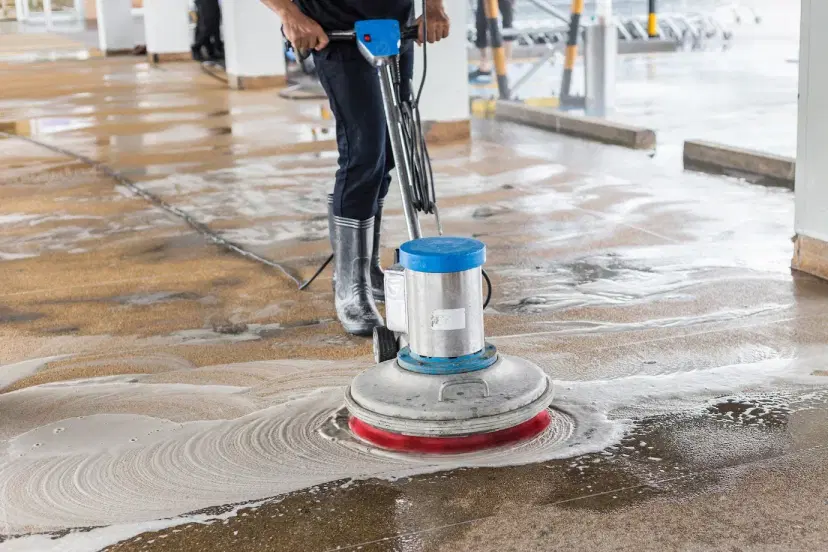
How to Remove Algae and Green Stains From Concrete Surfaces
By Samer Alsayegh · · Updated · 7 min read
Key Takeaways
- Mix one part bleach with four parts water to kill algae on concrete.
- Let the solution sit 10 to 15 minutes, but don't let it dry.
- Scrub with a stiff brush, then rinse thoroughly.
- Keep surfaces dry: trim branches, fix drainage and adjust sprinklers.
- Seal concrete once a year to stop algae coming back.
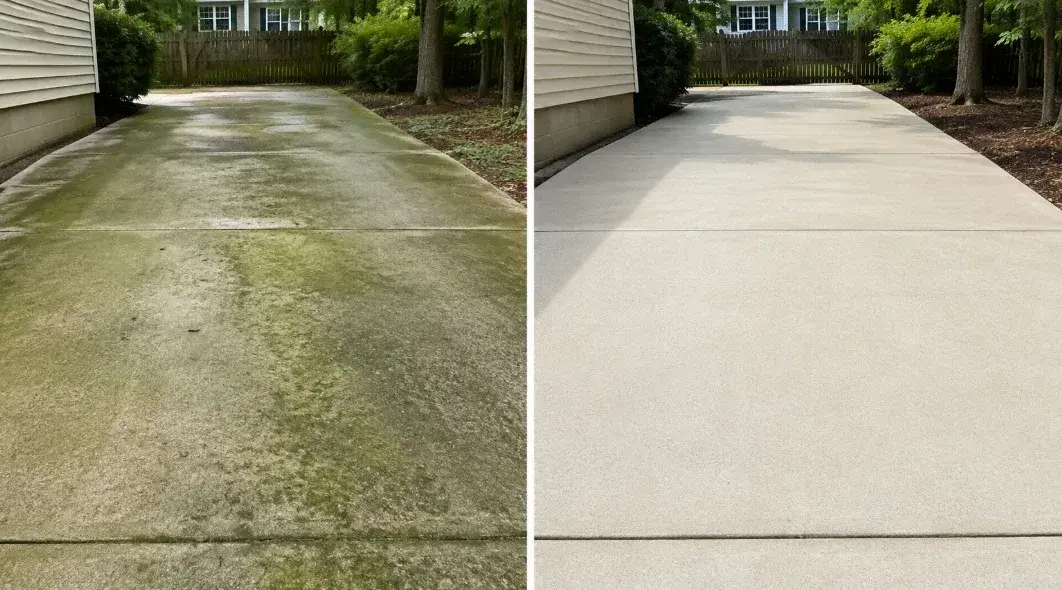
Mix one part bleach with four parts water, scrub the green stains with a stiff brush, then rinse well with a hose. This kills the algae and lifts most stains within 15 to 20 minutes. For tougher spots, a concrete-safe algae cleaner or a pressure washer finishes the job.
Algae loves damp, shady spots. The EPA notes that mold and algae only grow where there is water or moisture present, which is why driveways, patios, and walkways near trees or gutters get hit the hardest. Once you control the moisture and clean the surface properly, the green stains stop coming back.
Why concrete turns green
Concrete is porous, so it holds onto moisture longer than most surfaces. Add some shade, cool weather, or poor drainage, and algae spores settle in fast.
Common causes include:
- Shaded areas that stay damp longer
- Sprinklers hitting the same spot daily
- Poor drainage after rain or snowmelt
- Leaves and debris trapping moisture
- North-facing walls or fences with less sun
Homes near parks, riverbanks, or tree-lined streets tend to see this more. In cities like Ottawa, Toronto, and Montreal, the freeze-thaw cycle in fall and spring keeps concrete damp for weeks, which gives algae the perfect head start.
What you need before you start
Gather these simple supplies first so the job goes smoothly:
- Stiff bristle brush or push broom
- Bucket
- Garden hose or pressure washer
- Bleach or a concrete-safe cleaner
- Rubber gloves and eye protection
- Plastic sheeting (to protect nearby plants)
Step-by-step: how to remove algae from concrete
Step 1: Clear the area
Sweep away leaves, dirt, and loose debris. This helps the cleaner reach the algae directly instead of sitting on top of loose dirt.
Step 2: Wet the surface
Rinse the concrete with a hose. A damp surface helps the cleaning solution spread evenly and soak in faster.
Step 3: Apply your cleaning solution
Mix one part household bleach with four parts water. Pour or spray it over the stained areas. If you prefer a gentler option, white vinegar works on light stains, though bleach is stronger for deep green patches. Keep this bleach solution on its own. Combining it with another cleaner or acid-based product can release dangerous fumes.
Step 4: Let it sit
Give the solution 10 to 15 minutes to break down the algae. Do not let it dry completely on the surface.
Step 5: Scrub the stains
Use a stiff brush in circular motions. Focus extra effort on cracks and edges where algae builds up thickest.
Step 6: Rinse thoroughly
Rinse with a hose or pressure washer on a low setting. Make sure no cleaner residue is left behind, especially near grass or garden beds.
Step 7: Dry and inspect
Let the area air dry, then check for any spots that need a second treatment.
Preventing algae from coming back
Cleaning once is not enough if moisture keeps building up. Try these simple habits:
- Trim overhanging branches to let more sunlight in
- Fix drainage issues so water does not pool
- Sweep leaves and debris weekly during fall
- Apply a concrete sealer once a year
- Adjust sprinklers so they do not soak the same spot daily
A damp or wet spot is exactly where mold and algae spores settle and start growing, so keeping surfaces dry is the real long-term fix, not just scrubbing.
When to call a professional
DIY works for small patios or short driveways. But large surfaces, deep-set stains, or algae growing back every few weeks often mean it is time for a professional deep clean. Professionals use commercial-grade equipment and safer chemical ratios that protect your concrete's finish while fully killing the algae at the root. In Montreal, Ezi's exterior house cleaners can handle driveways, patios, and walkways for you.
This is also where a full home deep cleaning service helps. Outdoor algae is often just one sign of a bigger moisture or maintenance issue around the home, and a proper deep cleaning service in Ottawa can catch problem areas before they spread indoors too.
Why choose Ezi Home Services
Ezi Home Services has spent over 10 years helping homeowners keep their houses spotless, inside and out. With more than 260 five-star reviews on Google, our team is trusted across Ottawa, Toronto, and Montreal for reliable, thorough cleaning work. We know that a clean home is not just about what people see indoors. Outdoor buildup, damp corners, and neglected surfaces all affect how a home feels and how long it lasts.
Our deep cleaning teams are trained to spot moisture problems early, tackle tough grime, and leave every corner of your home fresh. Whether you are near the Rideau Canal in Ottawa, downtown Toronto, or Old Montreal, our local crews know the seasonal challenges each city brings, from humid summers to slushy winters. If your home needs more than a quick wipe-down, our thorough home deep cleaning in Toronto covers everything from kitchens to hard-to-reach outdoor spots.
Ready for a home that truly feels clean? Book a complete deep cleaning service in Montreal and let our experienced team handle the hard work for you.
Conclusion
Green algae on concrete is common, but it does not have to stay. A simple bleach solution, some scrubbing, and better drainage habits keep your driveway, patio, and walkways clean season after season. Catch it early, treat it right, and your concrete will stay algae-free for much longer.
Frequently Asked Questions
Can I use bleach on all concrete surfaces?
Yes, bleach is safe for most outdoor concrete, but avoid using it near plants or grass.
How often should I clean algae off concrete?
Check shaded or damp areas every 2 to 3 months, especially in spring and fall.
Does vinegar work as well as bleach?
Vinegar works for light stains, but bleach is stronger for deep, set-in algae.
Will a pressure washer damage my concrete?
Not if you use a low setting and keep the nozzle a safe distance from the surface.
Why does algae keep coming back in the same spot?
That area likely stays damp longer, often due to shade, poor drainage, or sprinkler overspray.
How do I choose between hiring a professional pressure washing company and renting equipment for my driveway?
Rent if your driveway is small, the stains are light, and you have a free afternoon. Hire a pro if the driveway is large, the algae or oil stains are deep, or you also want the house, deck, or patio done. Pros bring commercial-grade machines, surface cleaners that avoid streaks, and the right pressure for each surface, so there is less risk of etching concrete or gouging wood.
Which pressure washing company offers the best package deal for driveway and deck cleaning?
The best deal is usually the company that quotes the driveway and deck together in one visit, since bundling saves a second trip and setup fee. Ask each company for a flat bundled price, what cleaner they use on wood versus concrete, and whether sealing is included. Ezi's exterior cleaning service lets you book driveway, deck, and patio cleaning in one visit with an upfront price.
What are the best exterior pressure washing services to hire in Canada for a full home wash?
Look for an insured company with recent local reviews that offers soft washing for siding and pressure washing for hard surfaces. A full home wash should cover siding, driveway, walkways, deck or patio, and windows or gutters as add-ons. Ezi Home Services offers exterior cleaning in Ottawa, Toronto, Gatineau, Montreal, and Surrey, with upfront pricing and online booking.
Written by
Home Cleaning · Maintenance
Co-founder of Ezi Services and Draftbase, entrepreneur and builder focused on SaaS, AI, and growth — I turn ideas into scalable businesses using technology, automation, and relentless execution.